


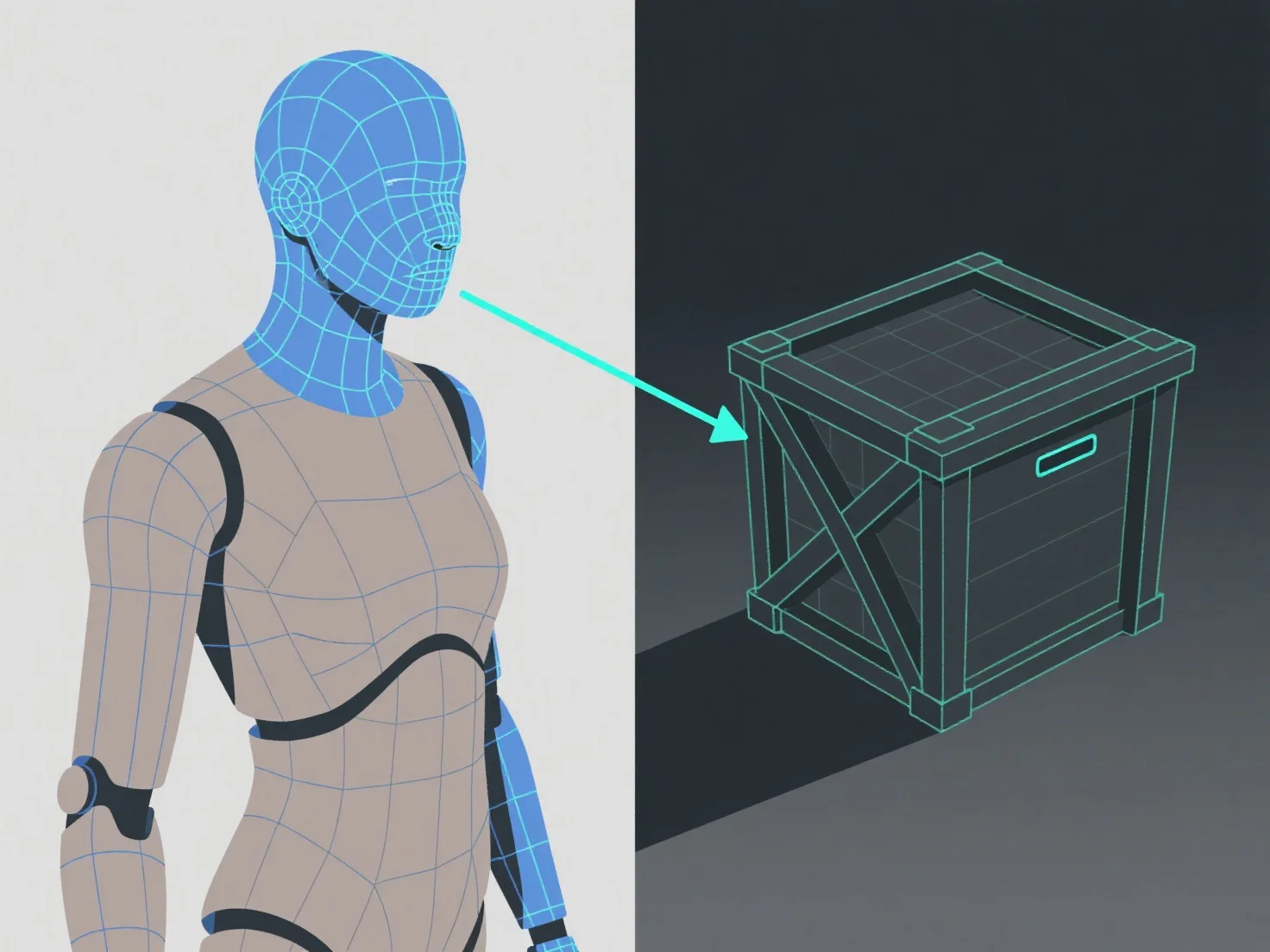
La topologie d'un modèle de personnage diffère de celle d'un modèle d'objet statique principalement parce qu'elle met l'accent sur la préparation à l'animation et les performances de déformation, tandis que la topologie d'un objet statique se concentre davantage sur les détails de la surface et la stabilité structurelle.
La topologie du modèle de personnage priorise les boucles d'arêtes alignées avec le mouvement des muscles et des articulations.
En revanche, la topologie d'objets statiques met l'accent sur la précision de la surface et l'efficacité des polygones pour des détails tels que les textures ou les bords nets, car elle n'a pas besoin de s'adapter aux mouvements dynamiques. Son flux d'arêtes est optimisé pour le rendu plutôt que pour l'animation.