


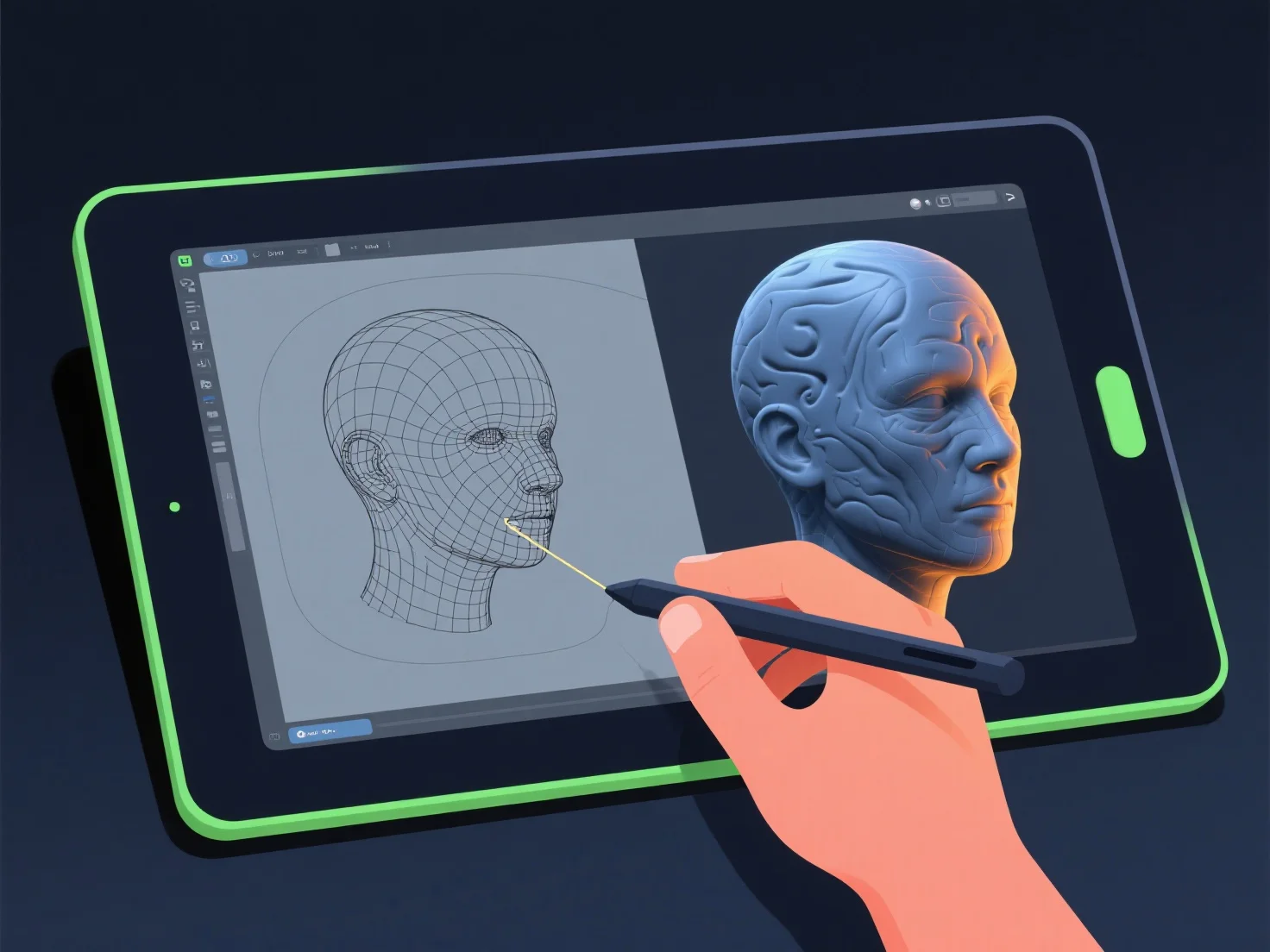
La phase de sculpture est cruciale pour la création de modèles 3D haute résolution, car elle permet aux artistes d'ajouter manuellement des détails complexes, des textures organiques et de fines variations de surface que les maillages de base à faible résolution ne peuvent pas capturer, faisant le pont entre la structure de base et les détails haute fidélité.
Les contributions clés incluent : 1. **Amélioration des détails** : En utilisant des outils tels que ZBrush ou le mode Sculpt de Blender, les artistes ajoutent des micro-détails (par exemple, des rides, des pores, des contours complexes) qui manquent aux bases de polygones réduits, améliorant ainsi la profondeur de la résolution. 2. **Création de textures organiques** : Contrairement aux méthodes automatisées, la sculpture permet de créer des textures artisanales et naturelles imitant les matériaux du monde réel (par exemple, la peau, la pierre), améliorant ainsi le réalisme. 3. **Affinement de la forme** : Elle affine la forme de la maille de base, assurant des transitions fluides et des proportions précises, essentielles pour une clarté haute résolution.
Dans l'ensemble, la sculpture transforme des maillages simples en modèles détaillés et réalistes en se concentrant sur un travail de détail manuel et précis qui permet d'obtenir une qualité haute résolution.