


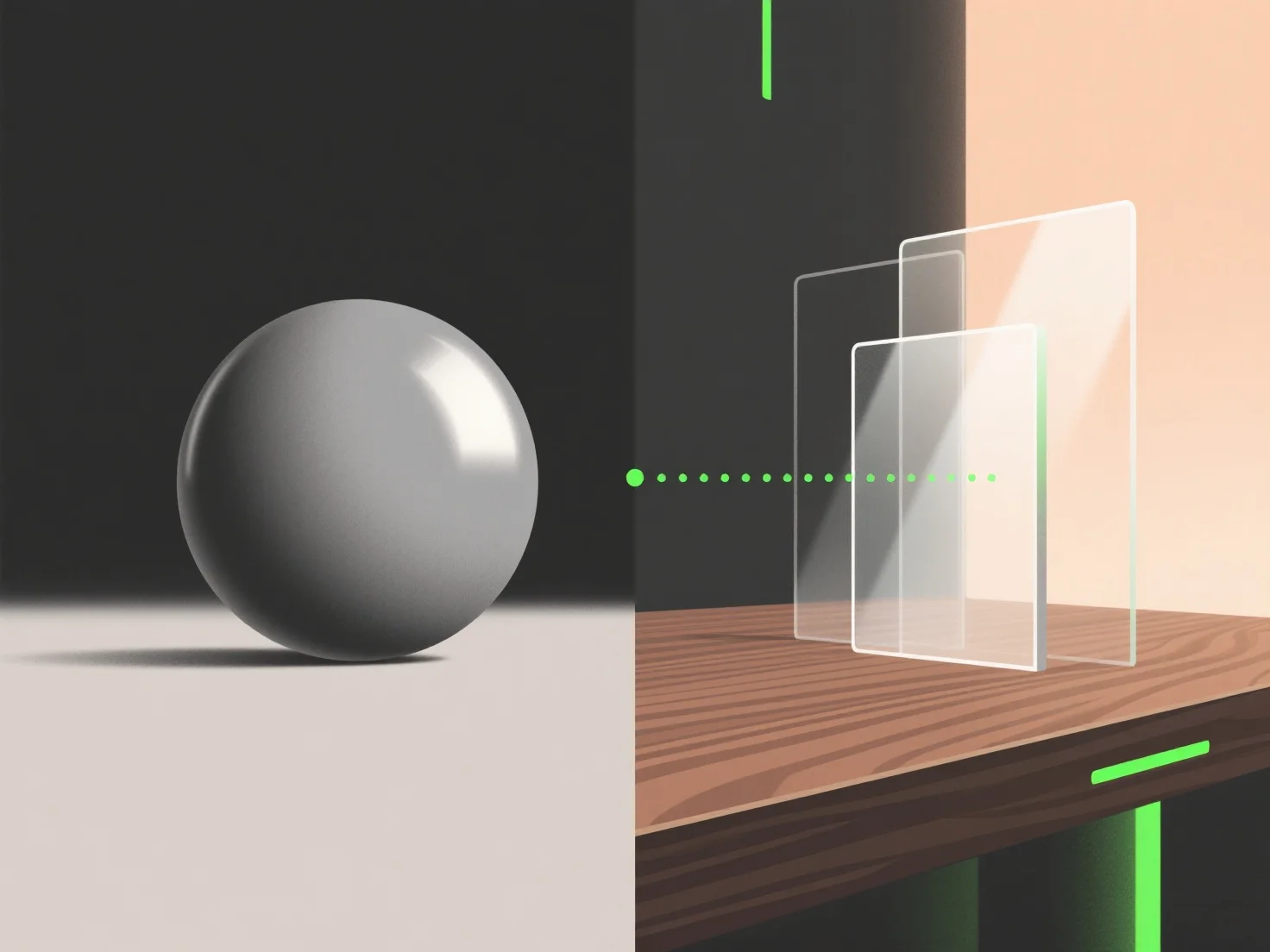
Les shaders sont fondamentaux pour la création de matériaux 3D, car ils définissent la façon dont les surfaces interagissent avec la lumière et déterminent l'apparence visuelle finale. Ils agissent comme des instructions programmables qui relient les propriétés matérielles abstraites et les résultats rendus.
Les influences clés incluent : - **Contrôle des propriétés de base** : Les shaders gèrent des attributs critiques tels que la couleur, la texture, la réflectivité et la transparence, dictant directement le comportement de la surface. - **Simulation du monde réel** : Ils permettent d'imiter les matériaux. Par exemple, le béton rugueux diffuse la lumière de manière inégale, tandis que le métal réfléchit fortement, façonnant la texture perçue. - **Création simplifiée** : Ajustement des paramètres du shader.
En bref, les shaders traduisent les attributs matériels dans le langage visuel des scènes 3D, ce qui les rend essentiels pour créer des surfaces réalistes ou stylisées.