


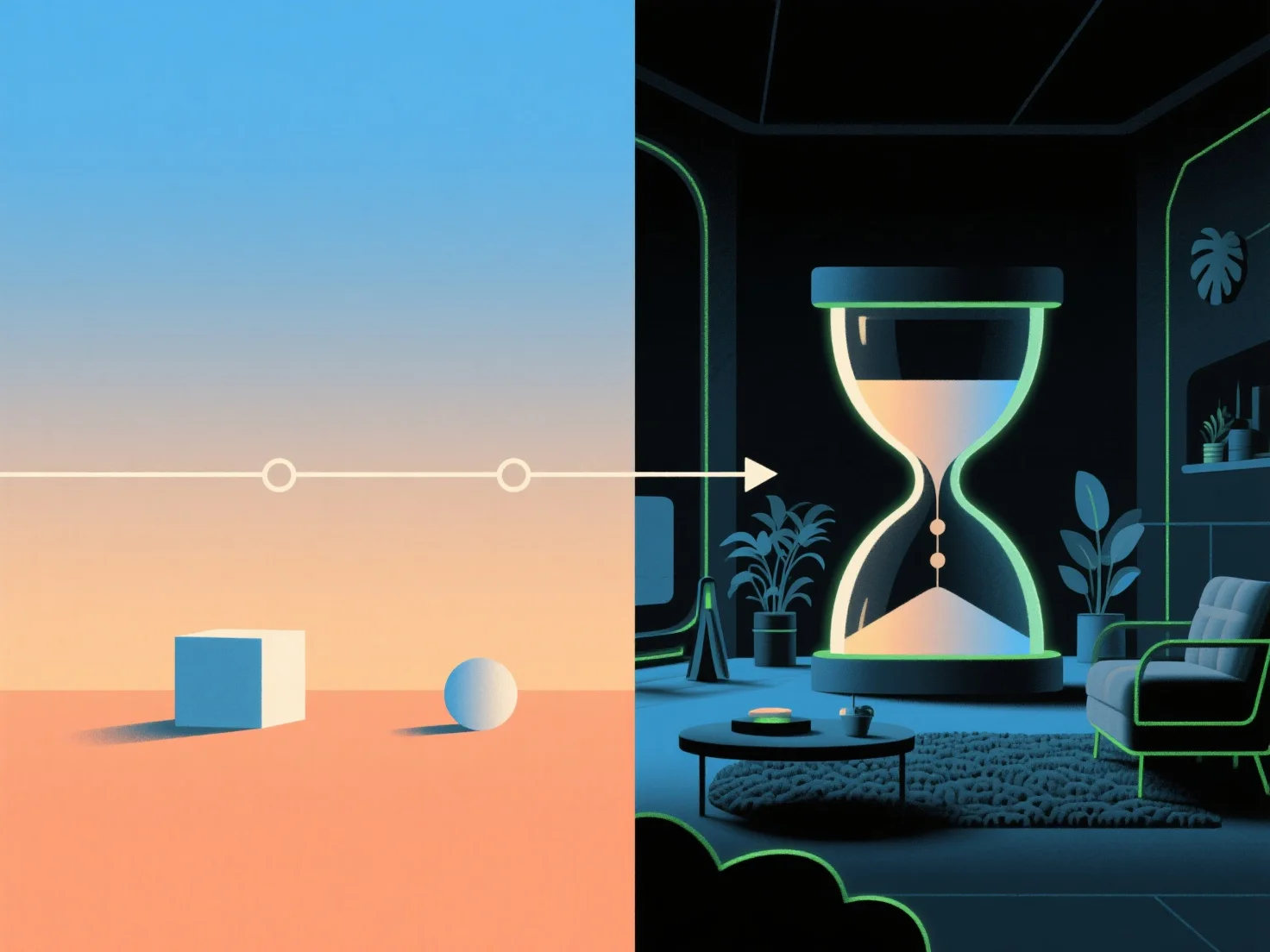
La complexité de la scène fait augmenter les coûts du temps de rendu 3D de manière non linéaire ; un nombre plus élevé de polygones, de détails de texture et d'exigences d'éclairage entraînent des temps de traitement exponentiellement plus longs.
Les principaux facteurs de complexité qui augmentent les coûts de temps comprennent : - La quantité de polygones : Plus de géométrie nécessite que le moteur de rendu traite des sommets et des arêtes supplémentaires, ce qui augmente la charge de calcul. - La résolution des textures : Les textures de haute résolution signifient des fichiers de données plus volumineux, ce qui ralentit la cartographie des textures et les calculs des shaders. - Les sources de lumière : Chaque lumière ajoutée nécessite des calculs d'ombrage, de réflexion et de réfraction, ce qui multiplie les besoins de traitement. - Les ombres/l'éclairage global : Des effets d'éclairage avancés.
Exemples pratiques : les rendus architecturaux avec des meubles détaillés et plus de 10 lumières peuvent passer de 30 minutes à plus de 3 heures ; les scènes d'effets visuels de films avec des systèmes de particules ou du brouillard volumétrique peuvent prendre des jours par image.
Pour réduire les coûts de temps, simplifiez la géométrie.