


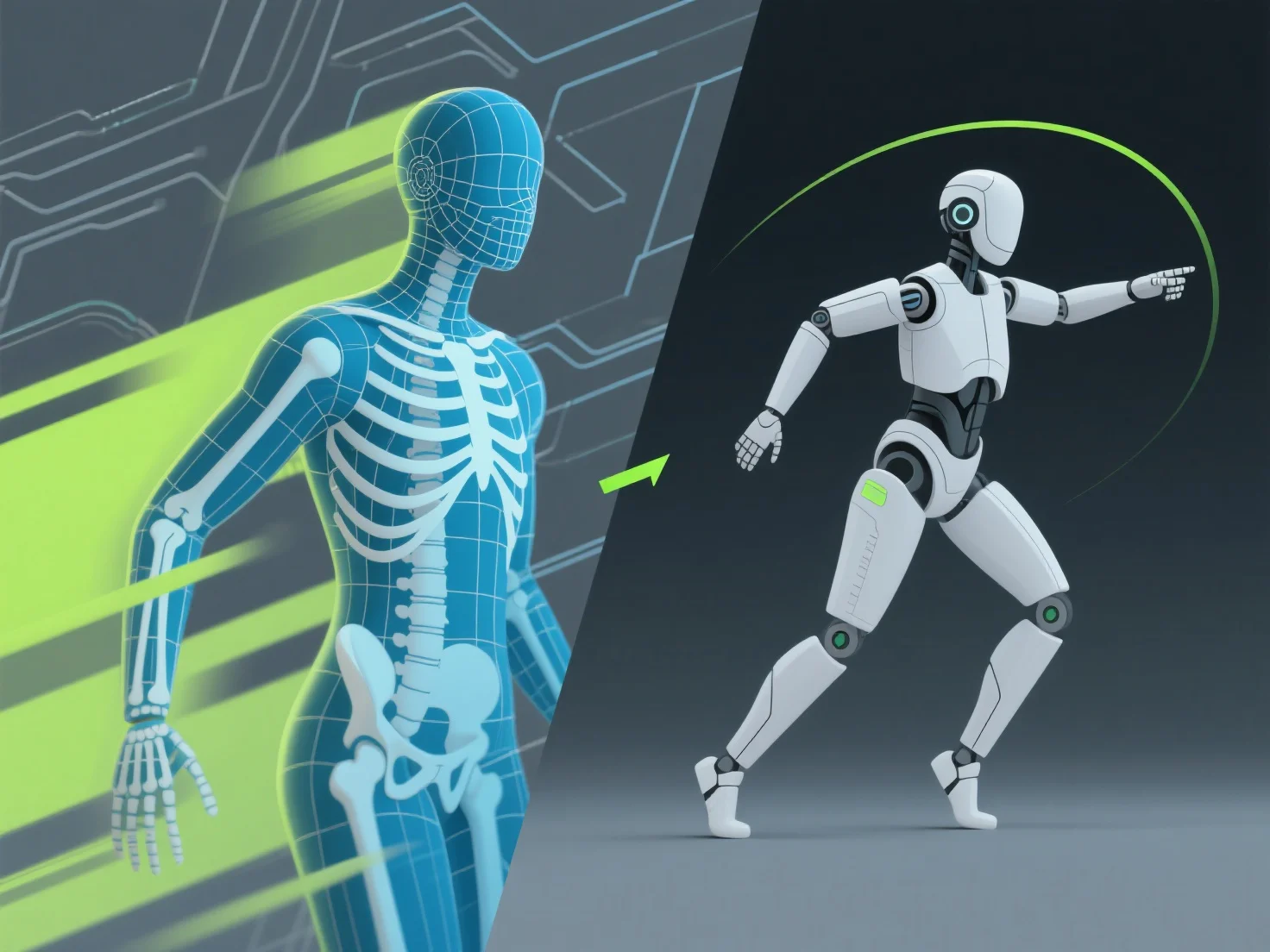
Le rigging affecte directement l'animation de personnages 3D dans le cycle de production en fournissant la structure squelettique et les systèmes de contrôle qui permettent aux personnages de se mouvoir, en servant de lien essentiel entre les modèles 3D statiques et les animations dynamiques, en déterminant l'amplitude des mouvements, le réalisme et l'efficacité de la production.
- **Dépendance en amont** : Il s'appuie sur la topologie du modèle (par exemple, le flux d'arêtes) pour assurer une déformation naturelle ; une mauvaise topologie peut provoquer des problèmes de rigging tels que la distorsion du maillage. - **Efficacité en aval** : Des rigs bien conçus avec des contrôles intuitifs permettent aux animateurs de manipuler facilement les membres, les expressions faciales ou la dynamique, accélérant ainsi le flux de travail ; des rigs complexes ou non réactifs nécessitent un temps d'ajustement supplémentaire, ce qui retarde la production. - **Impact sur la qualité** : De bons rigs permettent des mouvements fluides et réalistes ; des rigs défectueux entraînent des déformations non naturelles.
Pour optimiser, testez les installations d'essai dès le début avec des mouvements de base afin de détecter les problèmes avant l'animation complète, en assurant à la fois la qualité et l'efficacité du cycle de production.