


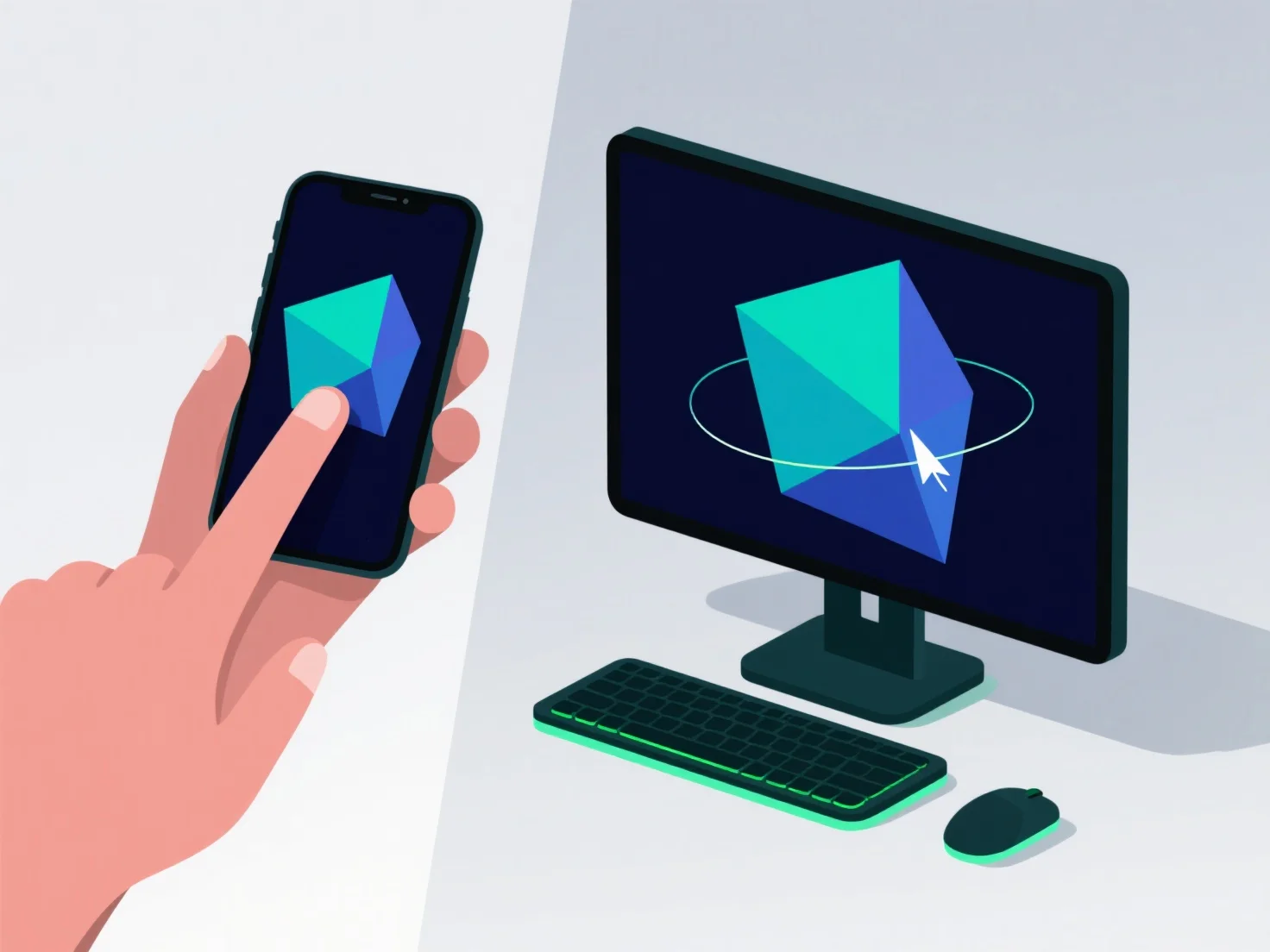
La présentation 3D mobile diffère des expériences 3D sur ordinateur principalement en termes de performances, de dépendance au matériel et de cas d'utilisation.
Mobile 3D fonctionne sur du matériel limité.
La 3D mobile est idéale pour une visualisation en déplacement, des interactions basiques ou des aperçus/partages 3D rapides. Les ordinateurs de bureau excellent dans la conception professionnelle, les jeux haut de gamme ou les simulations détaillées, où la haute fidélité et les performances sont essentielles.
En bref, les appareils mobiles privilégient la portabilité et l'accessibilité, tandis que les ordinateurs de bureau se concentrent sur les performances et les détails pour les tâches exigeantes.