


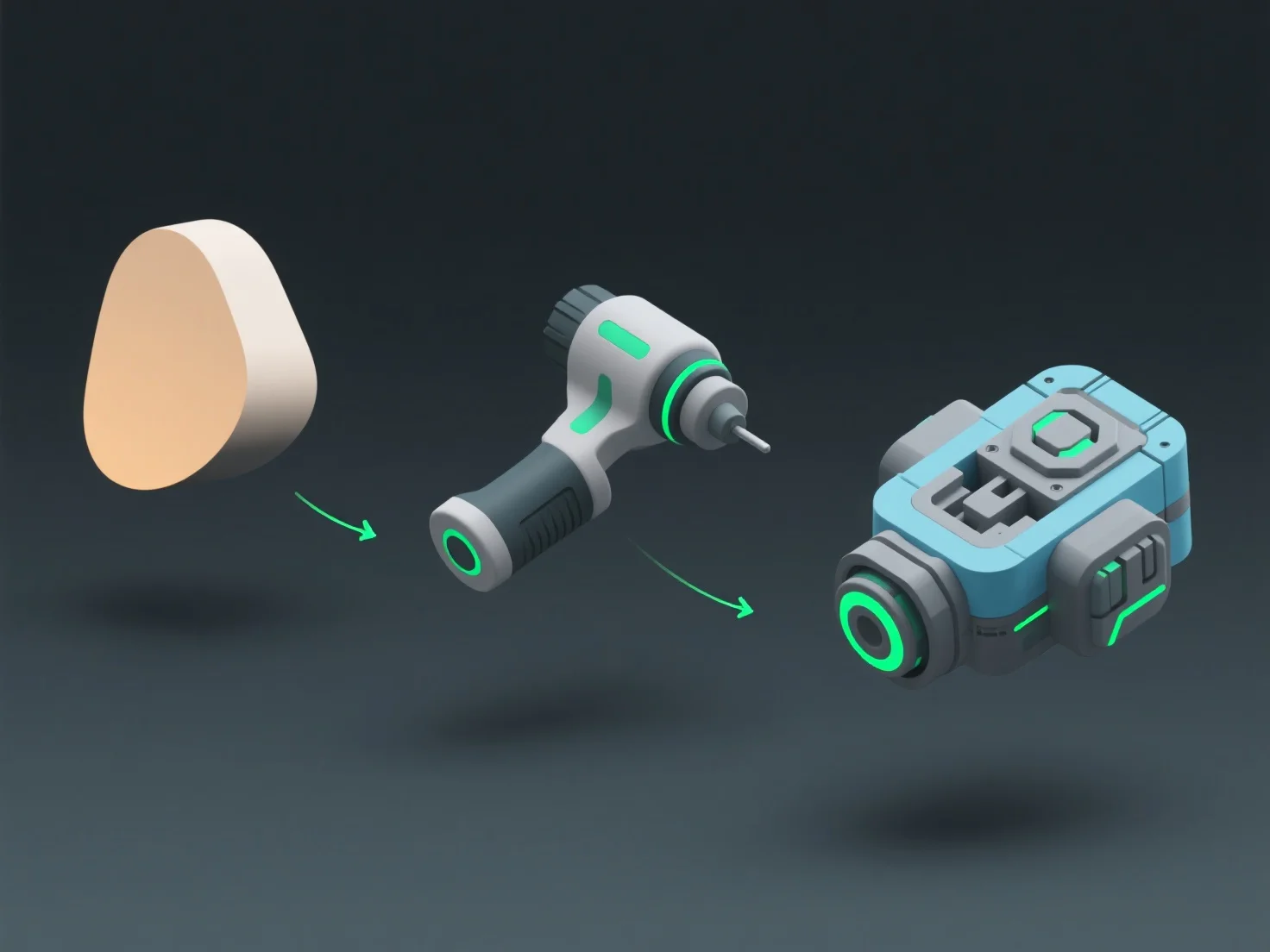
La visualisation 3D varie considérablement en fonction de la complexité du produit, en adaptant les détails de la modélisation, la résolution des textures et les techniques de rendu pour correspondre à la complexité du produit.
Des produits plus simples.
Produits complexes
Pour gérer la complexité, la modélisation modulaire. Diviser les produits en composants plus petits et gérables. Aide à maintenir les détails tout en assurant un rendu efficace et une communication claire.