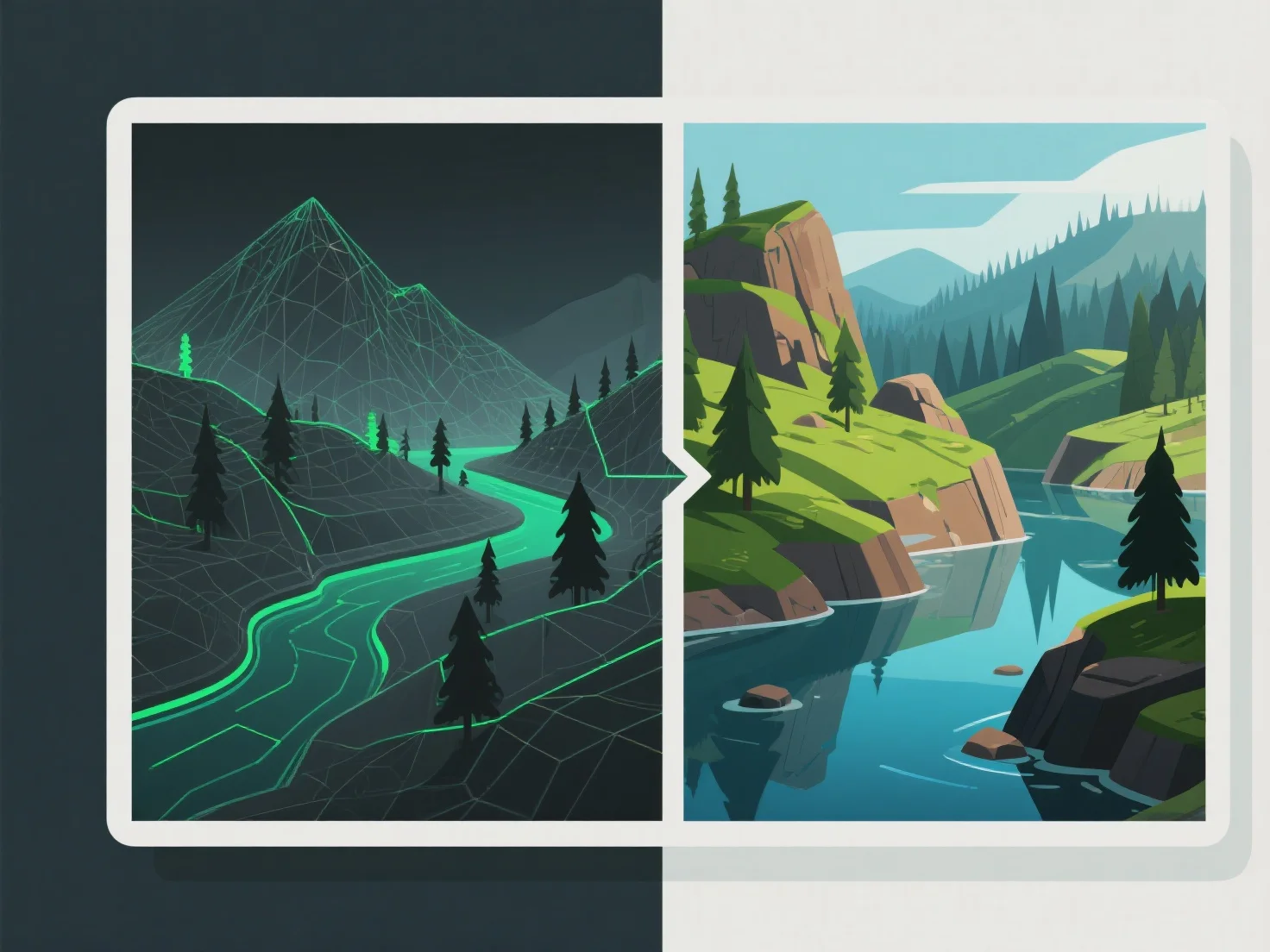
3D modeling helps design realistic video game landscapes by creating detailed three-dimensional terrain and environmental elements that mimic real-world physics and aesthetics, making landscapes immersive and lifelike.
It enables precise control over terrain features: designers adjust height, slope, and texture to replicate natural formations like mountains, valleys, or plateaus with accuracy.
It integrates natural elements: adding vegetation (trees, grass), water bodies (rivers, lakes), and dynamic effects (e.g., flowing water, blowing wind) to enhance realism.
It leverages real-world data: using 3D scans of actual landscapes ensures accurate proportions, textures, and details, critical for hyper-realistic environments.
This combination of control, natural integration, and real-world references results in landscapes that feel authentic and engaging for players.