


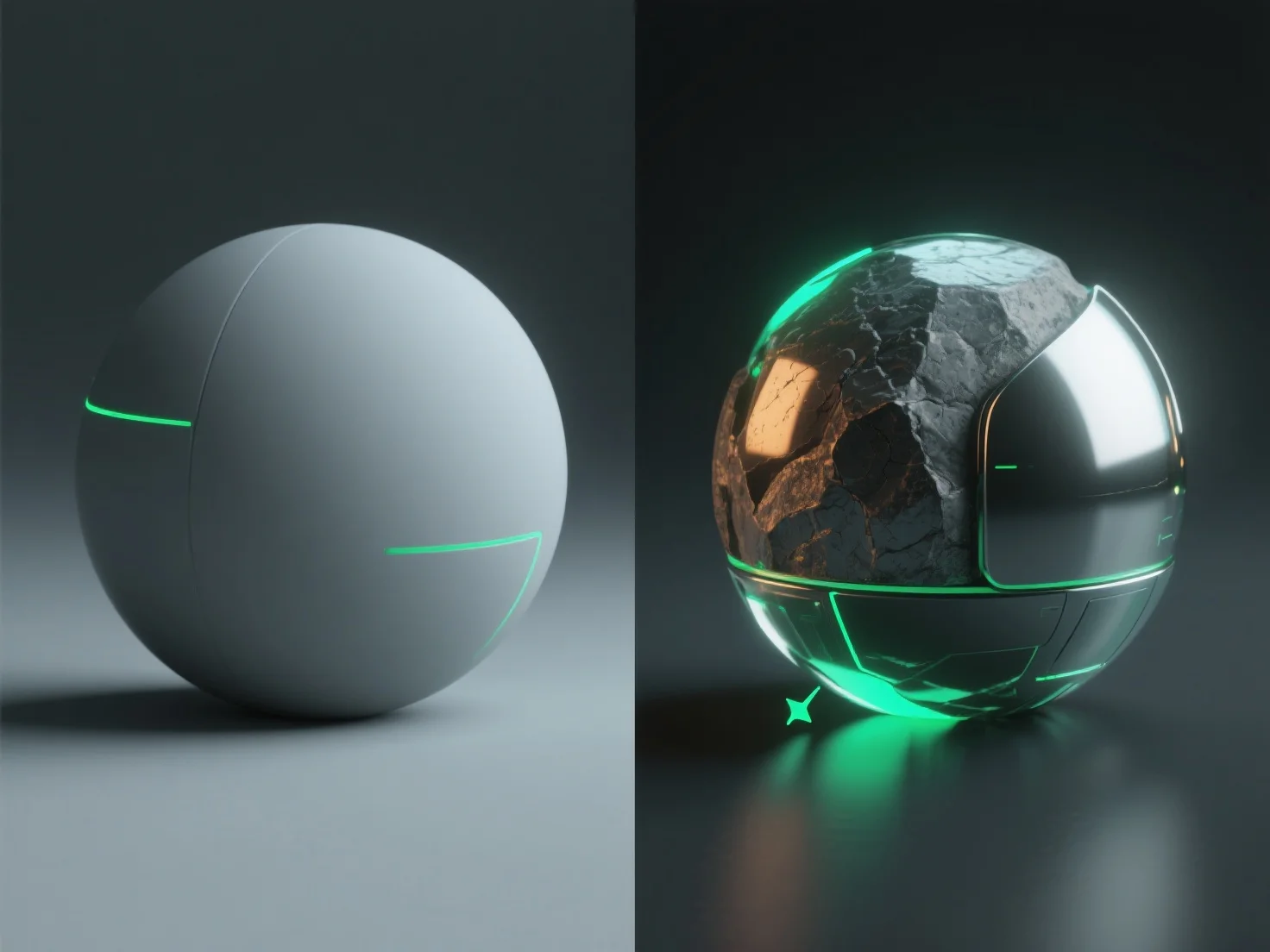
Les matériaux et les shaders répondent aux critères de qualité 3D en simulant de manière collaborative des propriétés physiques réalistes et des interactions de surface, assurant ainsi une précision et une cohérence visuelles.
Les matériaux définissent des attributs fondamentaux tels que la couleur, la texture et la réflectivité, jetant les bases de l'apparence de base d'un objet. Les shaders contrôlent ensuite la façon dont ces attributs réagissent à la lumière, à l'ombre et aux facteurs environnementaux, traduisant les données matérielles en un rendu final.
Test de paires matériel-shader dans divers scénarios d'éclairage, allant de la lumière directe brillante aux conditions ambiantes douces. Cela aide à affiner leur performance, en assurant une conformité effective aux normes de qualité 3D.