


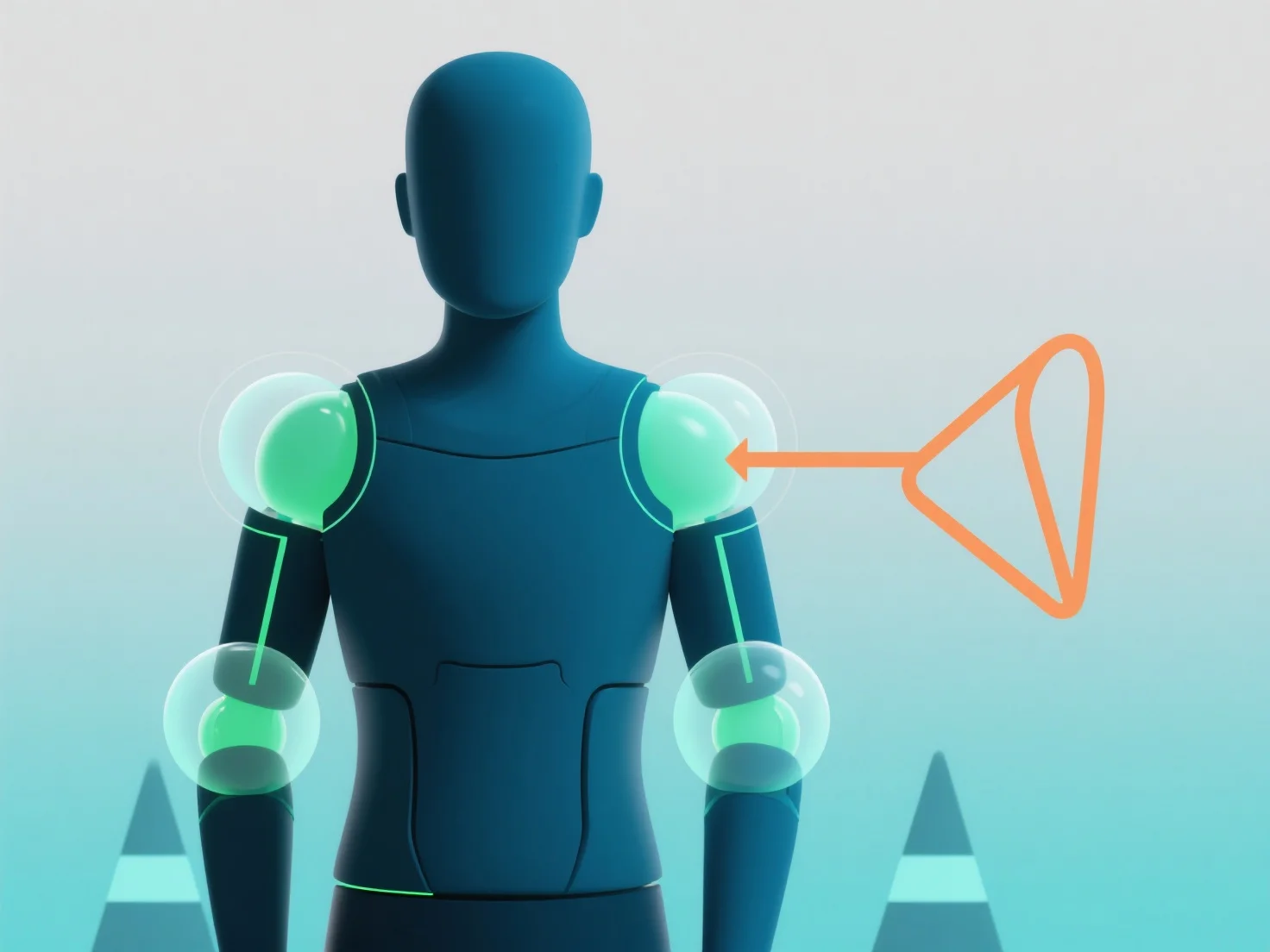
Les articulations et les contraintes dans le rigging déterminent directement le comportement de mouvement et la stabilité structurelle d'un modèle 3D pendant l'animation.
Les articulations agissent comme des points pivot, permettant des mouvements fondamentaux tels que la rotation.
Les contraintes, telles que l'IK (cinématique inverse), les contraintes de limite ou les contraintes parent-enfant, restreignent ou guident le mouvement. L'IK maintient les membres alignés lors du mouvement, les contraintes de limite empêchent la sur-rotation, et les liens parent-enfant assurent un mouvement hiérarchique.
Ensemble, ils s'assurent que le modèle se déplace de manière contrôlée et réaliste, en évitant les poses disjointes ou non naturelles et en maintenant l'intégrité structurelle.