


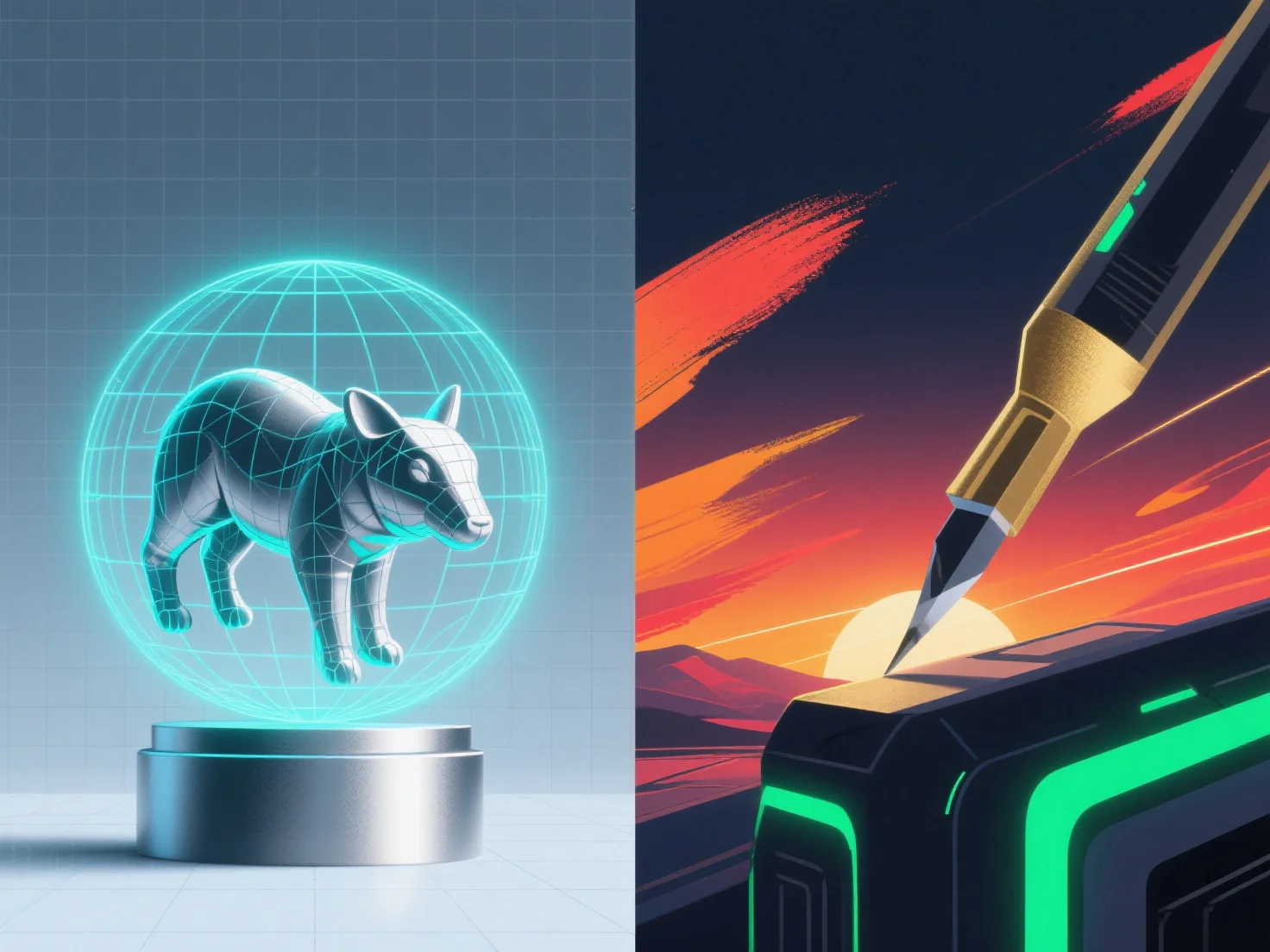
Les outils de sculpture 3D et les logiciels de peinture numérique 2D traditionnels diffèrent principalement en termes de dimension spatiale, d'objectif principal et de cas d'utilisation.
Dimension spatiale : les outils 3D fonctionnent dans un espace tridimensionnel, permettant la manipulation du volume et de la profondeur, tandis que les logiciels 2D travaillent sur une toile plane bidimensionnelle avec uniquement la largeur et la hauteur.
Concentration principale : La sculpture 3D met l'accent sur la formation de formes physiques à l'aide d'outils tels que la manipulation de sommets, la topologie dynamique et des pinceaux "ressemblant à de l'argile" pour créer du volume. La peinture 2D se concentre sur la couleur, la composition et les détails de surface, en utilisant des calques, des mélanges de pinceaux et des superpositions de textures.
Cas d'utilisation : les outils 3D conviennent aux modèles 3D pour les jeux, les films ou l'impression 3D ; les logiciels 2D sont idéaux pour les illustrations, les concept arts ou les bandes dessinées numériques nécessitant une sortie visuelle plate.