


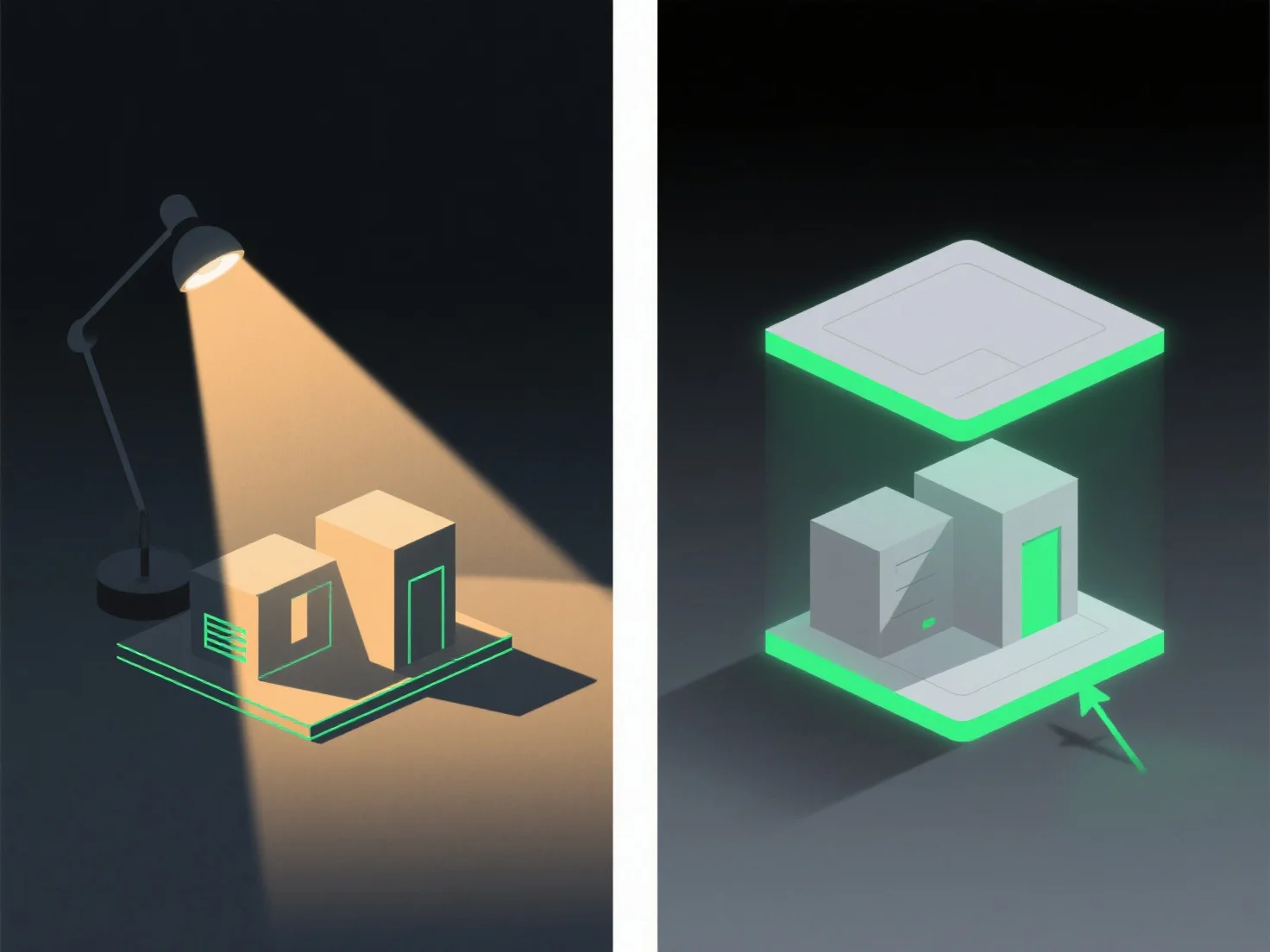
Les présentations 3D avec éclairage en temps réel ajustent dynamiquement les effets d'éclairage en fonction des changements de scène, tandis que l'éclairage précalculé prépare et stocke les données d'éclairage pour les éléments statiques, différant en termes de flexibilité, de performances et de cas d'utilisation idéaux.
L'éclairage en temps réel est adapté pour les scènes interactives ou changeantes.
L'éclairage baké fonctionne mieux pour les scènes statiques. Il utilise des données d'éclairage pré-rendues pour réduire la charge de performance, améliorant l'efficacité mais limitant l'adaptabilité aux ajustements d'éclairage.
En résumé, l'éclairage en temps réel privilégie l'interactivité et la flexibilité, tandis que l'éclairage précalculé met l'accent sur les performances et l'efficacité pour les environnements statiques.