


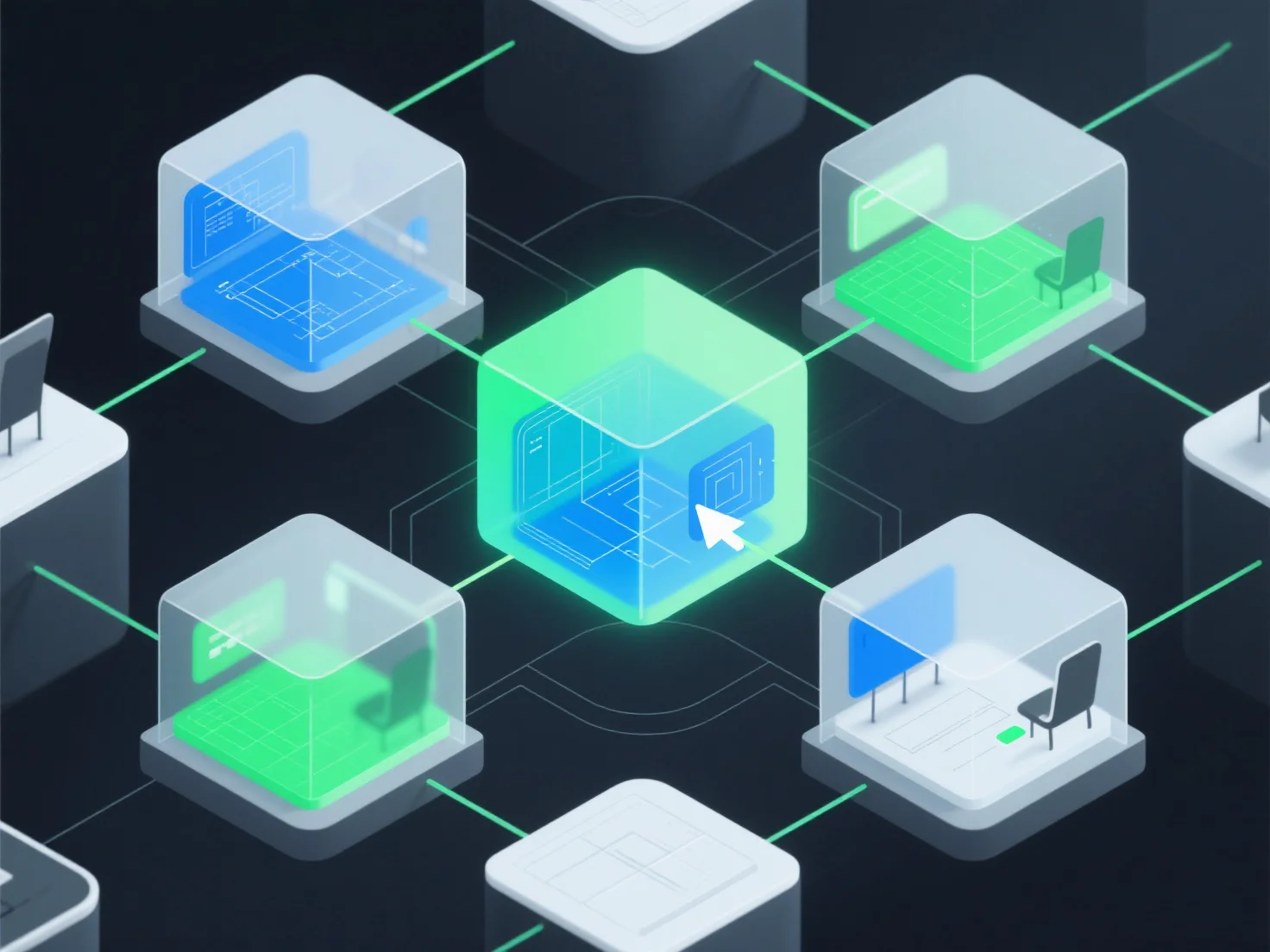
Les outils de conception 3D s'adaptent aux projets collaboratifs à grande échelle en intégrant l'édition en temps réel multi-utilisateur, le contrôle de version basé sur le cloud et la gestion des autorisations basée sur les rôles, permettant un travail d'équipe efficace à travers différents sites.
L'édition multi-utilisateur en temps réel permet aux membres de l'équipe situés à différents endroits de travailler simultanément sur le même modèle 3D, éliminant ainsi les délais liés aux mises à jour séquentielles.
Le contrôle de version basé sur le cloud suit l'historique des révisions, permettant aux utilisateurs d'examiner, de revenir en arrière ou de fusionner les modifications pour éviter les écrasements accidentels de données de conception critiques.
La gestion des permissions basée sur les rôles attribue des droits d'accès.
Outils avec des fonctions de communication intégrées.