


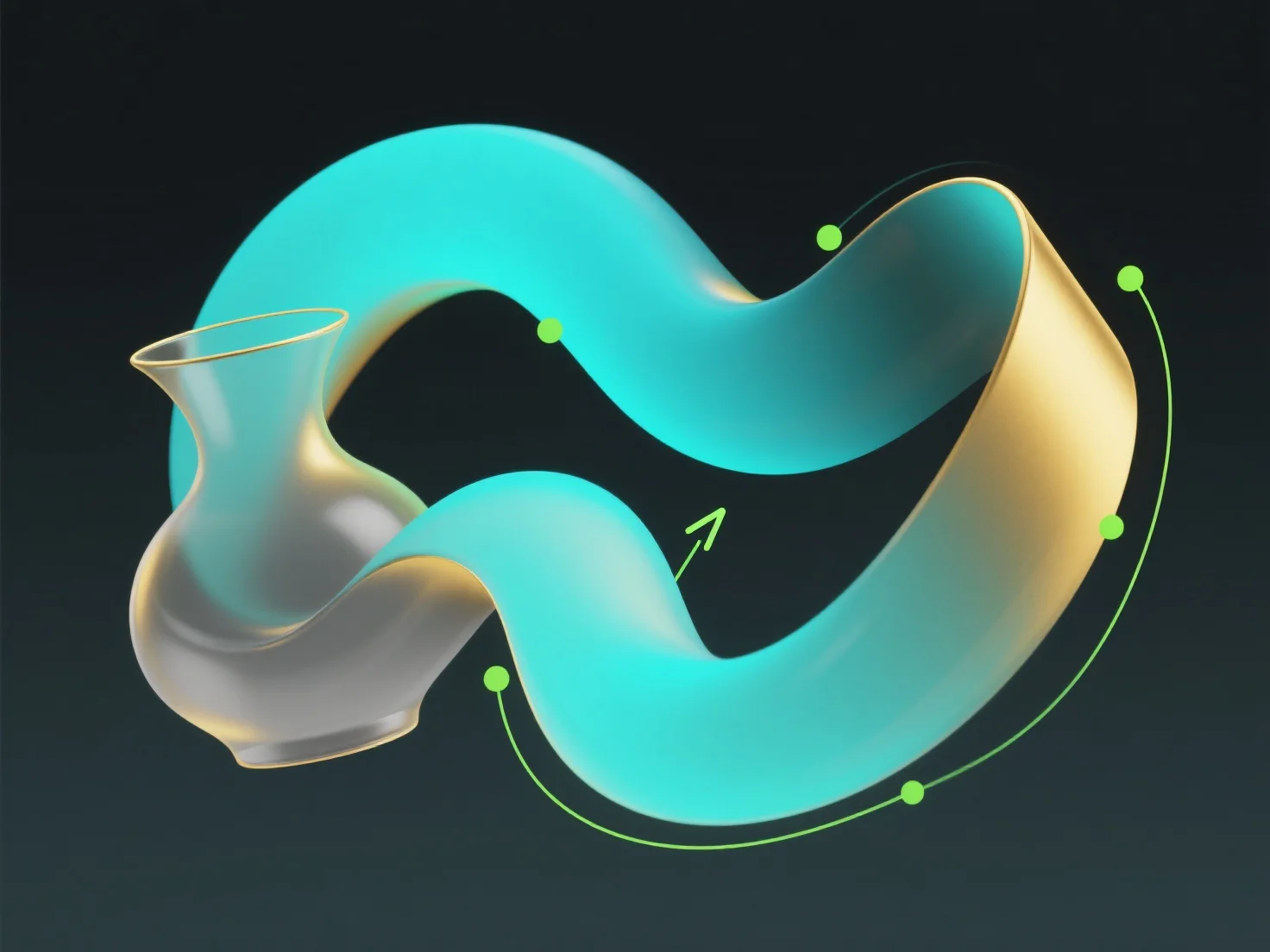
Les courbes sont des guides fondamentaux pour la création de formes 3D complexes, permettant la génération de surfaces ou de volumes grâce à des opérations clés telles que l'extrusion, le lofting ou le sweeping.
- Extrusion : Une courbe 2D (par exemple, un cercle ou un polygone) est prolongée le long d'un chemin droit ou courbe pour former une forme 3D, telle qu'un cylindre à partir d'une courbe de cercle. - Lofting : Plusieurs courbes (par exemple, des sections transversales) sont connectées pour générer une surface lisse, idéale pour des formes organiques telles que des visages humains ou des carrosseries de voitures. - Sweeping : Une courbe de profil se déplace le long d'une courbe guide, façonnant des surfaces. Par exemple, le col d'une bouteille à partir d'une courbe de cercle et d'une courbe spirale.
En utilisant des types de courbes précis.