


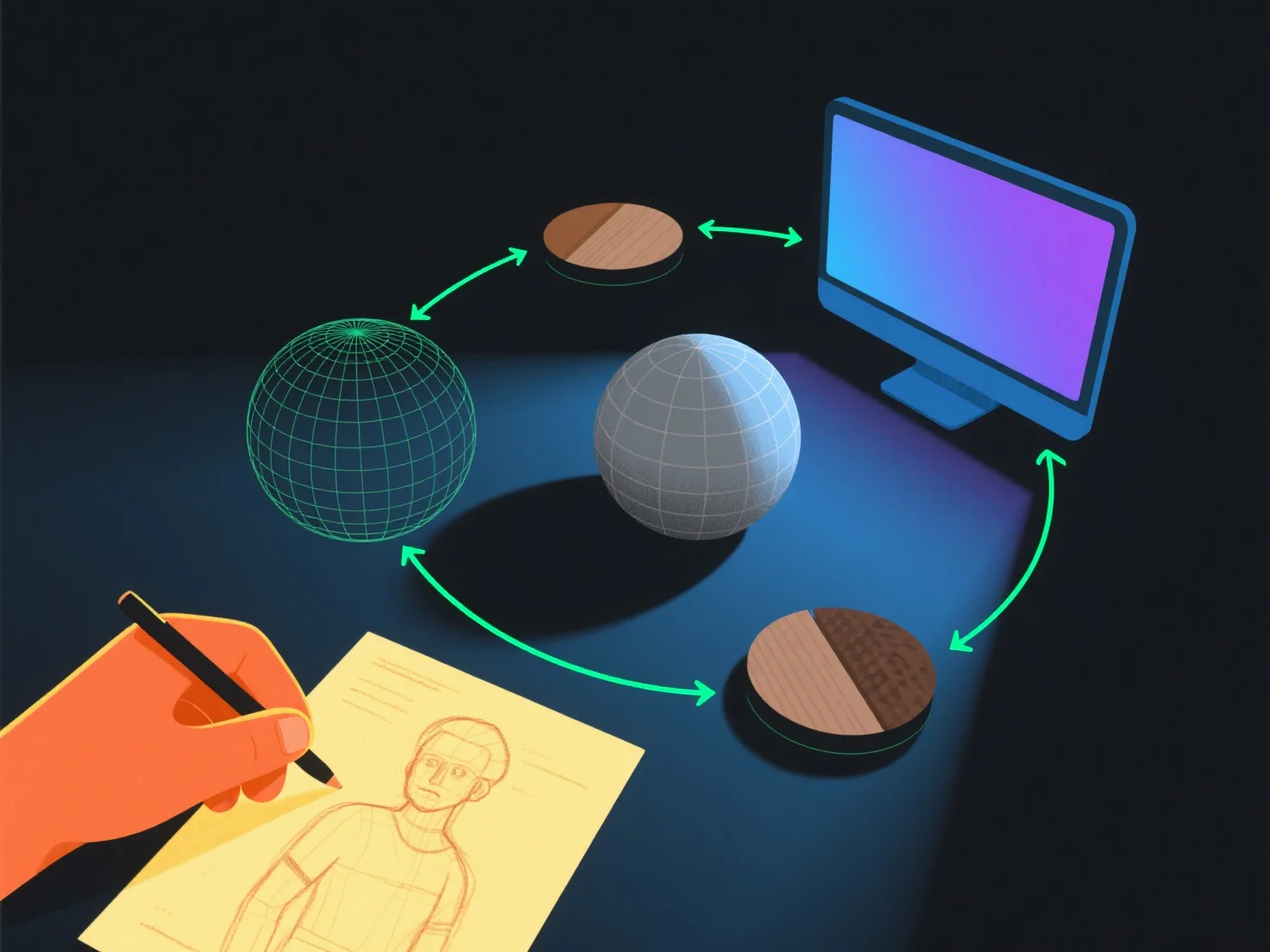
El proceso de creación 3D, desde el concepto hasta el renderizado final, involucra seis pasos principales: diseño conceptual, modelado 3D, texturizado, rigging (para activos animados), iluminación y renderizado final.
- **Diseño conceptual**: Traduce ideas en conceptos visuales a través de bocetos o paneles de inspiración, estableciendo la dirección creativa del proyecto. - **Modelado 3D**: Construye geometría 3D digital utilizando software, formando la forma y estructura básica del activo. - **Texturizado**: Añade detalles de superficie (color, patrones, materiales) para mejorar el realismo y el atractivo visual. - **Rigging (para animación)**: Construye un esqueleto con controles para habilitar el movimiento (por ejemplo, articulaciones de personajes o articulación de objetos). - **Iluminación**: Configura fuentes de luz para definir el estado de ánimo, la profundidad y la dinámica de las sombras de la escena. - ** Renderizado final**: Calcula las interacciones de luz y materiales para generar la imagen final o el fotograma de animación.
Estos pasos secuenciales transforman los conceptos iniciales en imágenes pulidas y listas para renderizar.