


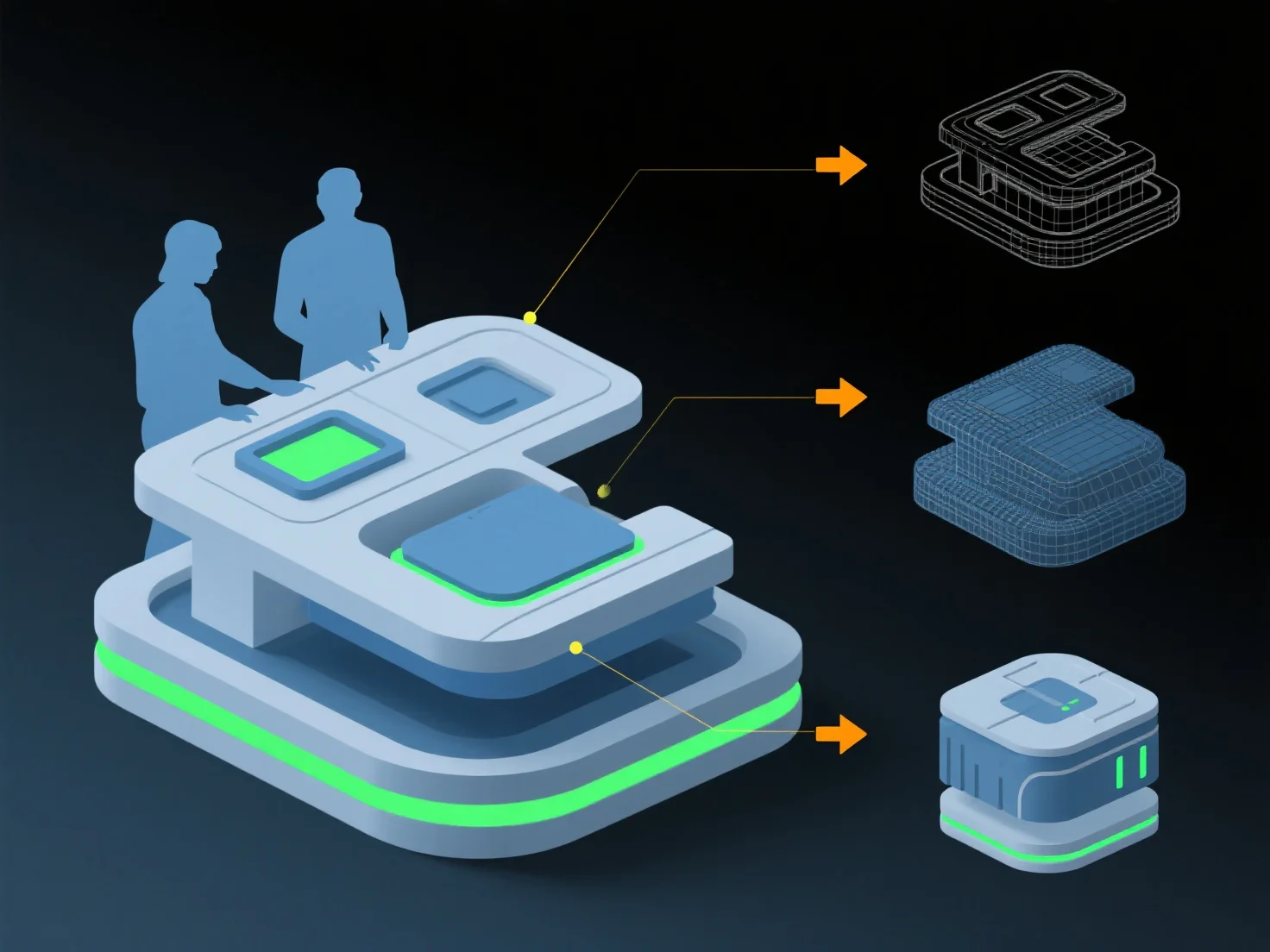
En los flujos de trabajo de diseño 3D colaborativo, los bucles de retroalimentación sirven principalmente para alinear la intención de diseño del equipo, mejorar la precisión del modelo e impulsar la mejora iterativa al facilitar la entrada continua de los interesados.
Funcionan a través de aspectos clave: - **Alinear la intención**: Asegurar que los diseñadores, ingenieros y clientes compartan una visión unificada abordando las discrepancias en geometría, texturas o funcionalidad desde el principio. - **Aumentar la precisión**: La retroalimentación en tiempo real o iterativa detecta errores (por ejemplo, fallas estructurales, inconsistencias estéticas) desde el principio, reduciendo el trabajo de revisión costoso. - **Acelerar la iteración**: Permitir ajustes rápidos basados en la información recibida, acortando los ciclos de desarrollo para cumplir con los requisitos de manera eficiente.
En general, los bucles de retroalimentación son fundamentales para la eficiencia de la colaboración, la minimización de errores y garantizar que el modelo 3D final se alinee con los objetivos colectivos.