Home/Hitem3D FAQ/What is the difference between baking lighting and real-time lighting in 3D environments?

What is the difference between baking lighting and real-time lighting in 3D environments?

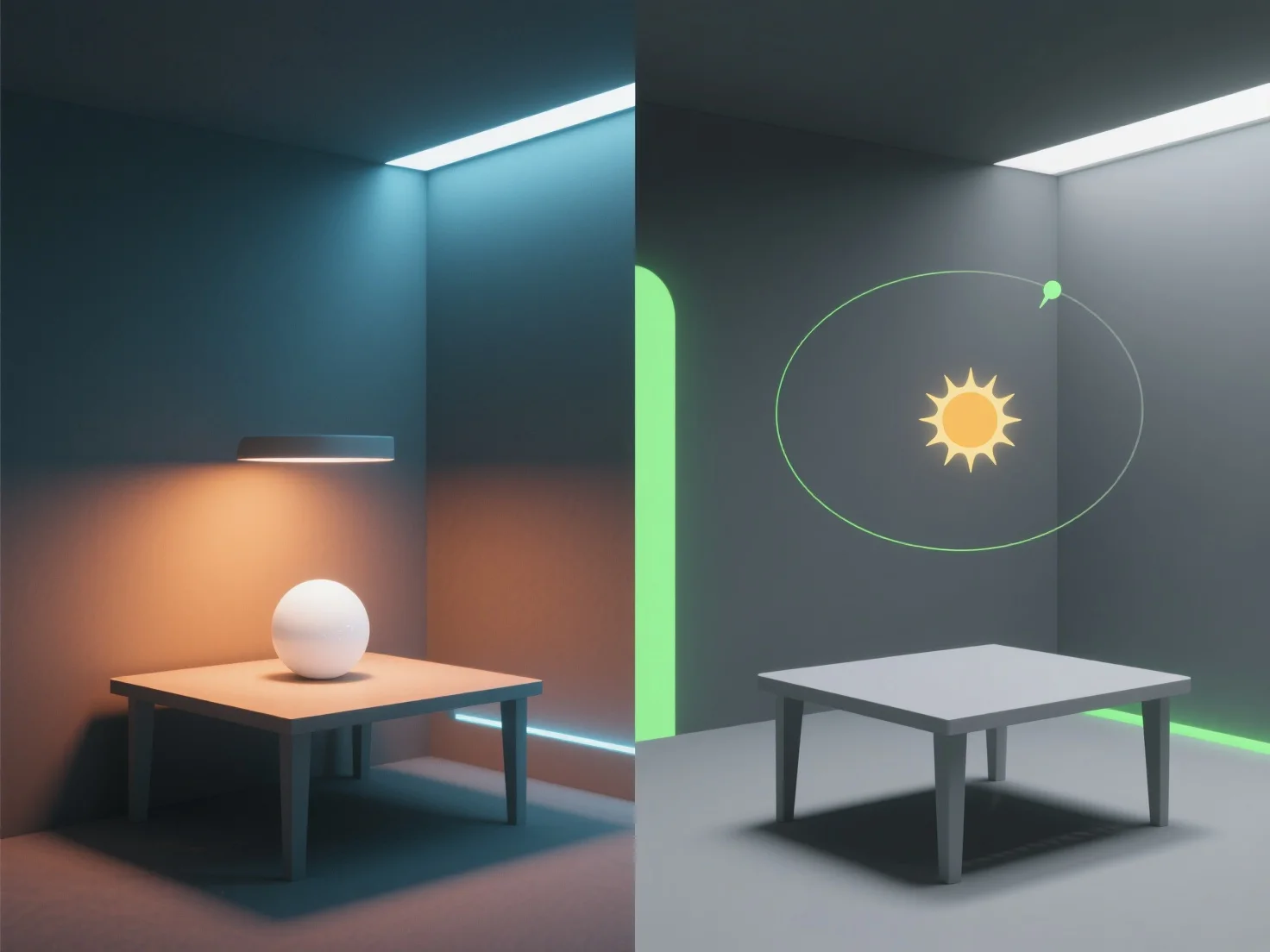
Baking lighting precomputes and stores light data for static scenes, while real-time calculates dynamically for dynamic ones.

What is the difference between baking lighting and real-time lighting in 3D environments?

The core difference between baking lighting and real-time lighting in 3D environments lies in the timing of light calculation: baking precomputes and stores light data, while real-time calculates it dynamically during rendering.

Baking lighting (precomputed lighting) pre-calculates light interactions (e.g., shadows, ambient occlusion) during production and saves them into textures (like lightmaps) for later rendering. Real-time lighting (dynamic lighting) computes light effects on the fly as the scene runs, adapting to changes in light sources, object positions, or camera angles.

For static 3D scenes (e.g., architectural visualization, fixed game levels), baking lighting is ideal—it reduces real-time GPU load and ensures consistent, high-quality lighting. For dynamic scenes (e.g., games with moving characters/lights, interactive simulations), real-time lighting is better, as it instantly adjusts to environmental changes.

Choose baking lighting for static projects prioritizing performance; opt for real-time lighting when dynamic light responses are needed.

PreviousNext
Producto
Web Studio
Plataforma API
Funciones
Imagen a 3D
Multivista a 3D
Relieve
Segmentación
Modelos
Modelo general
Modelo de retrato
Recursos
Blog
Preguntas frecuentes
Documentación API
Acerca de nosotros
Precios