


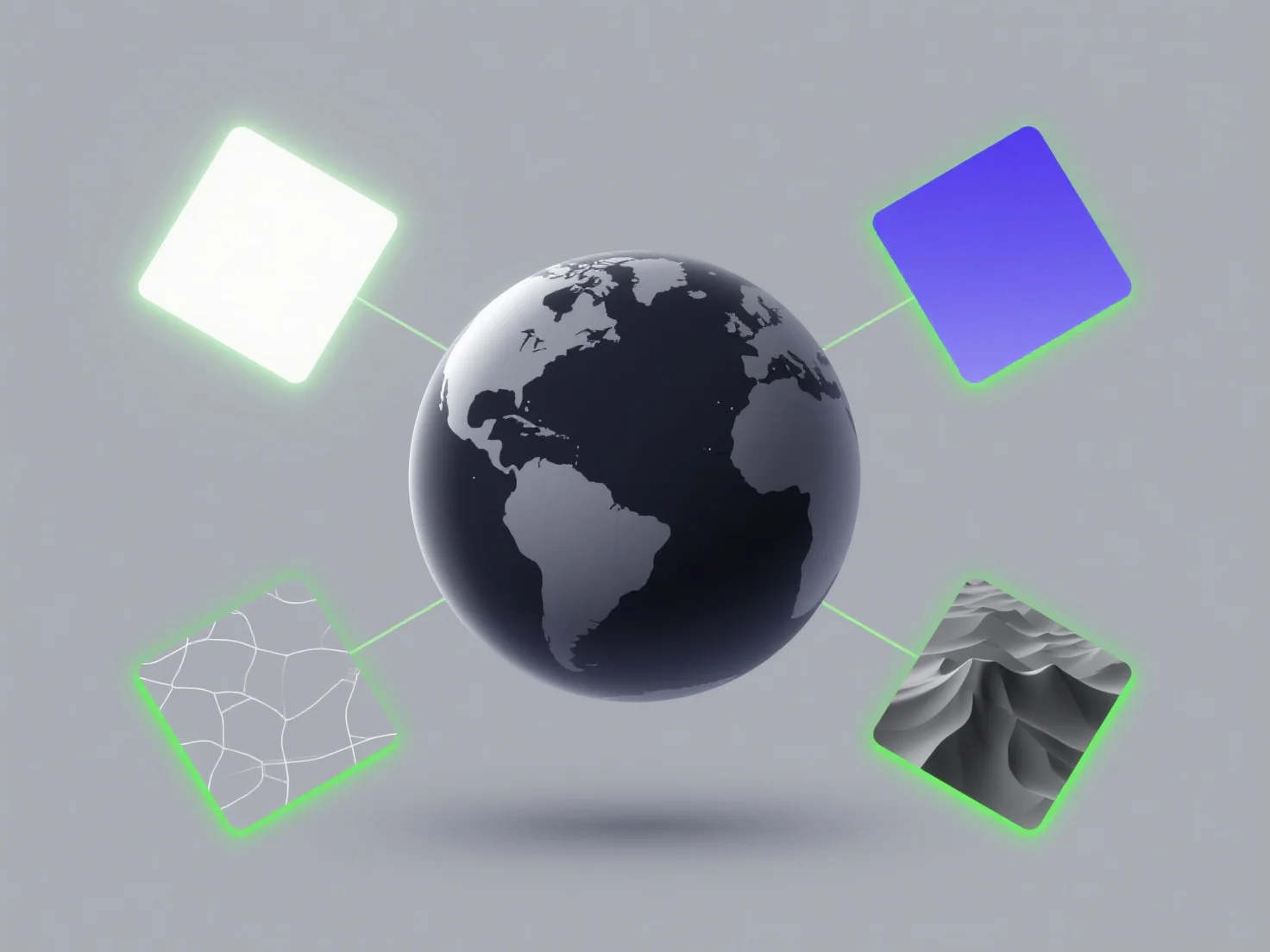
Los tipos comunes de mapas de textura incluyen mapas difusos, especulares, normales, de relieve, de albedo, de rugosidad y de desplazamiento, cada uno de los cuales simula propiedades específicas de la superficie para mejorar el realismo de los modelos 3D.
- Mapas difusos/albedo: Definen el color base de una superficie. El albedo a menudo excluye los efectos de iluminación para lograr un tono de material consistente, mientras que el difuso puede incluir sombreado básico. - Mapas especulares/rugosidad: Controlan la reflectividad. Los mapas especulares ajustan la intensidad de los reflejos (por ejemplo, brillo metálico), mientras que los mapas de rugosidad determinan acabados mate (alta rugosidad) o brillantes (baja rugosidad). - Mapas normales/de relieve: Añaden detalles a la superficie sin polígonos adicionales. Los mapas normales utilizan valores RGB para simular la dirección de la superficie en 3D.
Estos mapas equilibran colectivamente la calidad visual y el rendimiento, lo cual es crucial en el modelado 3D, los juegos y la animación para crear superficies realistas.