


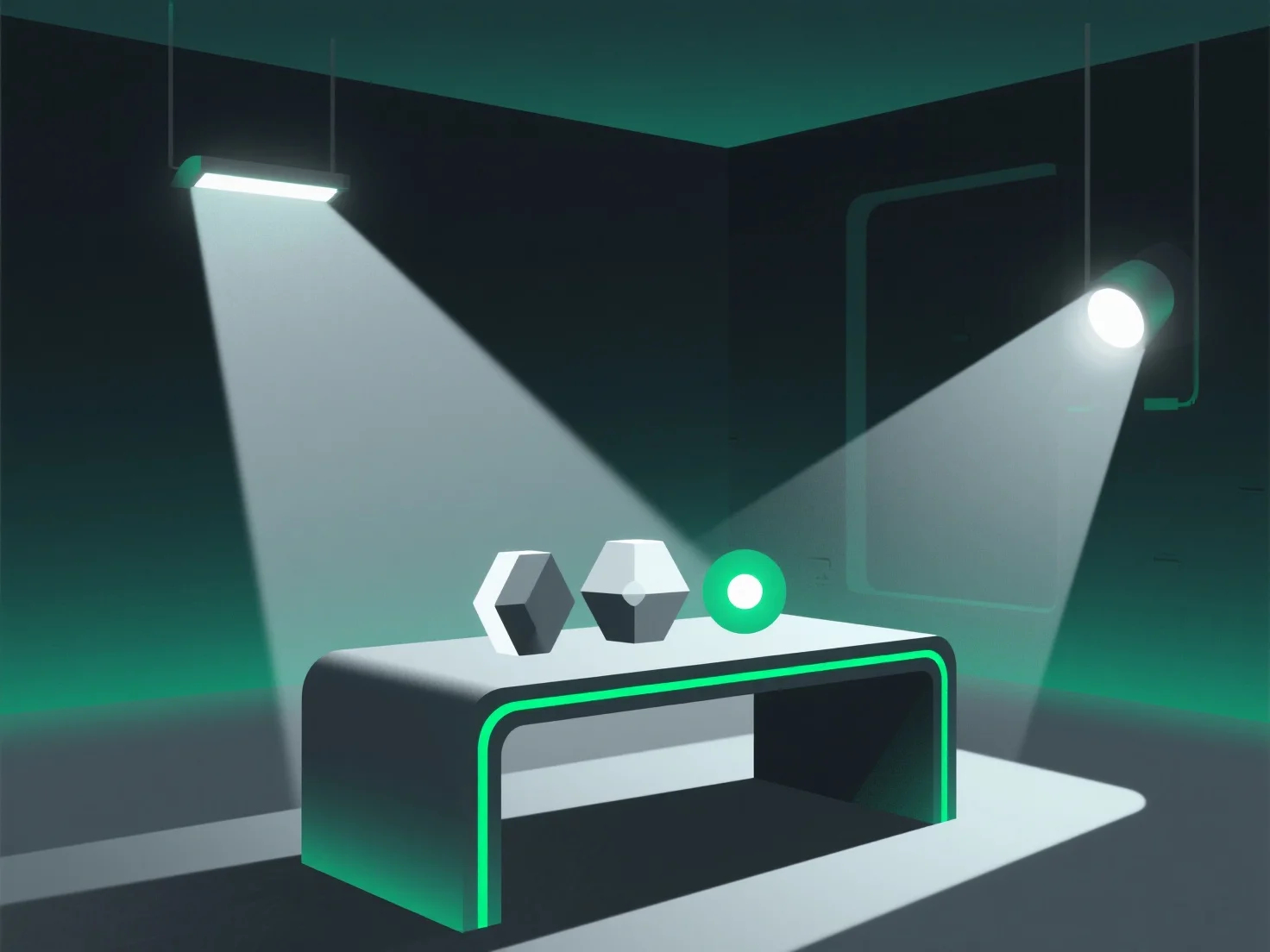
Las mejores prácticas para iluminar una escena 3D en interiores se centran en imitar la lógica natural, equilibrar las fuentes de luz y alinearse con el propósito de la escena para mejorar la profundidad y el realismo.
Comience con una luz clave (fuente primaria) para establecer la dirección y el estado de ánimo. Por ejemplo, luz cálida y difusa para una sala de estar acogedora o luz más fría y direccional para una oficina moderna.
Añade luz de relleno para suavizar las sombras duras, utilizando una intensidad inferior a la de la luz clave para mantener el contraste sin aplanar demasiado la escena.
Incorpora luz de borde para resaltar los bordes
Manténlo simple: construye gradualmente, ajusta la intensidad y la temperatura del color para que coincida con el contexto de la escena, y evita complicarlo demasiado para obtener resultados naturales e inmersivos.