


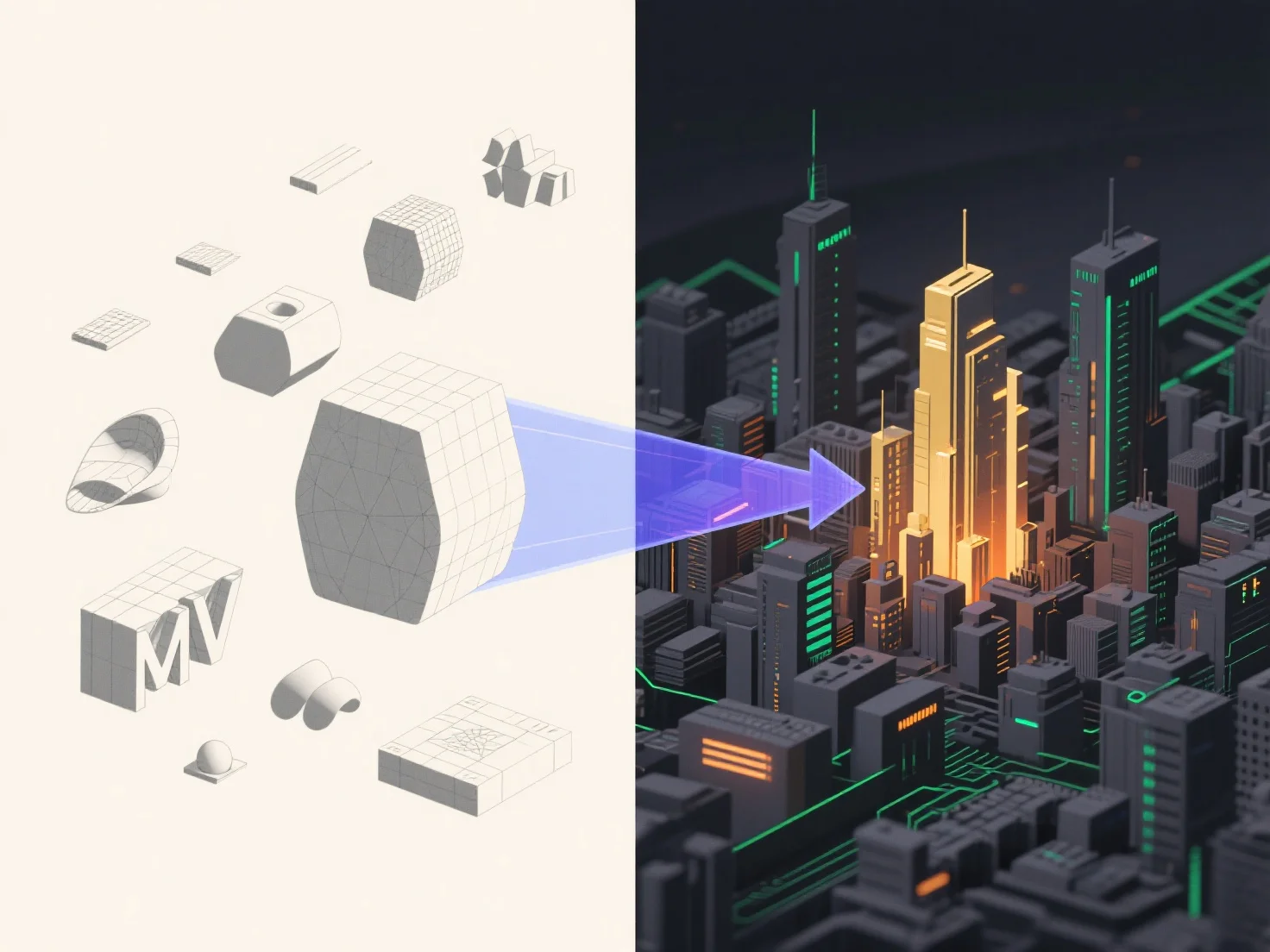
Para el modelado procedimental en la producción 3D, Houdini ofrece ventajas clave sobre Maya, incluyendo un sistema basado en nodos más robusto y flujos de trabajo no destructivos superiores.
Su arquitectura de gráfico de nodos permite a los artistas construir modelos a través de nodos interconectados, lo que facilita el ajuste de parámetros y la iteración sin alterar la estructura original. Ideal para diseños complejos y en evolución.
El conjunto de herramientas procedimentales de Houdini es inherentemente más profundo: las características integradas como Houdini Engine simplifican la integración de la pipeline, mientras que Maya a menudo depende de plugins de terceros para una complejidad similar.
También escala mejor para proyectos a gran escala.
Estas fortalezas hacen que Houdini sea más eficiente para el modelado procedimental iterativo y complejo en la producción.