


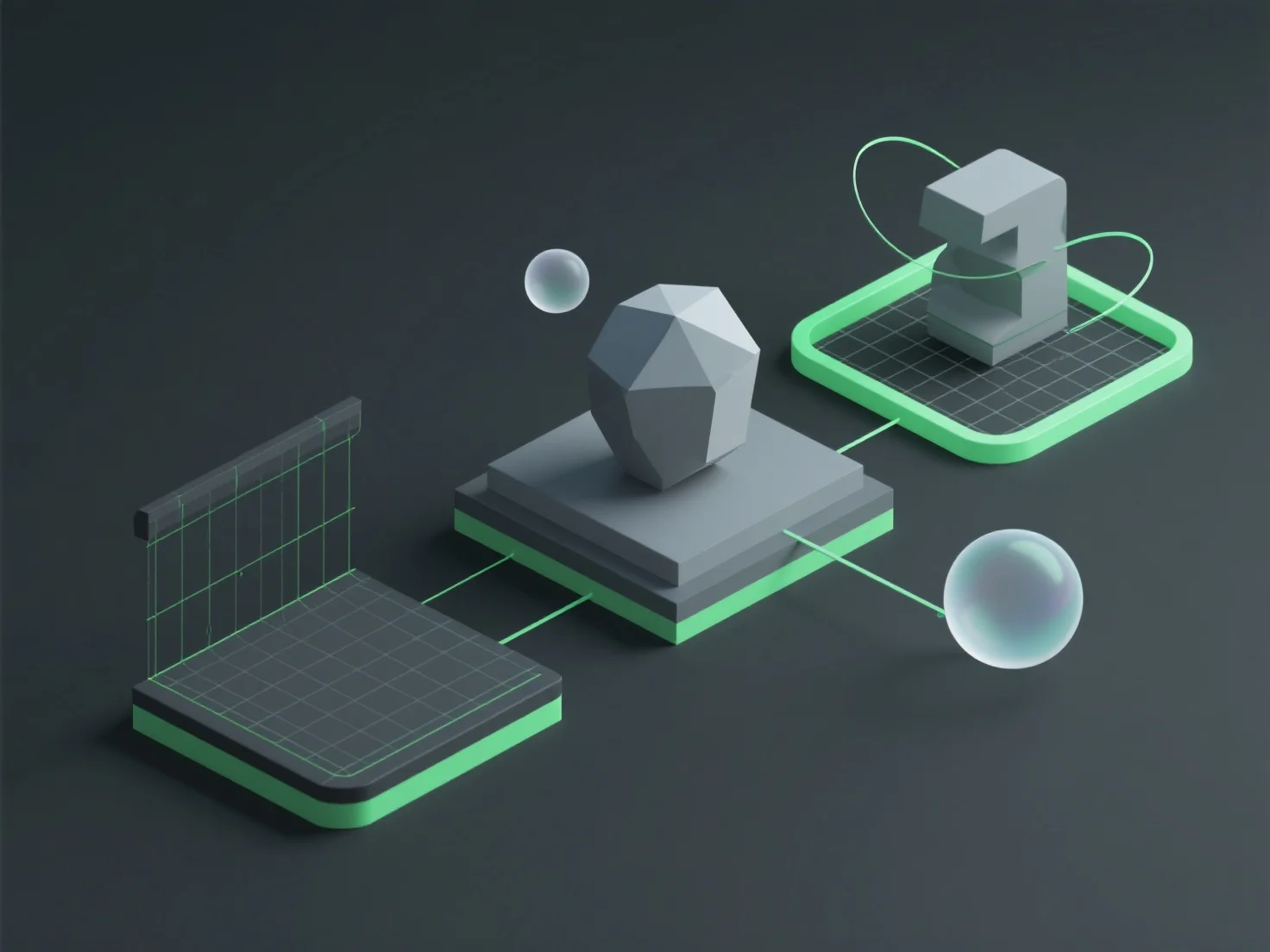
La retroalimentación se integra de forma iterativa en todas las etapas del modelado 3D a través de ciclos estructurados de revisión y ajuste.
En la fase de concepto, la retroalimentación refina las ideas iniciales. Revisión de la intención de diseño o de referencias. Alineación con los objetivos, elaboración de bocetos o paneles de inspiración.
Durante el modelado, la retroalimentación se centra en la precisión de la geometría, las proporciones o la topología, lo que provoca ediciones de mallas, ajustes del flujo de bordes o adiciones de detalles.
Para la texturización, la retroalimentación guía el realismo del material, el color o los detalles de la superficie a través del mapa de textura (albedo, normal) o ajustes de las propiedades del material.
En el rigging/animación, la retroalimentación asegura la autenticidad del movimiento, la flexibilidad de las articulaciones y el tiempo de los fotogramas clave, lo que conduce a mejoras en el rigging o la curva de animación.
Durante el renderizado, la retroalimentación se centra en la iluminación, la composición o la atmósfera, ajustando las fuentes de luz, los ángulos de la cámara o el procesamiento posterior.
Las herramientas de anotación ayudan a rastrear los cambios, manteniendo la retroalimentación accionable y las revisiones trazables.