


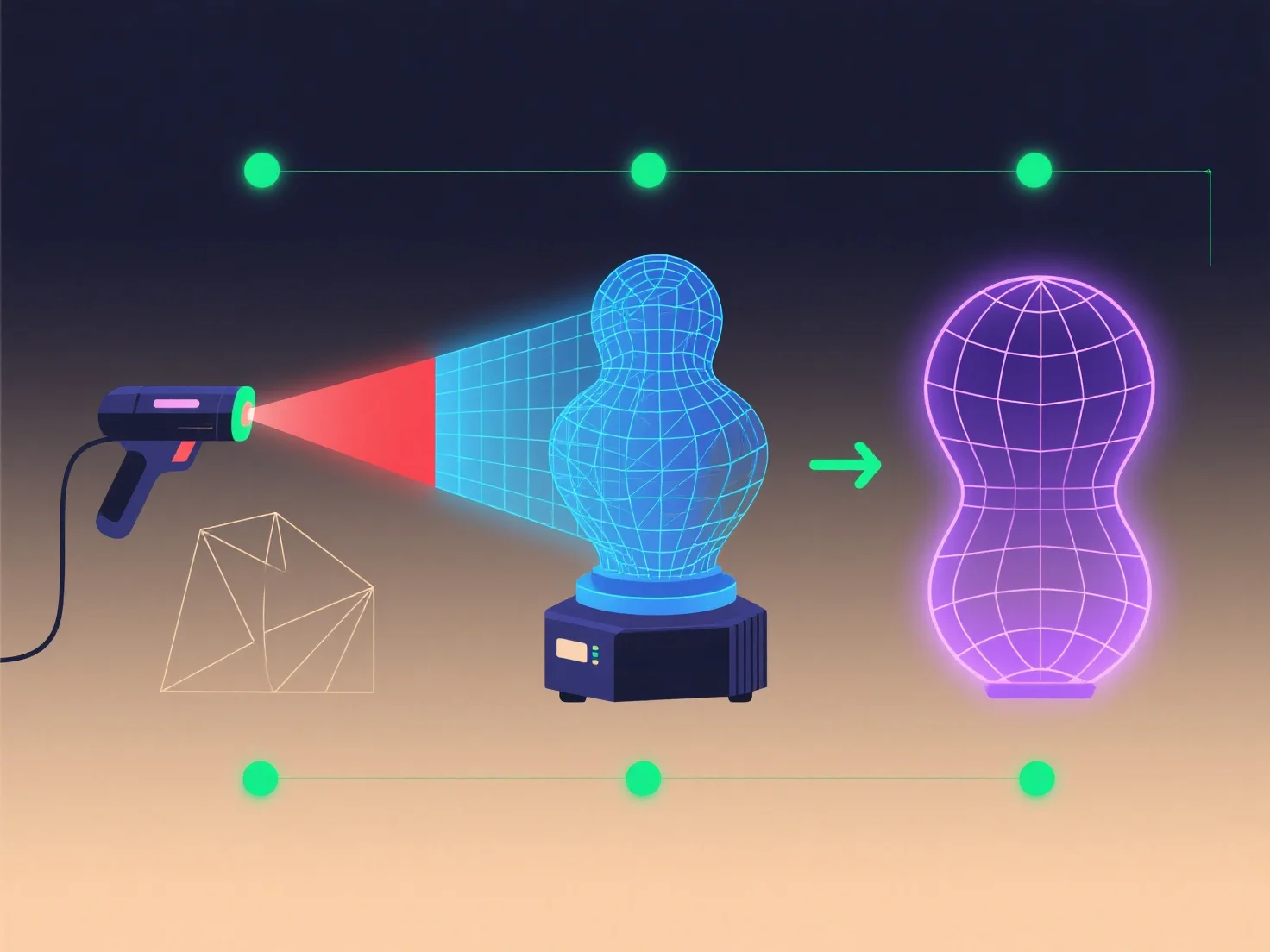
La tecnología de escaneo 3D está evolucionando hacia una mayor precisión, una captura de datos más rápida y una mayor accesibilidad, impulsada por los avances en la tecnología de sensores y la integración de la IA. Estos avances mejoran la precisión, reducen el tiempo de escaneo y disminuyen las barreras de entrada, expandiendo su uso en todas las industrias.
- **Mayor precisión**: La nueva tecnología de sensores y algoritmos de calibración aumentan la resolución, permitiendo escaneos detallados de implantes médicos y piezas aeroespaciales, con márgenes de error ahora por debajo de 0,1 mm en dispositivos de primer nivel. - **Captura de datos más rápida**: El procesamiento impulsado por IA agiliza la generación de nubes de puntos, reduciendo los tiempos de escaneo de horas a minutos. Esto es fundamental para aplicaciones en tiempo real como la ingeniería inversa. - **Mayor accesibilidad**: Escáneres portátiles de grado de consumidor.
Esta evolución posiciona el escaneo 3D como una herramienta versátil para la creación de prototipos, la preservación del patrimonio cultural y mucho más.