


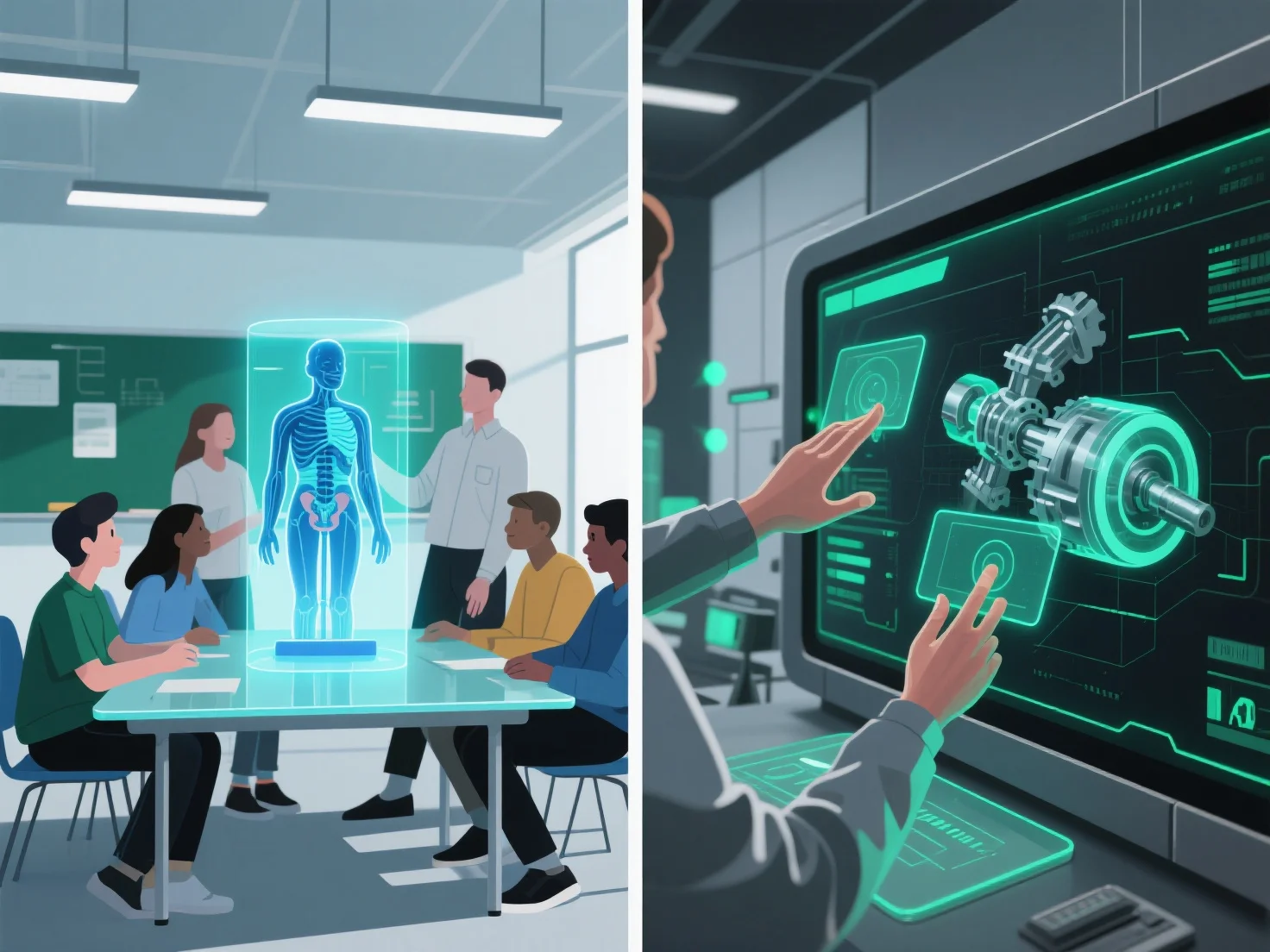
El modelado 3D se aplica ampliamente en educación y capacitación para crear herramientas de aprendizaje interactivas y visuales que mejoran la comprensión de conceptos complejos a través de experiencias inmersivas.
En la educación biológica, los modelos anatómicos en 3D muestran vívidamente las estructuras de los órganos y las relaciones espaciales, haciendo que la anatomía abstracta sea tangible para que los estudiantes exploren detalles como las capas de tejido o las conexiones de los órganos.
En la formación de ingeniería, los modelos de piezas mecánicas en 3D permiten el desmontaje y montaje simulados, lo que permite a los estudiantes practicar operaciones de manera segura, repetidamente y sin las limitaciones de los equipos físicos.
En geografía o historia, los modelos de terreno en 3D o de sitios históricos ayudan a visualizar formas de relieve, arquitecturas antiguas o procesos geológicos, convirtiendo las descripciones estáticas de los libros de texto en contenido dinámico y atractivo.
Estas aplicaciones aumentan el compromiso con el aprendizaje, mejoran la retención del conocimiento y simplifican temas complejos. Los educadores pueden utilizar herramientas 3D fáciles de usar para desarrollar modelos personalizados adaptados a las necesidades del curso, mejorando aún más la eficacia de la enseñanza.