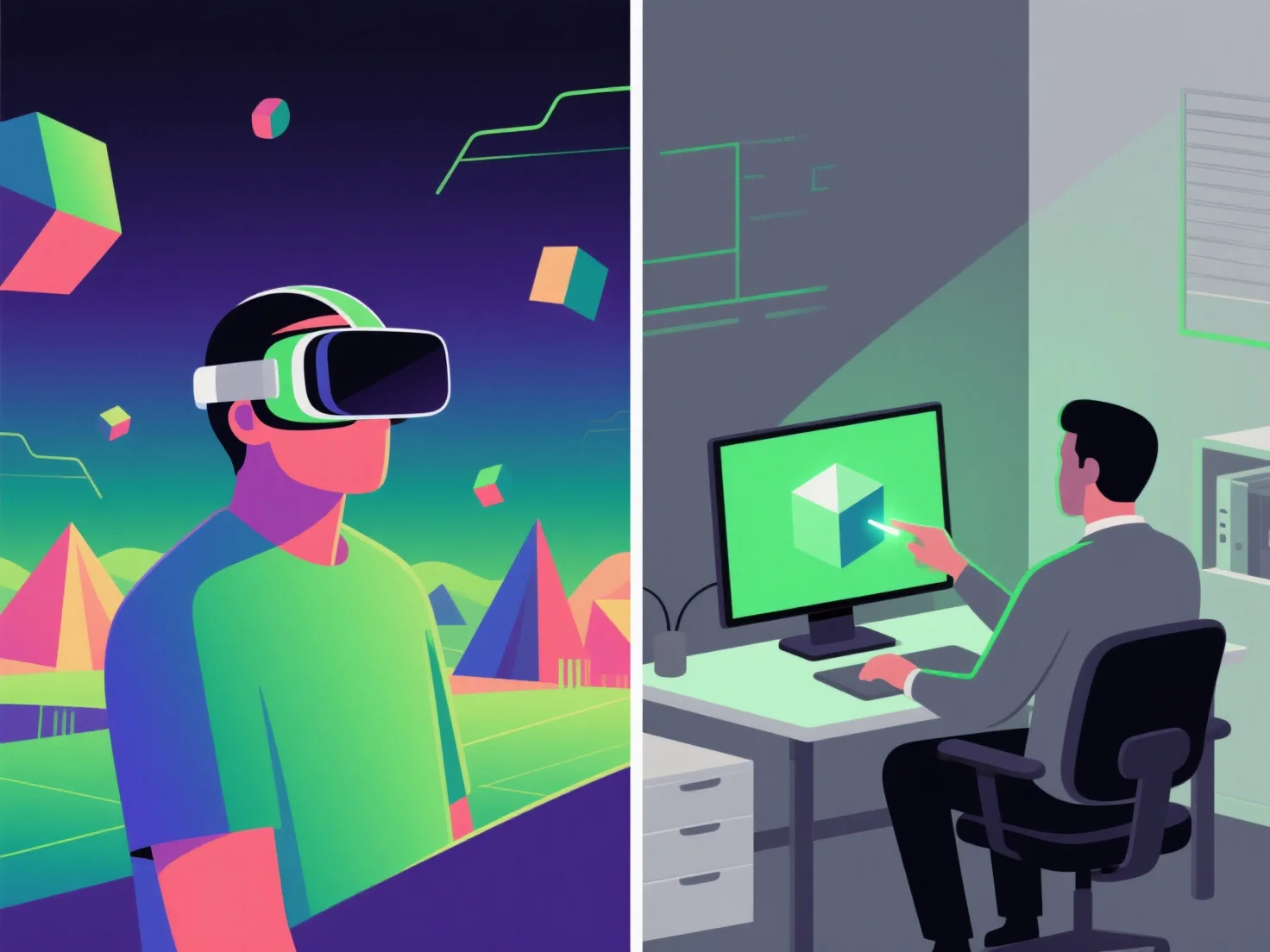
La presentación 3D basada en RV difiere de las experiencias 3D de escritorio principalmente en la profundidad de inmersión, los métodos de interacción y el enfoque de los casos de uso. La RV utiliza pantallas montadas en la cabeza para ofrecer un entorno virtual 360° completamente cerrado, creando una fuerte presencia espacial en la que los usuarios se sienten «dentro» del espacio 3D. En contraste, la 3D de escritorio presenta modelos 3D en una pantalla plana con ángulos de visión fijos, ofreciendo una inmersión limitada. La interacción de la RV se basa en movimientos corporales naturales, como el seguimiento de manos, la rotación de la cabeza o el control de gestos, para una interacción intuitiva con objetos 3D. Sin embargo, la 3D de escritorio utiliza el ratón, el teclado o entradas táctiles para manipular modelos en la pantalla, con una implicación física menor. La RV sobresale en escenarios que requieren una inmersión profunda, como simulaciones de entrenamiento o juegos inmersivos. La 3D de escritorio es ideal para tareas basadas en pantallas, como vistas previas de arquitectura o demostraciones educativas, donde una visualización 3D rápida y accesible es suficiente. En resumen, la RV prioriza la inmersión y la interacción natural, mientras que la 3D de escritorio ofrece un acceso 3D práctico y limitado a la pantalla.


¿Cómo difiere la presentación 3D basada en RV de las experiencias 3D de escritorio?
El 3D basado en RV difiere del 3D de escritorio en cuanto a la profundidad de inmersión, los métodos de interacción y el enfoque de los casos de uso.