


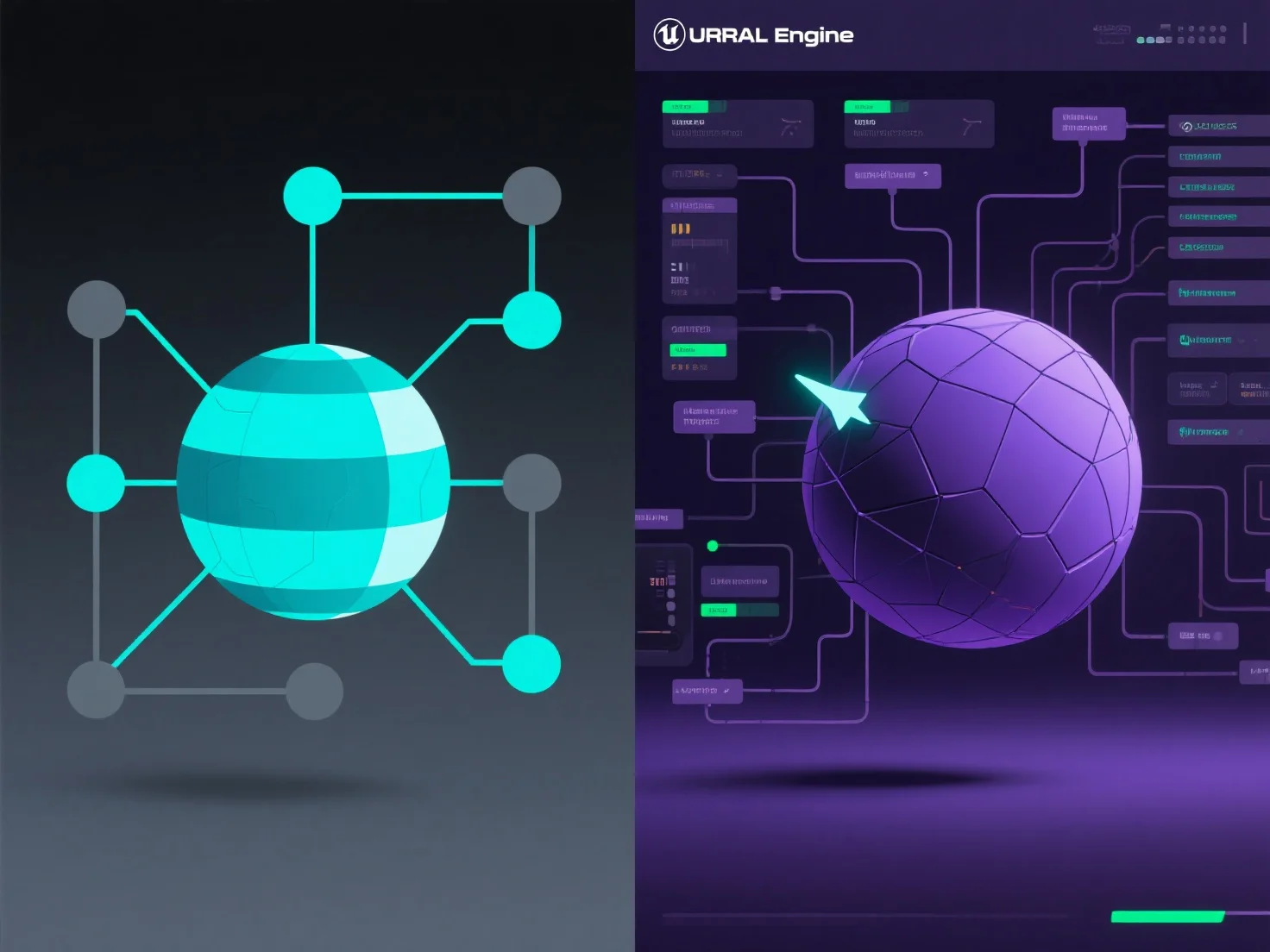
Al texturizar, el sistema de materiales de Unity generalmente utiliza gráficos de sombreadores para ajustes en tiempo real y fáciles de usar, mientras que el motor de Unreal emplea un complejo editor de materiales basado en nodos con parámetros PBR avanzados integrados.
Unity prioriza la accesibilidad, lo que permite una iteración rápida. Es ideal para proyectos independientes o principiantes. Sus gráficos de shader simplifican la configuración de texturas con controles intuitivos, reduciendo las barreras técnicas.
Sin embargo, Unreal ofrece una personalización más profunda para imágenes de alta fidelidad, integrando funciones avanzadas de materiales directamente en su editor. Esto satisface las necesidades de texturización detalladas y de nivel profesional, como la interacción precisa con la luz o los efectos complejos de la superficie.
En resumen, Unity se adapta a flujos de trabajo de texturización accesibles y rápidos, mientras que Unreal sobresale en el control de materiales complejos y de alta calidad.