


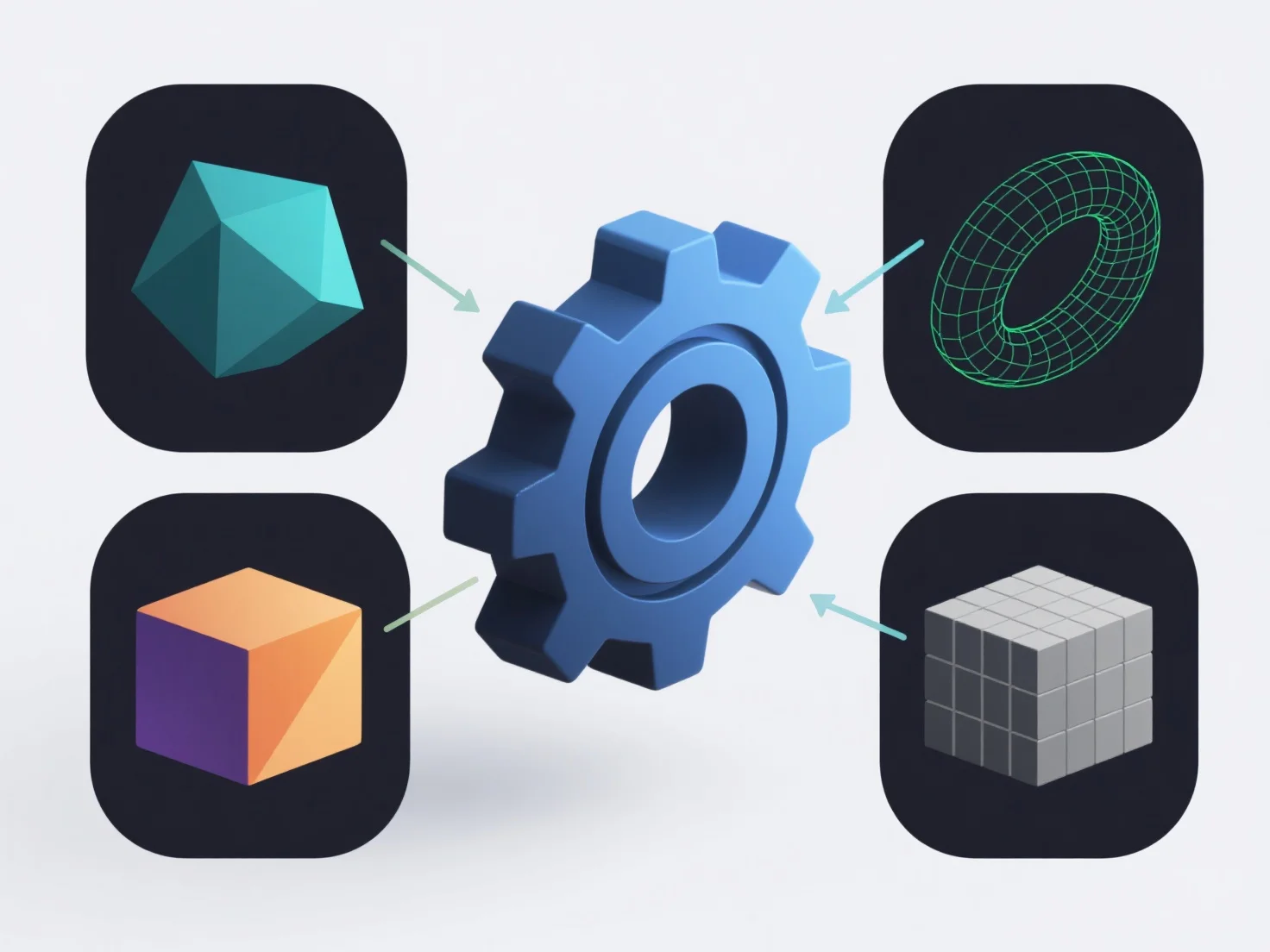
La elección de los formatos de archivo 3D afecta directamente el rendimiento al influir en el tamaño de los datos, la velocidad de carga y la compatibilidad con el software o el hardware.
Formatos comprimidos.
Formatos con estructuras de datos optimizadas.
En general, seleccionar el formato adecuado equilibra estos factores para garantizar un rendimiento fluido del modelo 3D en todas las aplicaciones.