


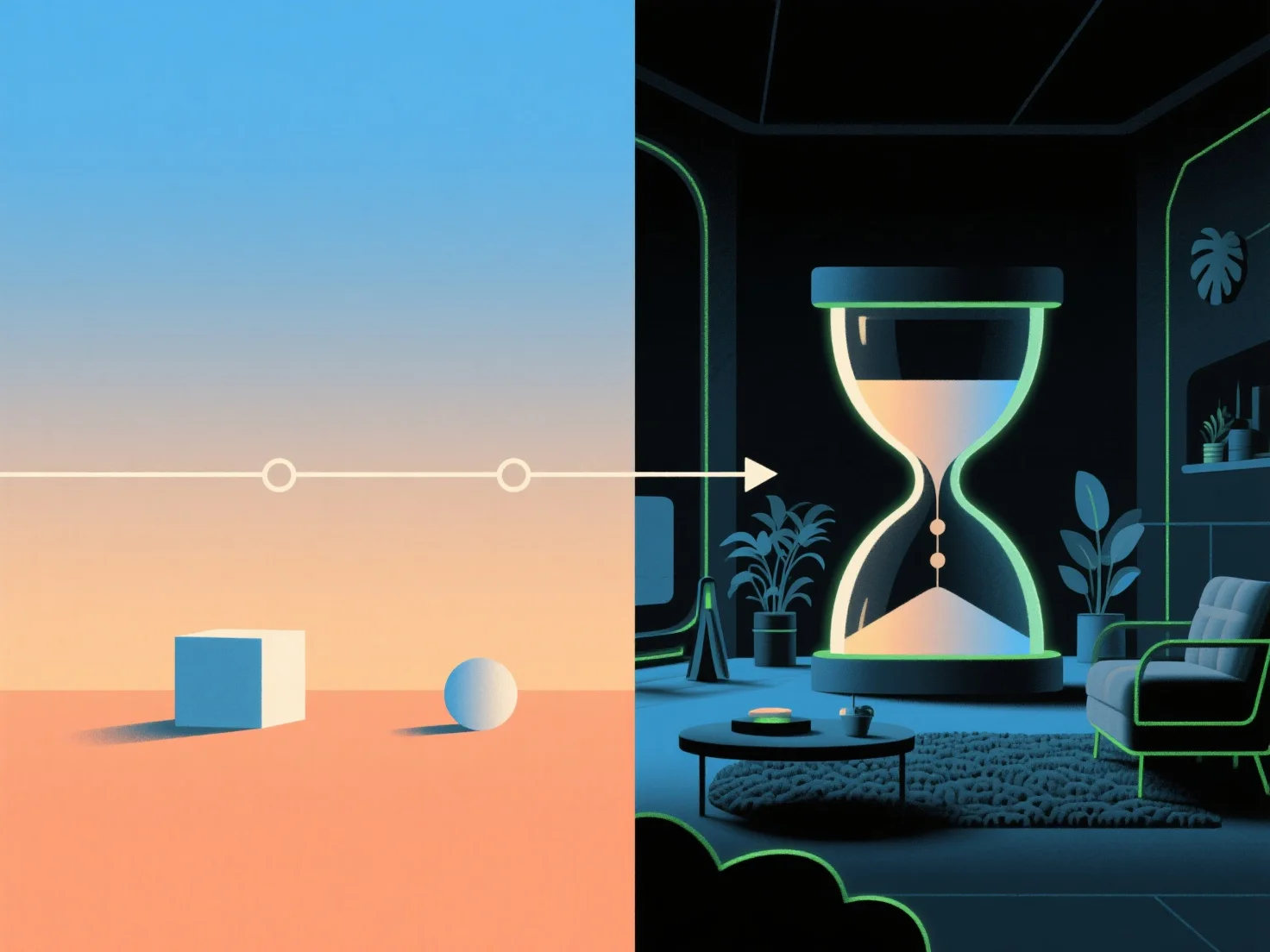
La complejidad de la escena hace que el tiempo de renderizado en 3D aumente de manera no lineal; un mayor número de polígonos, detalles de textura y demandas de iluminación conducen a tiempos de procesamiento exponencialmente más largos.
Los factores clave de complejidad que impulsan los costos de tiempo incluyen: - Cantidad de polígonos: Más geometría requiere que el renderizador procese vértices y bordes adicionales, lo que aumenta la carga computacional. - Resolución de texturas: Las texturas de mayor resolución significan archivos de datos más grandes, lo que ralentiza el mapeo de texturas y los cálculos de sombras. - Fuentes de luz: Cada luz añadida requiere cálculos de proyección de sombras, reflexión y refracción, lo que multiplica las necesidades de procesamiento. - Sombra/iluminación global: Efectos de iluminación avanzados.
Ejemplos prácticos: Los renders arquitectónicos con muebles detallados y más de 10 luces pueden pasar de 30 minutos a más de 3 horas; las escenas de VFX de películas con sistemas de partículas o niebla volumétrica pueden tardar días por fotograma.
Para reducir los costos de tiempo, simplifique la geometría.