


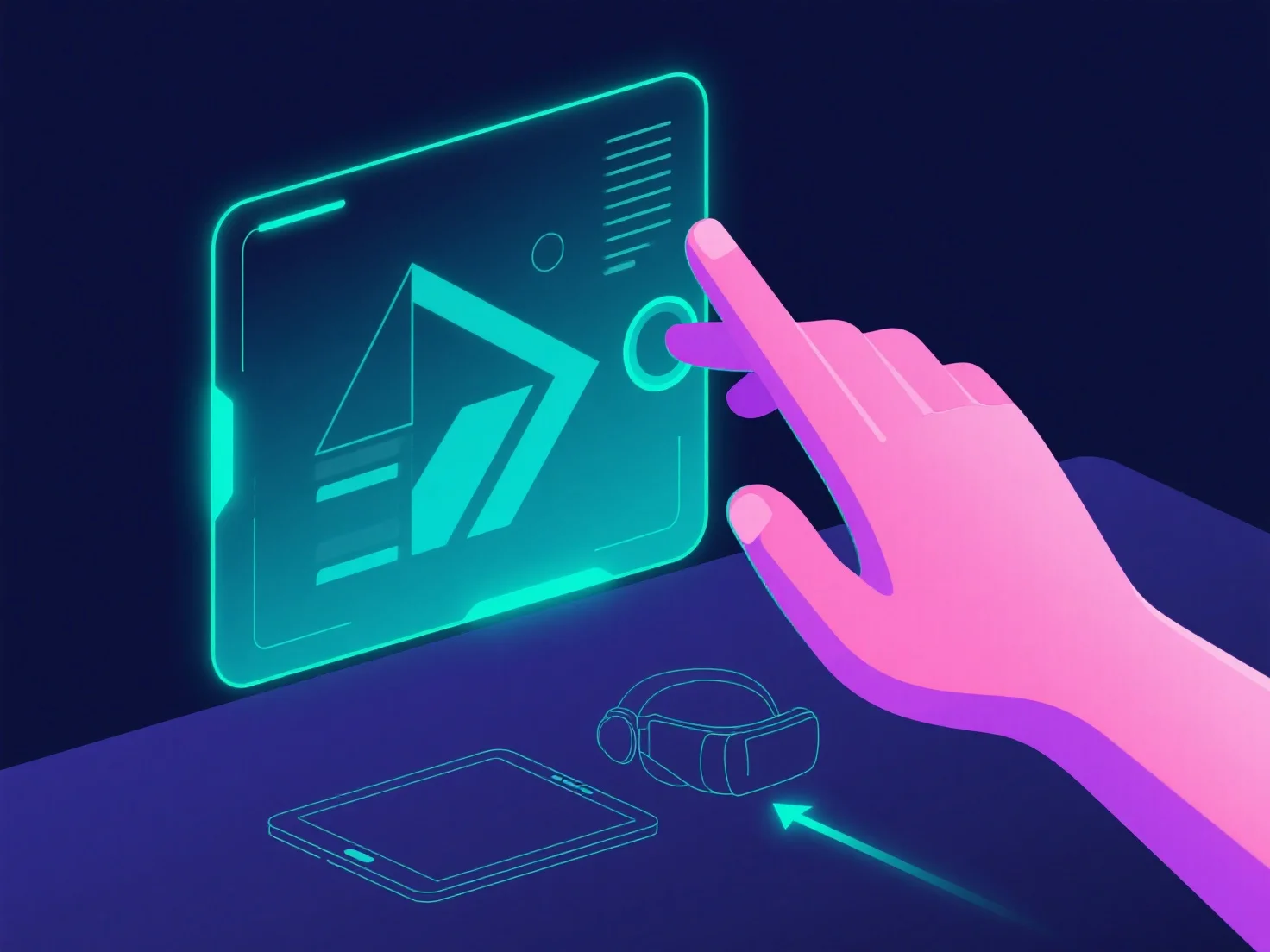
Die wichtigsten aufkommenden Trends in 3D-Interaktionstechnologien umfassen fortschrittliches haptisches Feedback, KI-gesteuerte adaptive Schnittstellen und plattformübergreifende Kompatibilität, die alle darauf ausgerichtet sind, natürliche, benutzerzentrierte Erfahrungen zu verbessern.
Erweiterte haptische Rückmeldungen erhöhen den Realismus, indem sie Textur, Gewicht und Widerstand simulieren und es Benutzern ermöglichen, virtuelle Objekte zu "fühlen". Zum Beispiel können sie in 3D-Umgebungen durch taktile Reaktionen zwischen einer glatten und einer rauen Oberfläche unterscheiden.
KI-gesteuerte adaptive Schnittstellen analysieren das Nutzerverhalten (Gesten, Präferenzen), um Interaktionen in Echtzeit anzupassen und manuelle Eingaben zu reduzieren. Beispielsweise kalibrieren Systeme Steuerungen automatisch für erstmalige Nutzer, was 3D-Tools intuitiver macht.
Die plattformübergreifende Kompatibilität gewährleistet nahtlose 3D-Interaktionen auf verschiedenen Geräten (VR-Headsets, Smartphones, AR-Brillen) und ermöglicht es Benutzern, zwischen Plattformen zu wechseln, ohne die Einstellungen neu konfigurieren zu müssen, was die Zugänglichkeit verbessert.
Diese Trends machen 3D-Interaktionen insgesamt immersiver und zugänglicher und schließen die Lücken zwischen virtuellen und physischen Erfahrungen für sowohl Gelegenheits- als auch professionelle Nutzer.