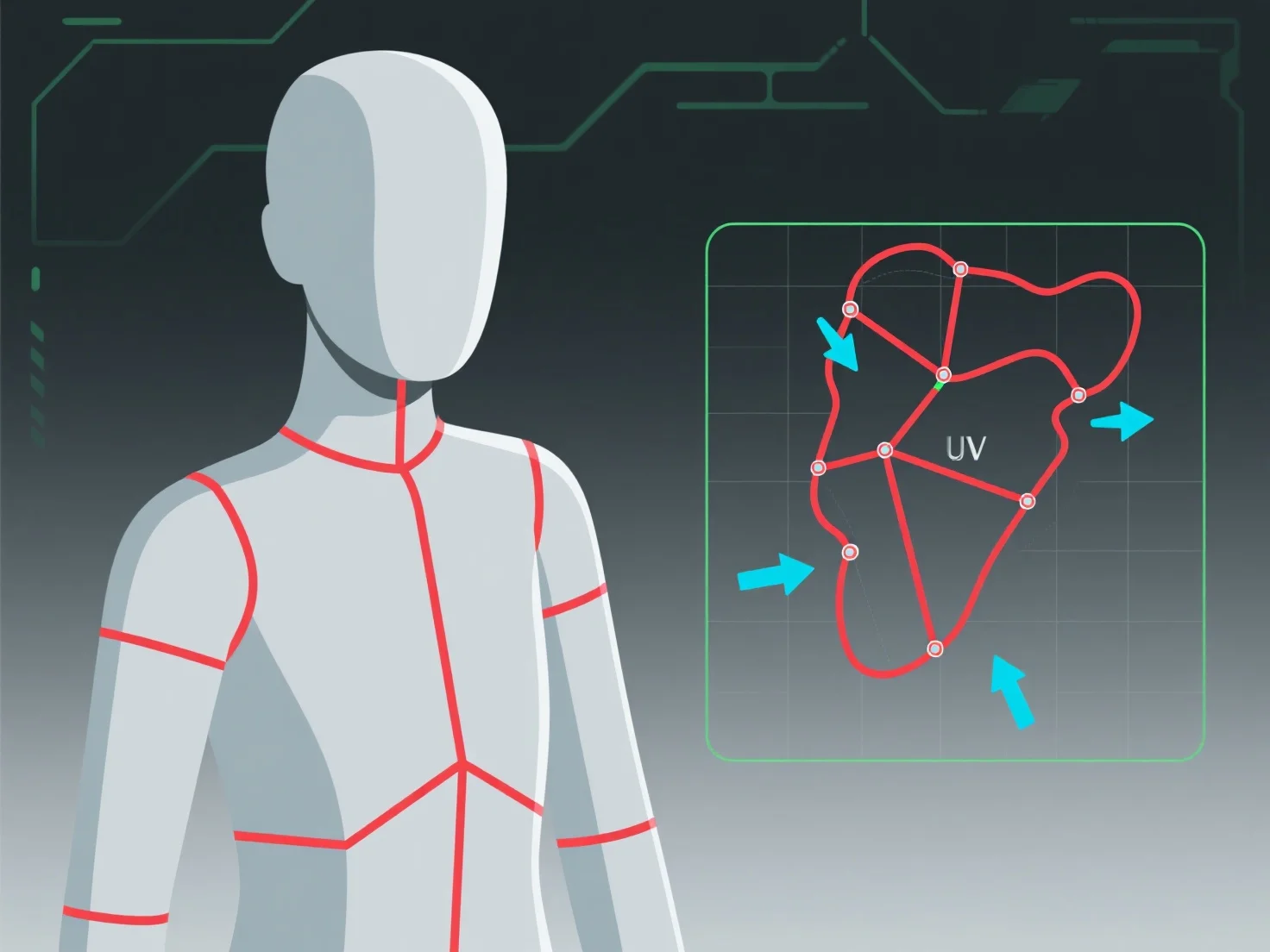
UV seams in 3D model topology are boundaries that define how a 3D model’s surface is unfolded into a 2D UV map, enabling accurate texture application.
- **Unfolding guide**: They split the 3D surface into manageable sections, allowing it to lay flat in 2D without overlapping, a key step for texture mapping. - **Prevent distortion**: By dividing the model, seams reduce texture stretching or warping, ensuring patterns, decals, or details align naturally on the 3D surface. - **Workflow bridge**: They connect 3D modeling and texturing workflows, letting artists apply 2D textures that wrap correctly around 3D geometry.
Strategic placement along natural edges (e.g., character joints) also minimizes seam visibility, enhancing final texture quality.