


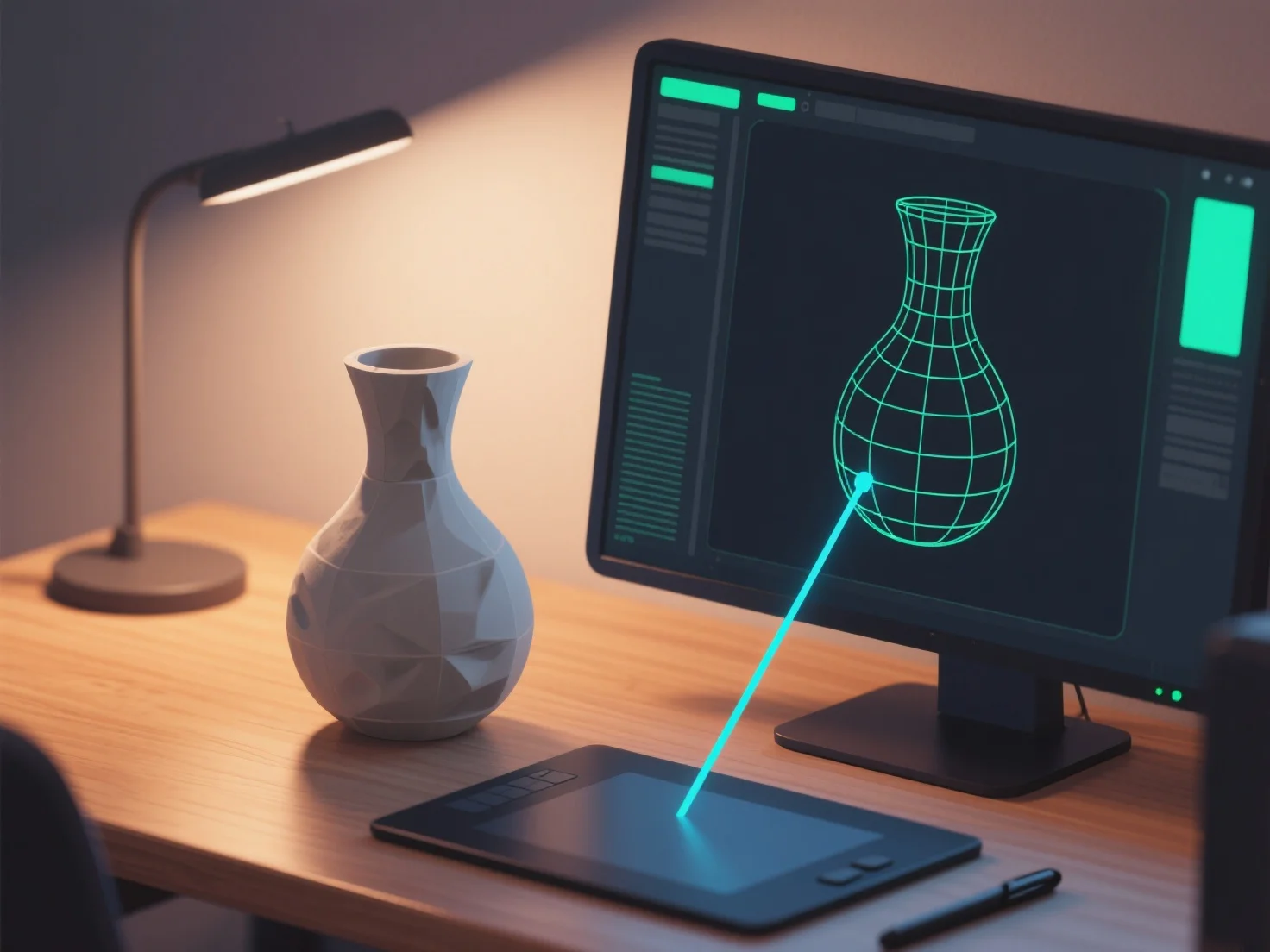
Für Anfänger, die realistische 3D-Modelle erstellen, liegt der Fokus auf der Beherrschung der Grundlagen, der Verwendung von Referenzen und der Verfeinerung von Details, um lebensechte Ergebnisse zu erzielen.
Beginnen Sie mit einfachen Formen: Starten Sie mit Würfeln, Kugeln oder Zylindern, um die Proportionen zu verstehen; vermeiden Sie komplexe Formen in der Anfangsphase. Dies bildet eine Grundlage für eine genaue Skalierung und Strukturierung.
Verwenden Sie Referenzbilder: Studieren Sie Fotos des Zielobjekts, um wichtige Details zu erfassen.
Fügen Sie subtile Details hinzu: Verbessern Sie den Realismus mit kleinen Details wie Oberflächentexturen (Rauheit, Glanz) oder weichen Schatten; diese Elemente lassen Modelle greifbar erscheinen.
Üben Sie mit Alltagsgegenständen: Modellieren Sie häufige Objekte (Tassen, Bücher), um Fertigkeiten schrittweise anzuwenden. Dies reduziert das Überwältigungsgefühl und festigt die Grundwerkzeuge.