


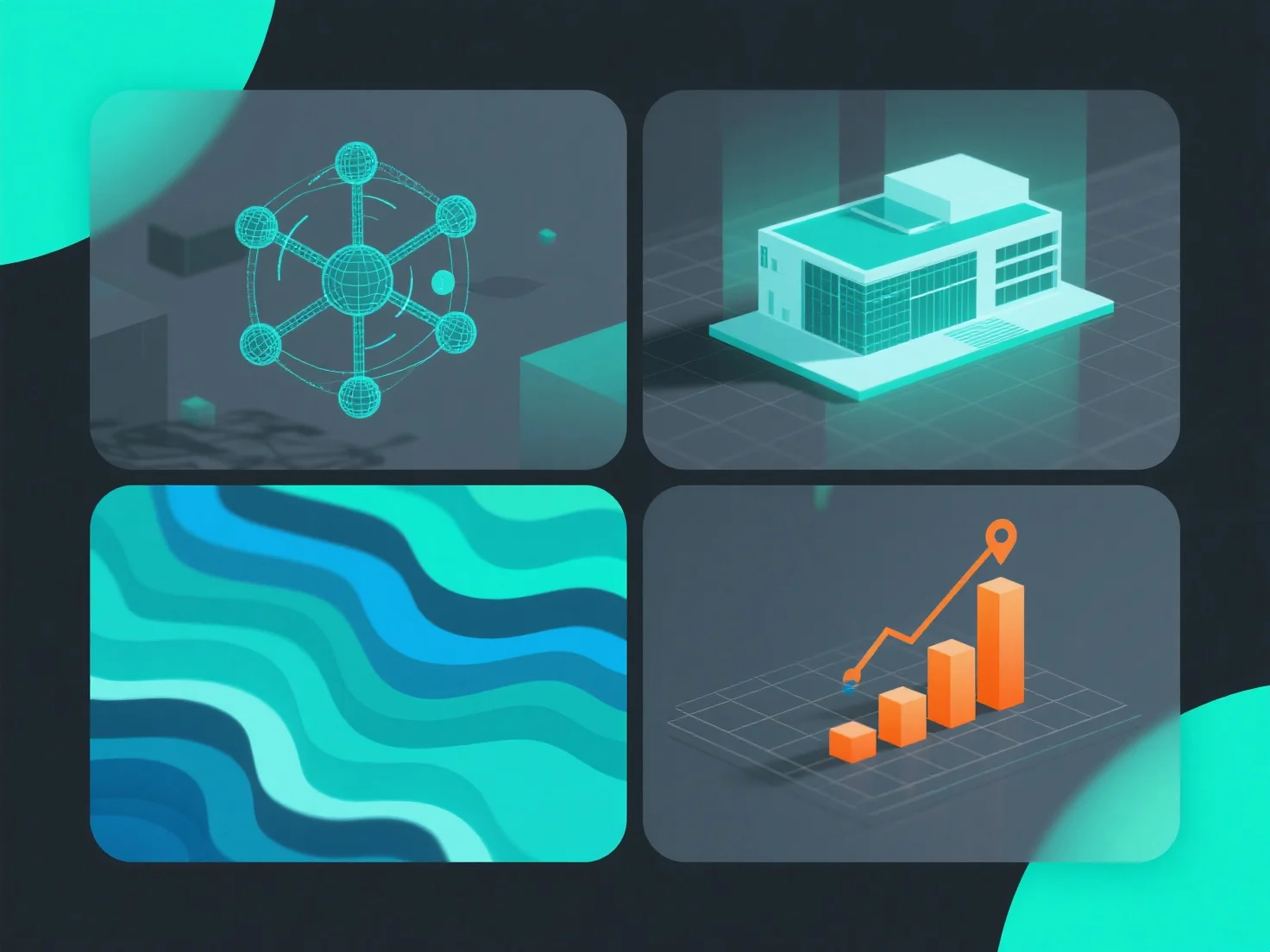
Häufige Implementierungsformen der 3D-Visualisierung umfassen typischerweise 3D-Modelle, interaktive Simulationen und Augmented Reality (AR)-Overlays, die abstrakte Daten oder Designs in greifbare visuelle Elemente umwandeln, um das Verständnis und die Interaktion zu verbessern.
- **3D-Modelle**: Statische oder dynamische digitale Darstellungen, die in der Architektur, Produktdesign und im Ingenieurwesen häufig zur detaillierten Darstellung von Strukturen oder Objekten eingesetzt werden. - **Interaktive Simulationen**: Echtzeit-Visualisierungen, die vom Benutzer gesteuert werden können und häufig in Schulungen (z. B. medizinische Simulationen) oder Produktdemos eingesetzt werden, um die Funktionalität zu demonstrieren. - **AR-Overlays**: Integrieren digitale 3D-Inhalte in die reale Welt, wie z. B. virtuelle Anprobemöglichkeiten im Einzelhandel oder räumliche Daten-Overlays in der Navigation.
Weitere Formen umfassen 3D-Renderings (statisch, für Marketingzwecke) und Virtual-Reality-Umgebungen (immersiv, für Bildung/Unterhaltung), die alle intuitiv räumliche Informationen präsentieren.