


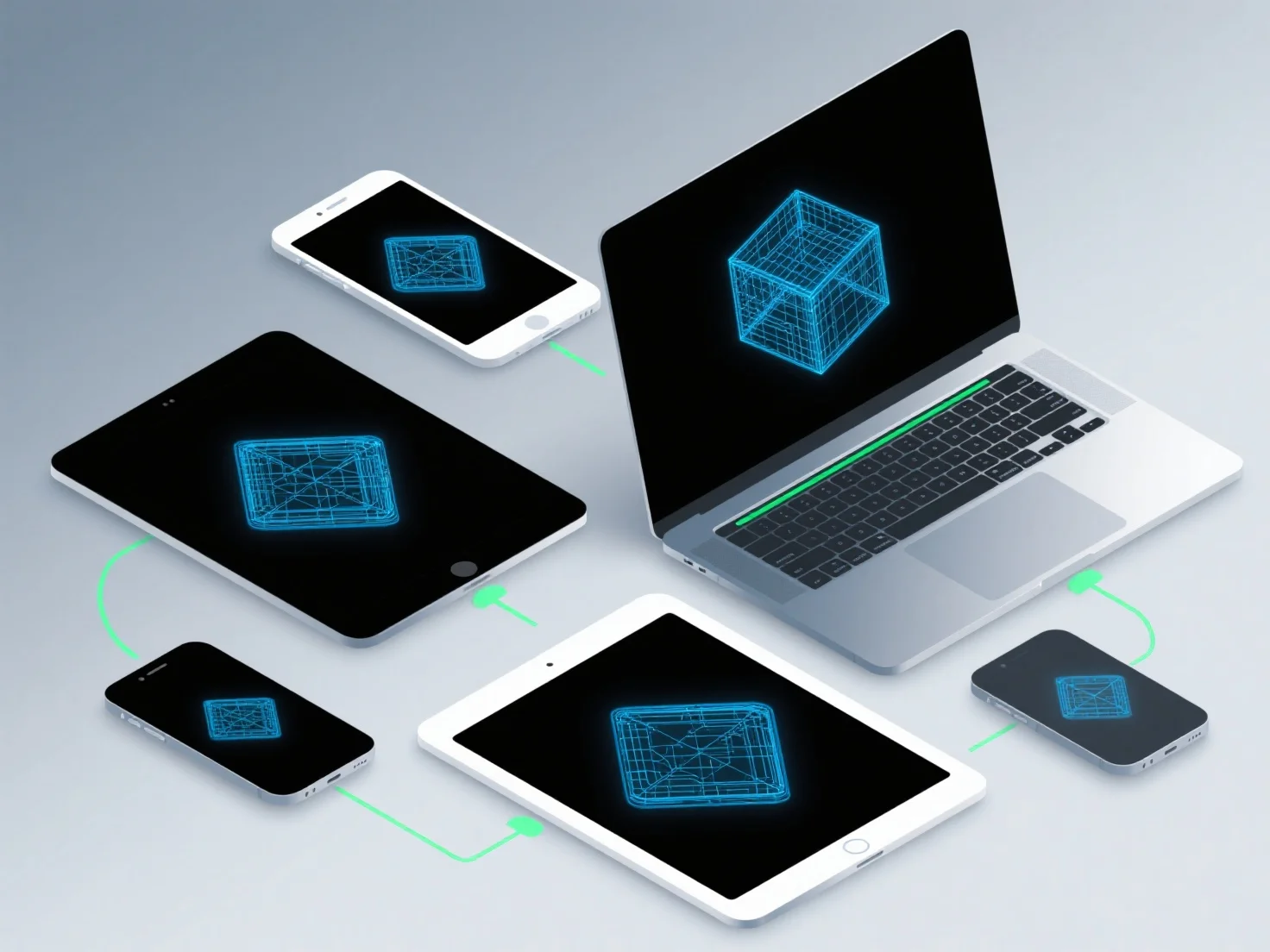
Die 3D-Technologie passt sich Multi-Geräte-Umgebungen an, indem sie die Kompatibilität und Leistung auf verschiedener Hardware optimiert und so ein konsistentes Nutzererlebnis gewährleistet.
Es optimiert 3D-Modelle durch Skalierung der Polygonanzahl und der Texturauflösung: High-End-Geräte (Workstations) verwenden detaillierte Modelle, während Mobilgeräte/Tablets vereinfachte Versionen einsetzen, um die Verarbeitungslast zu reduzieren.
Übernimmt universelle, leichte Formate.
Die Rendering-Methoden von Tailors: Echtzeit-Rendering für interaktive Geräte (Mobiltelefone, Tablets) und vorgerendertes Output für Geräte mit geringer Leistung, um die visuelle Qualität und Geschwindigkeit in Einklang zu bringen.
Diese Anpassungen ermöglichen es 3D-Inhalten, auf allen Geräten zuverlässig zu funktionieren und den Anforderungen von Benutzern, die auf mehreren Geräten gleichzeitig arbeiten, gerecht zu werden.