


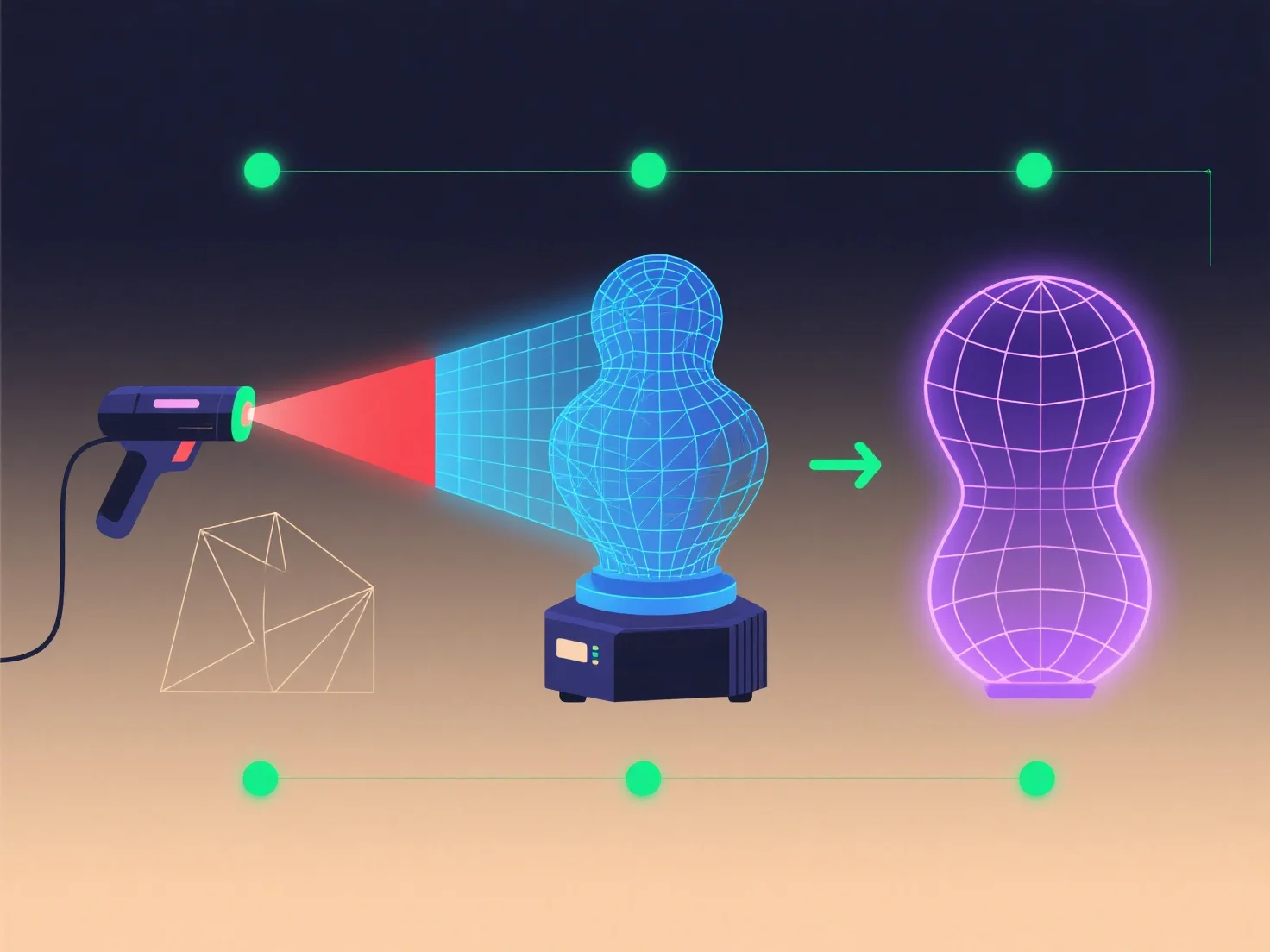
Die 3D-Scantechnologie entwickelt sich in Richtung höherer Genauigkeit, schnellerer Datenerfassung und größerer Zugänglichkeit, angetrieben von Fortschritten in der Sensortechnologie und der Integration von KI. Diese Entwicklungen verbessern die Präzision, reduzieren die Scanzeit und senken die Eintrittsbarrieren, was zu einer Ausweitung ihrer Verwendung in verschiedenen Branchen führt.
- **Höhere Genauigkeit**: Neue Sensortechnologie und Kalibrierungsalgorithmen verbessern die Auflösung und ermöglichen detaillierte Scans für medizinische Implantate und Luft- und Raumfahrtteile, wobei die Fehlermargen bei erstklassigen Geräten nun unter 0,1 mm liegen. - **Schnellere Datenerfassung**: KI-gestützte Verarbeitung rationalisiert die Generierung von Punktwolken und verkürzt die Scanzeiten von Stunden auf Minuten. Dies ist entscheidend für Echtzeitanwendungen wie Reverse Engineering. - **Größere Zugänglichkeit**: Tragbare Scanner für Verbraucher.
Diese Entwicklung positioniert das 3D-Scannen als ein vielseitiges Werkzeug für Prototyping, die Erhaltung des kulturellen Erbes und vieles mehr.