


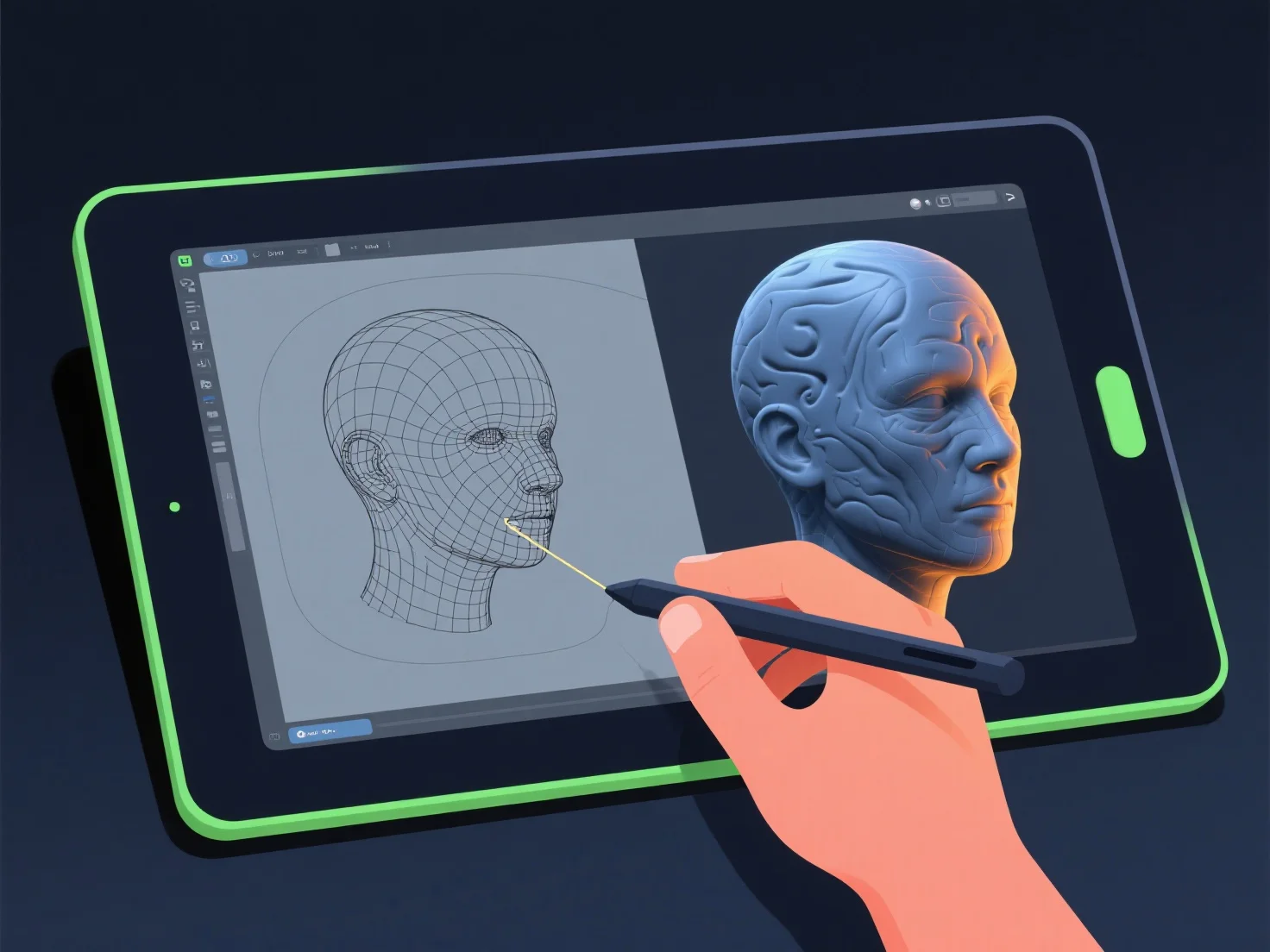
Die Modellierungsphase ist entscheidend für die Erstellung hochauflösender 3D-Modelle, da sie es Künstlern ermöglicht, komplexe Details, organische Texturen und feine Oberflächenvariationen manuell hinzuzufügen, die von niedrigauflösenden Basisnetzen nicht erfasst werden können, und so eine Brücke zwischen grundlegender Struktur und hochwertigen Details schlägt.
Zu den wichtigsten Beiträgen gehören: 1. **Detailverbesserung**: Mithilfe von Tools wie ZBrush oder dem Sculpt-Modus in Blender fügen Künstler Mikrodetails (z. B. Falten, Poren, komplexe Konturen) hinzu, die Low-Poly-Basen fehlen, und erhöhen so die Auflösungstiefe. 2. **Organische Texturherstellung**: Im Gegensatz zu automatisierten Methoden ermöglicht das Sculpting die handgefertigte Erzeugung natürlicher Texturen, die reale Materialien (z. B. Haut, Stein) nachahmen, und verbessert so die Realistik. 3. **Formverfeinerung**: Es verfeinert die Form des Basis-Mesh und sorgt für fließende Übergänge und präzise Proportionen, was für eine hohe Auflösungsklarheit entscheidend ist.
Insgesamt verwandelt das Modellieren einfache Netze in detaillierte, lebensechte Modelle, indem es sich auf manuelle, präzise Detailarbeit konzentriert, die eine hohe Auflösungsqualität ermöglicht.