


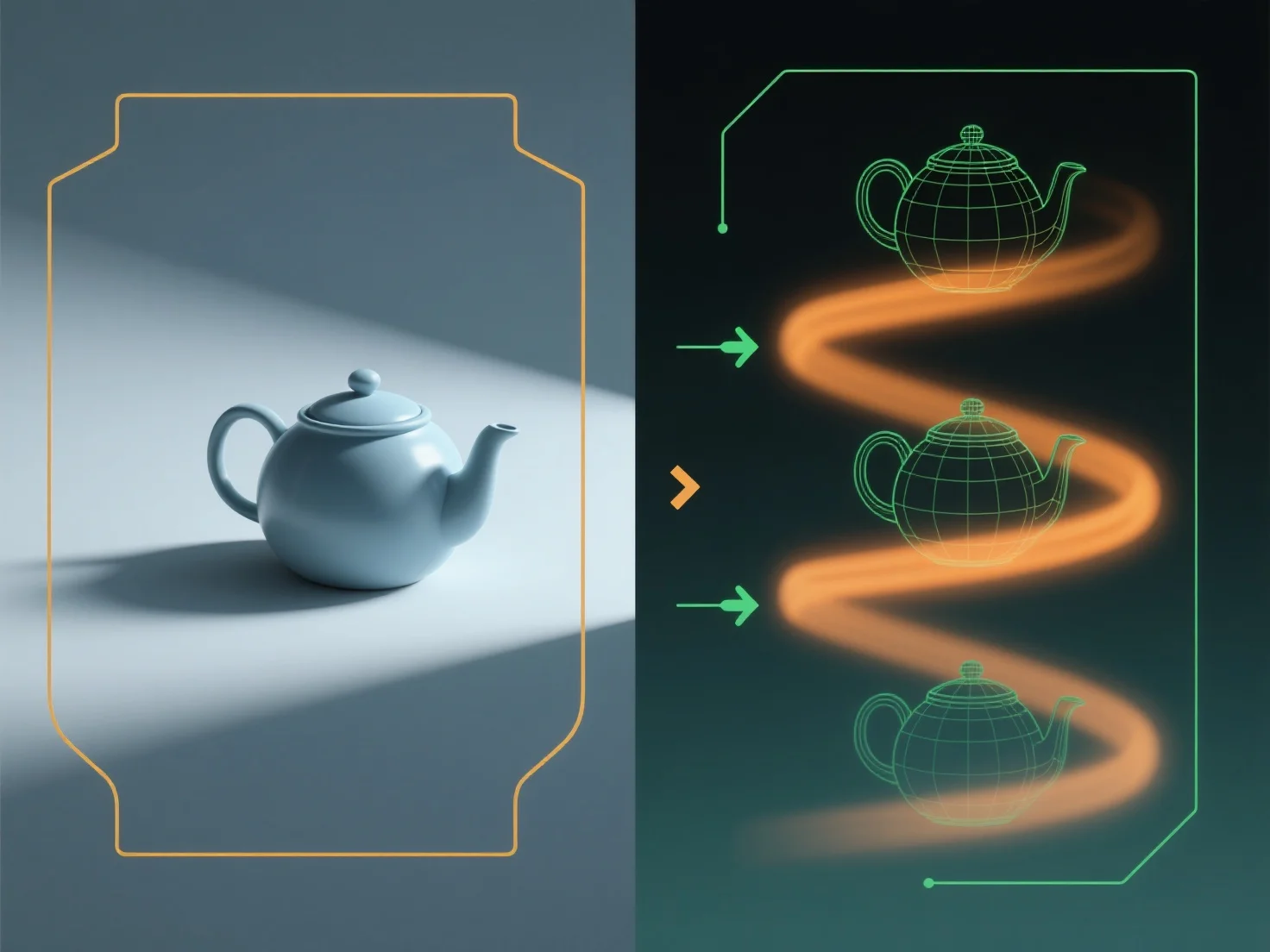
Die Rendering-Pipeline für statische Bilder und animierte Szenen unterscheidet sich hauptsächlich in der Zeitabhängigkeit: statische Bilder konzentrieren sich auf einen einzelnen Frame, während animierte Szenen eine zeitbasierte Frame-Sequenzierung und Bewegungsberechnungen erfordern.
Static Image Pipelines verarbeiten einen Frame mit fester Geometrie, Texturen und Beleuchtung. Es sind keine Zeitvariablen involviert. Die Hauptschritte umfassen Geometrieverarbeitung, Beleuchtung und Schattierung, um ein einzelnes, endgültiges Bild zu erzeugen.
Animierte Pipelines hingegen iterieren über die Zeit und aktualisieren die Positionen, Rotationen oder Verformungen von Objekten Bild für Bild. Sie integrieren auch bewegungsbezogene Effekte wie Bewegungsunschärfe, um eine flüssige Bewegung über aufeinanderfolgende Bilder hinweg zu simulieren.
Kurz gesagt, das statische Rendering behandelt einen einzelnen Moment, während das animierte Rendering eine Abfolge dynamischer Momente im Laufe der Zeit verwaltet.