


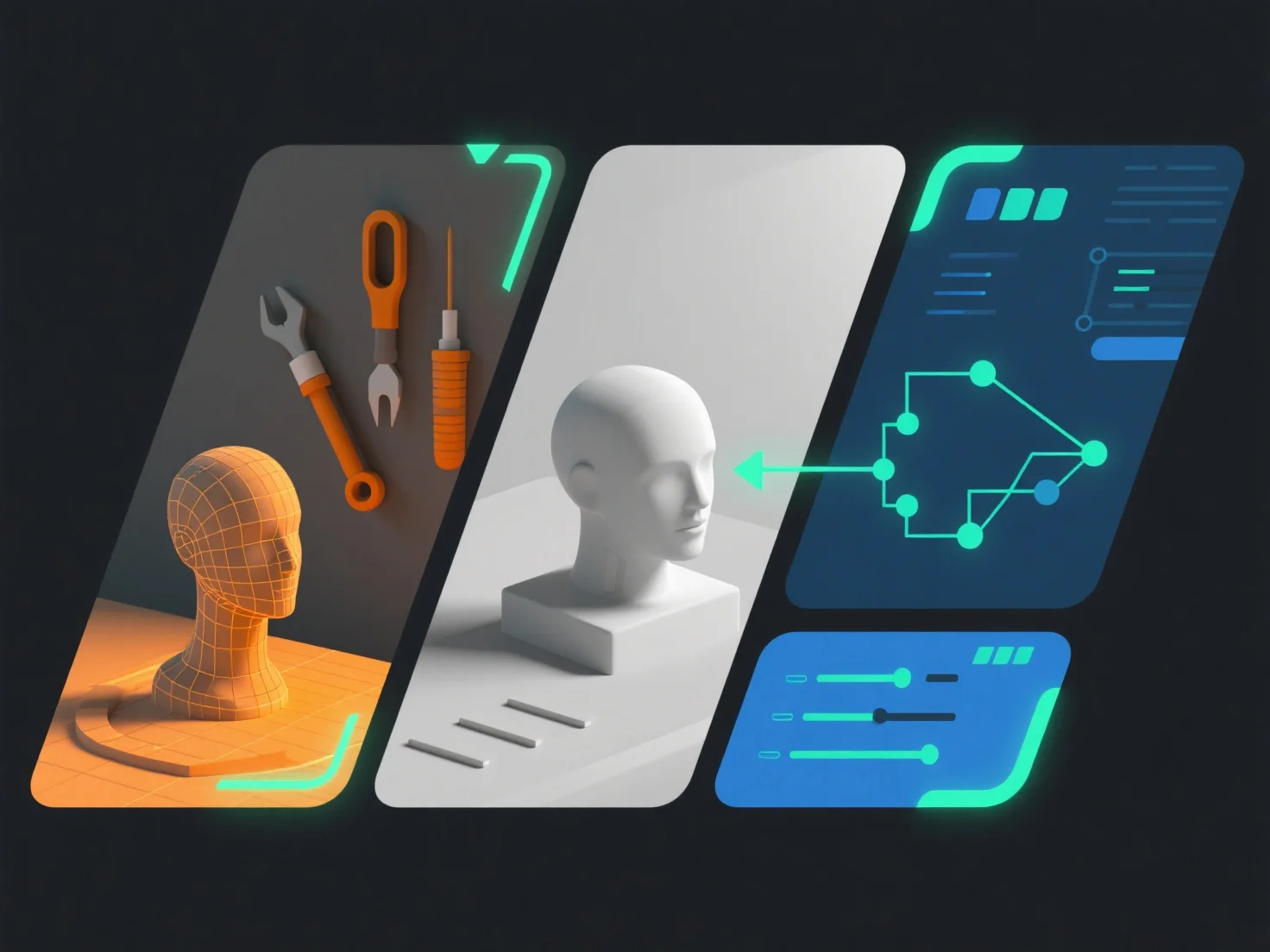
Rollebasiertes Tooling verbessert die Effizienz des 3D-Workflows, indem Tools und Schnittstellen an spezifische Benutzerrollen angepasst werden, um die Komplexität zu reduzieren und die Ausführung von Aufgaben zu optimieren.
- **Maßgeschneiderter Tool-Zugriff**: Jede Rolle (z. B. Modellierer, Animatoren, Renderer) hat Zugriff nur auf relevante Tools, was Ablenkungen und unnötige Schritte minimiert. - **Reduzierte Lernkurve**: Vereinfachte, rollenspezifische Schnittstellen verkürzen die Schulungszeit und ermöglichen es Benutzern, Tools schneller zu beherrschen. - **Verbesserte Koordination**: Klare Rollendefinitionen koordinieren die Teamarbeit und vermeiden Überschneidungen oder Lücken bei Aufgaben wie Texturierung oder Rigging.
Durch die Konzentration auf rollenspezifische Bedürfnisse optimiert es die Produktivität und gewährleistet einen reibungslosen Arbeitsablauf.