


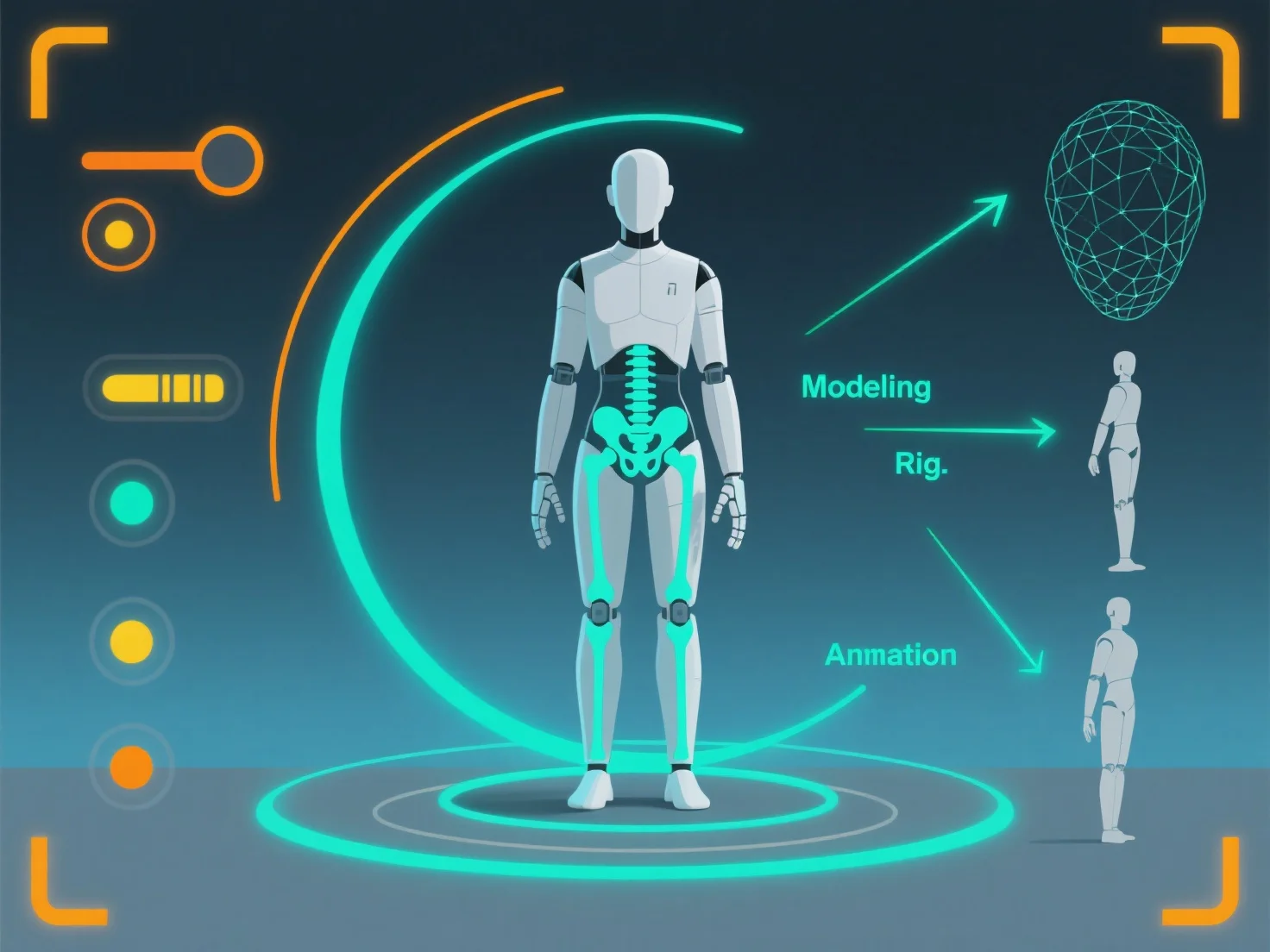
Rigging ist eine wichtige Phase in der 3D-Animationspipeline, die nach dem 3D-Modellieren und vor der Animation stattfindet. Es verwandelt statische 3D-Modelle in bewegliche Objekte, indem digitale Skelette und Steuerungssysteme erstellt werden, die es Animatoren ermöglichen, realistische Bewegungen zu erzeugen.
- **Pipeline-Platzierung**: Erfolgt nach der Modellierung (sobald die 3D-Modelle fertiggestellt sind) und vor der Animation, um sicherzustellen, dass die Animatoren über funktionale Rigs verfügen, mit denen sie animieren können. - **Kernaufgaben**: Umfassen den Aufbau von Armaturen (digitalen Skeletten mit Gelenken) und Steuerungs-Rigs (benutzerfreundlichen Schnittstellen) zur Manipulation von Bewegungen, Ausdrücken oder Deformationen. - **Schlüsselrolle**: Überbrückt statische Modelle mit dynamischer Animation und macht die Modelle für die Eingaben der Animatoren empfänglich, um natürliche, lebensechte Bewegungen zu erzielen.
Kurz gesagt, ist Rigging die entscheidende Verbindung zwischen Modellierung und Animation, indem es 3D-Modelle mit der für die Bewegung erforderlichen Struktur ausstattet.