


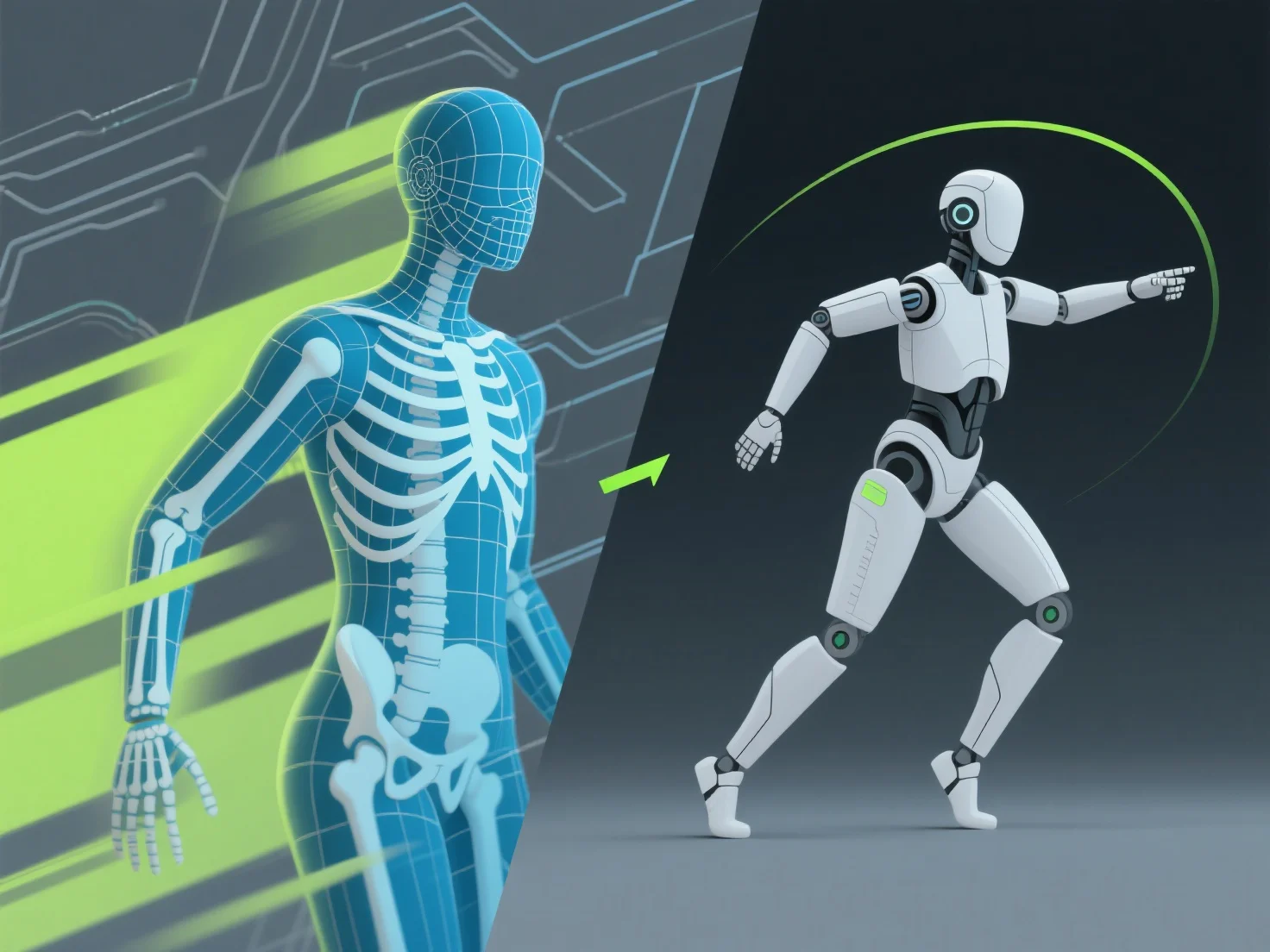
Das Rigging wirkt sich direkt auf die 3D-Charakteranimation im Produktionszyklus aus, indem es die Skelettstruktur und Steuerungssysteme bereitstellt, die es Charakteren ermöglichen, sich zu bewegen. Es fungiert als zentrales Bindeglied zwischen statischen 3D-Modellen und dynamischen Animationen und bestimmt den Bewegungsbereich, die Realistik und die Produktionseffizienz.
- **Upstream-Abhängigkeit**: Es stützt sich auf die Topologie des Modells (z. B. Kantenfluss), um eine natürliche Deformation zu gewährleisten; eine schlechte Topologie kann zu Rigging-Problemen wie Netzverzerrungen führen. - **Downstream-Effizienz**: Gut gestaltete Rigs mit intuitiven Steuerelementen ermöglichen es Animatoren, Gliedmaßen, Mimik oder Dynamik einfach zu manipulieren, was den Workflow beschleunigt; komplexe/unreaktive Rigs erfordern zusätzliche Anpassungszeit und verzögern die Produktion. - **Qualitätseinfluss**: Gute Rigs ermöglichen glatte, lebensechte Bewegungen; fehlerhafte Rigs führen zu unnatürlichen Deformationen.
Um zu optimieren, testen Sie die Prüfstände frühzeitig mit grundlegenden Bewegungen, um Probleme vor der vollständigen Animation zu erkennen, und stellen Sie so sowohl Qualität als auch Effizienz im Produktionszyklus sicher.