


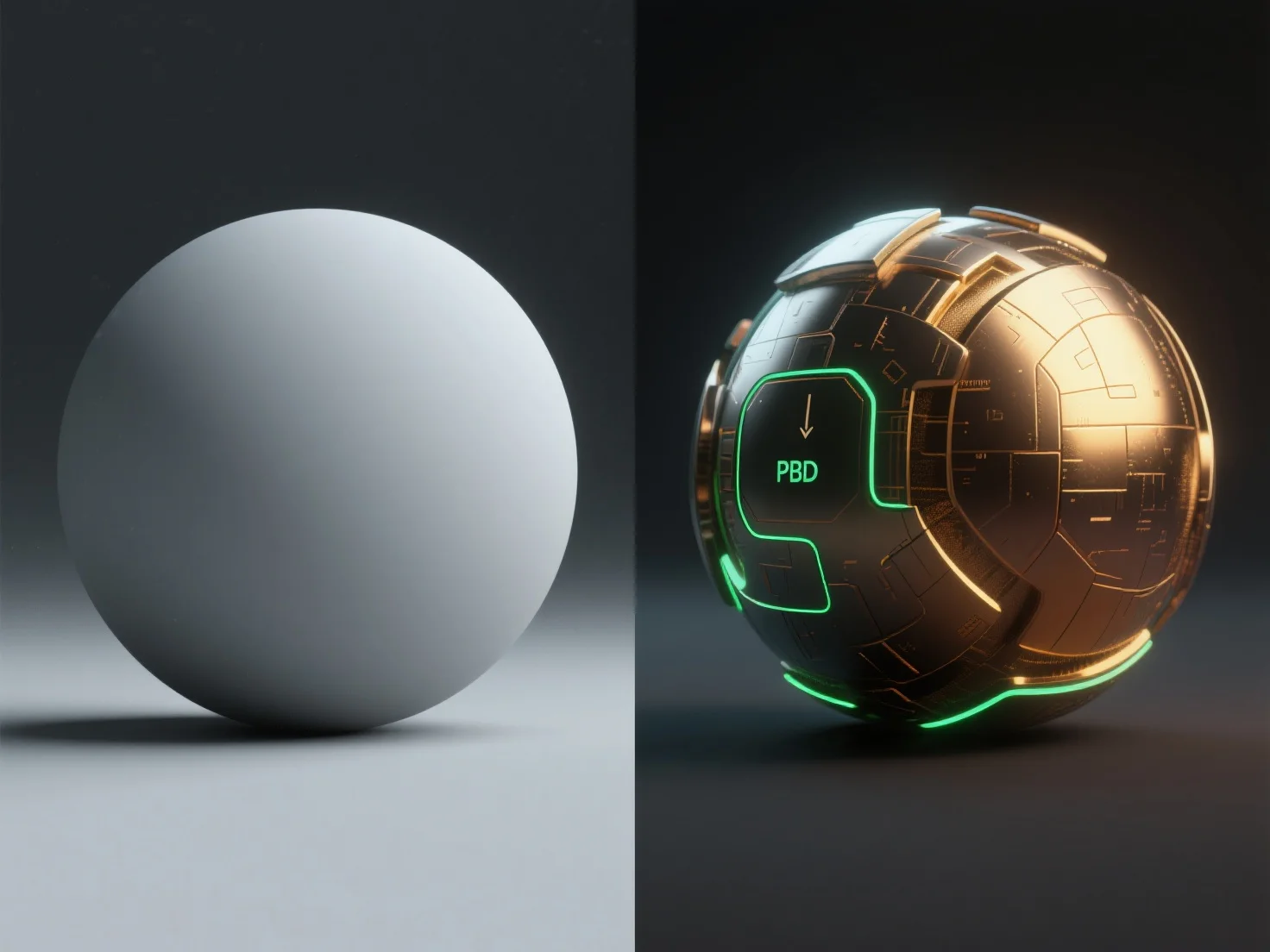
Wenn 3D-Designs PBR übernehmen, werden die Qualitätsstandards erhöht, indem das Rendering mit den physikalischen Eigenschaften der realen Welt in Einklang gebracht wird, was zu realistischeren und konsistenteren visuellen Ergebnissen führt.
PBR verbessert die Qualität, indem es Licht-Material-Interaktionen genau simuliert und vereinfachtes Shading durch Parameter wie Albedo und Rauheit ersetzt, die nachahmen, wie Materialien in der Realität auf Licht reagieren. Dies gewährleistet lebensechte Ergebnisse bei unterschiedlichen Lichtbedingungen.
Schlüsselanwendungen in verschiedenen Branchen umfassen: - Gaming: Erschafft immersive Welten, in denen Materialien (z. B. Metall, Holz) auf dynamische Beleuchtung im Spiel auf natürliche Weise reagieren und so den Realismus auf ein neues Niveau heben. - Film/Animation: Liefert lebensechte visuelle Effekte, indem reale Licht-Oberflächen-Interaktionen für Oberflächen wie Haut oder Stoff nachgeahmt werden. - Architektur: Bietet präzise Vorschauen von Materialien.
Für hochwertige 3D-Projekte ist die Integration von PBR-Workflows erforderlich.