


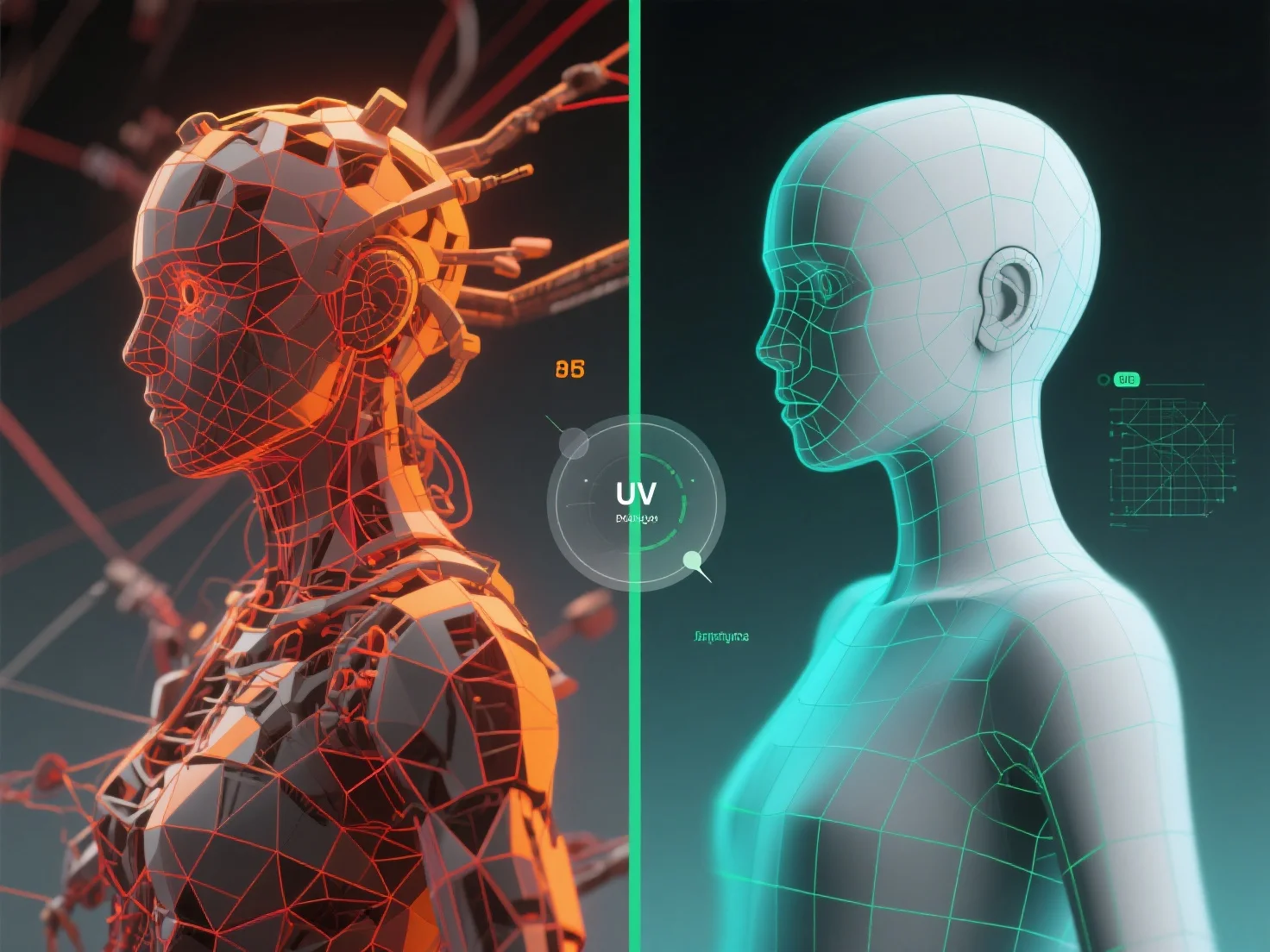
Um 3D-Designs für Echtzeit-Rendering zu optimieren, konzentrieren sich Modellierer auf die Reduzierung der Polygonanzahl, die Optimierung der Texturgrößen und die Vereinfachung von Materialien, um die visuelle Qualität mit der Rendering-Leistung in Einklang zu bringen.
Schlüsseltechniken umfassen: - **Retopologie**: Überflüssige Polygone entfernen, um die Mesh-Komplexität zu reduzieren, ohne dabei wichtige Details zu verlieren. - **Texturkomprimierung**: Formate wie BCn oder JPEG verwenden, um die Dateigröße und den GPU-Speicherverbrauch zu reduzieren. - **Level of Detail (LOD)**: Anpassung der Modell-Details basierend auf der Entfernung zur Kamera. Einfachere Versionen für entfernte Objekte reduzieren die Rendering-Belastung.
Definieren der Zielhardware-Einschränkungen