


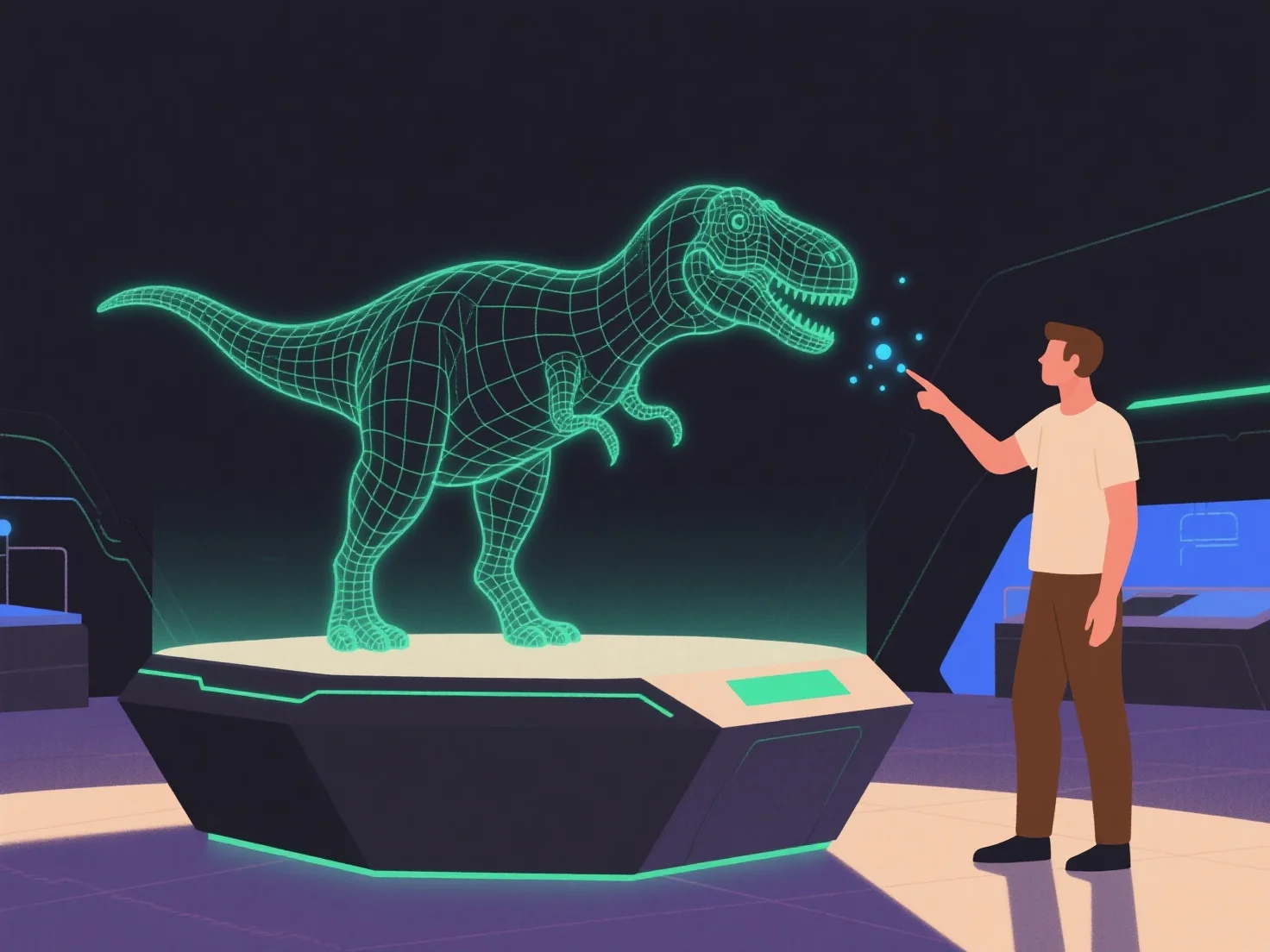
3D-Modellierung verbessert interaktive Museumsausstellungen, indem detaillierte, interaktive digitale Assets erstellt werden, die das Engagement und die Zugänglichkeit steigern.
- **Lebensechte digitale Repliken**: Es erzeugt genaue 3D-Scans von Artefakten, die es Besuchern ermöglichen, fragile Objekte sicher zu drehen, zu zoomen oder aus nächster Nähe zu untersuchen – etwas, was statische Displays nicht erreichen können. - **Immersives Storytelling**: 3D-Umgebungen stellen historische Settings (z. B. antike Städte) nach und werden mit AR-Overlays für interaktive Erzählungen kombiniert, um Ausstellungen lebendiger zu gestalten. - **Breiterer Zugang**: Die Integration mit Touchscreens oder mobilen Apps ermöglicht Remote-Zugriff oder taktile Interaktion und erfüllt so die unterschiedlichen Bedürfnisse der Besucher.
Durch den Start mit dem 3D-Scannen bestehender Sammlungen können Museen eine digitale Bibliothek aufbauen und interaktive Funktionen hinzufügen, um passives Betrachten in dynamische Erlebnisse zu verwandeln.