


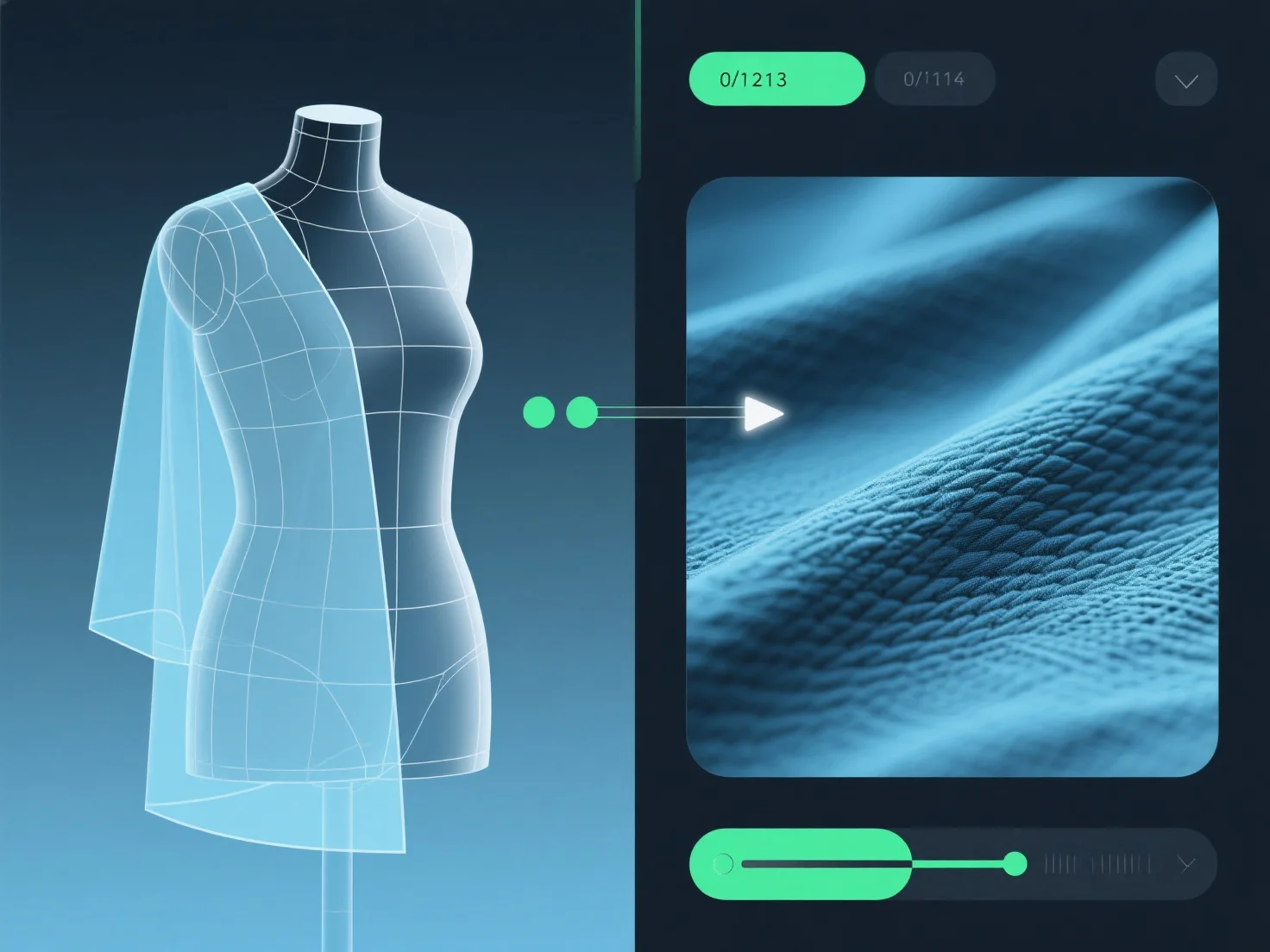
Die 3D-Modellierung erzeugt realistische Kleidungs- und Stofftexturen, indem sie physikalische Eigenschaften und Oberflächendetails simuliert und Materialverhalten und visuelle Abbildung für lebensechte Ergebnisse kombiniert.
- **Simulieren von physikalischen Eigenschaften**: Es definiert Schlüsselattribute wie Elastizität, Dicke und Reibung. Diese bestimmen, wie Stoffe auf 3D-Formen fallen, sich dehnen oder falten, und imitieren so die Bewegung in der realen Welt.
- **Hinzufügen von Oberflächendetails über Texturkarten**: Hochauflösende Karten replizieren Webmuster, Nähte, Falten oder Stofffehler. Dies verleiht visueller Realismus und lässt Texturen selbst in digitalen Renderings greifbar erscheinen.
Zusammen sorgen diese Schritte dafür, dass 3D-Kleidungstexturen authentisch aussehen und sich authentisch verhalten, indem sie eine Brücke zwischen virtuellen und physischen Stoffeigenschaften schlagen.