


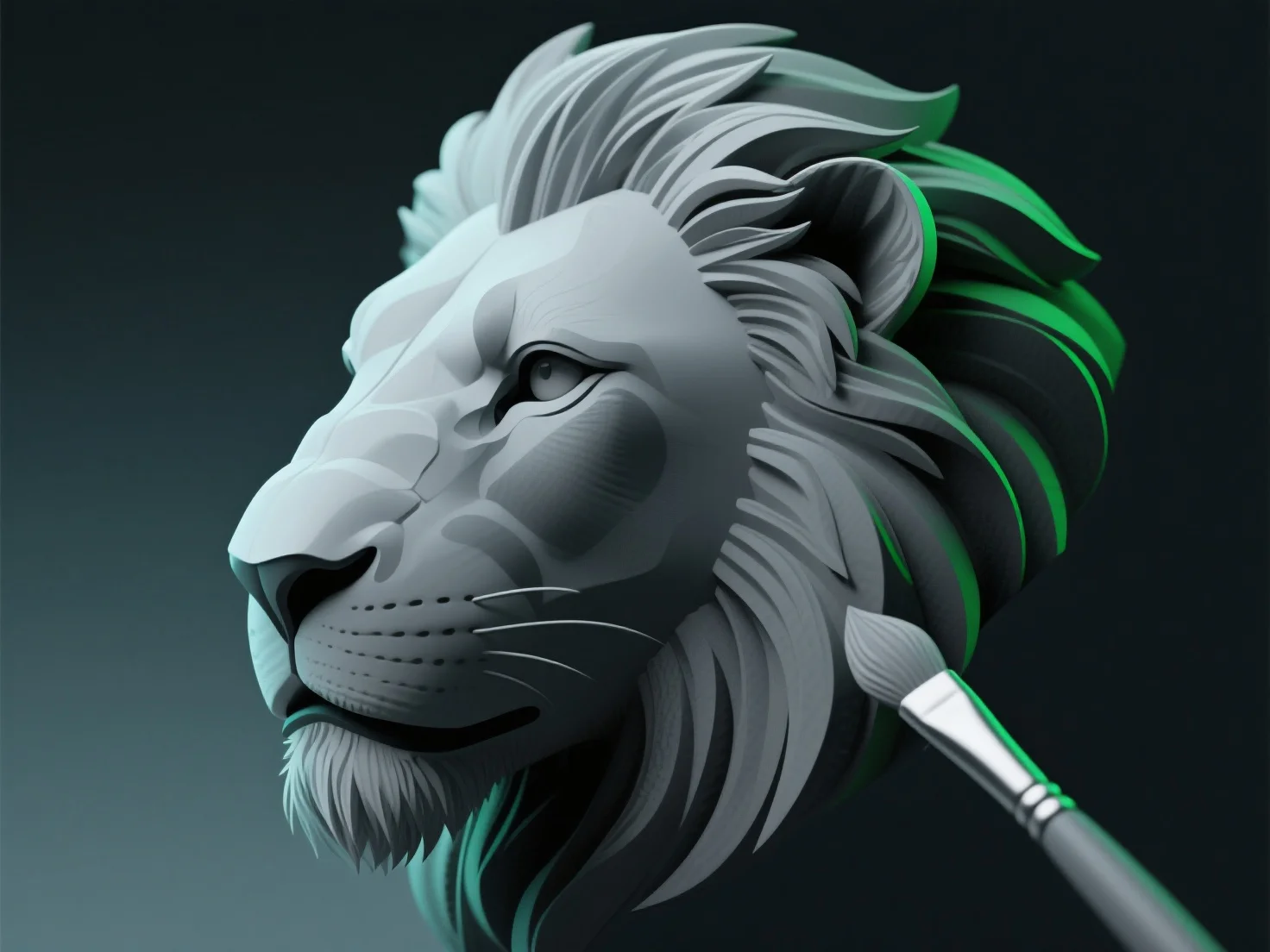
Die Integration von Modellierung und Texturierung in 3D-Design beinhaltet zunächst die Gestaltung der Kernstruktur des Modells durch Modellierung, gefolgt von der Übertragung dieser Details in Texturen, um den Realismus zu verbessern und sicherzustellen, dass Form und Oberflächeneigenschaften nahtlos zusammenpassen.
Beginnen Sie damit, die Grundform und die hochpolygonalen Details zu modellieren: Schnitzen Sie die grundlegende Form und die komplizierten Merkmale des Modells.
Als nächstes bäckt man die geformten Daten in Texturkarten ein: Man wandelt die geformte Tiefe, die Kanten und die Details in technische Karten wie Normal-, Displacement- oder AO-Karten um. Diese Karten dienen als Blaupause für die Texturierung und bewahren die Dimensionalität der Skulptur digital.
Schließlich richten Sie Texturen nach den geformten Konturen aus: Wenden Sie Farb-, Rauheit- oder Spiegelungstexturen an, die die geformte Form ergänzen. Zum Beispiel können Sie dunklere Farbtöne in Falten oder eine höhere Rauheit auf erhabenen Bereichen verwenden, um das Oberflächenverhalten in der realen Welt nachzuahmen.
Dieser Workflow stellt sicher, dass Texturen das geformte Design verstärken und kohärente, lebensechte 3D-Modelle schaffen, bei denen Form und Oberflächendetails harmonisch zusammenwirken.