


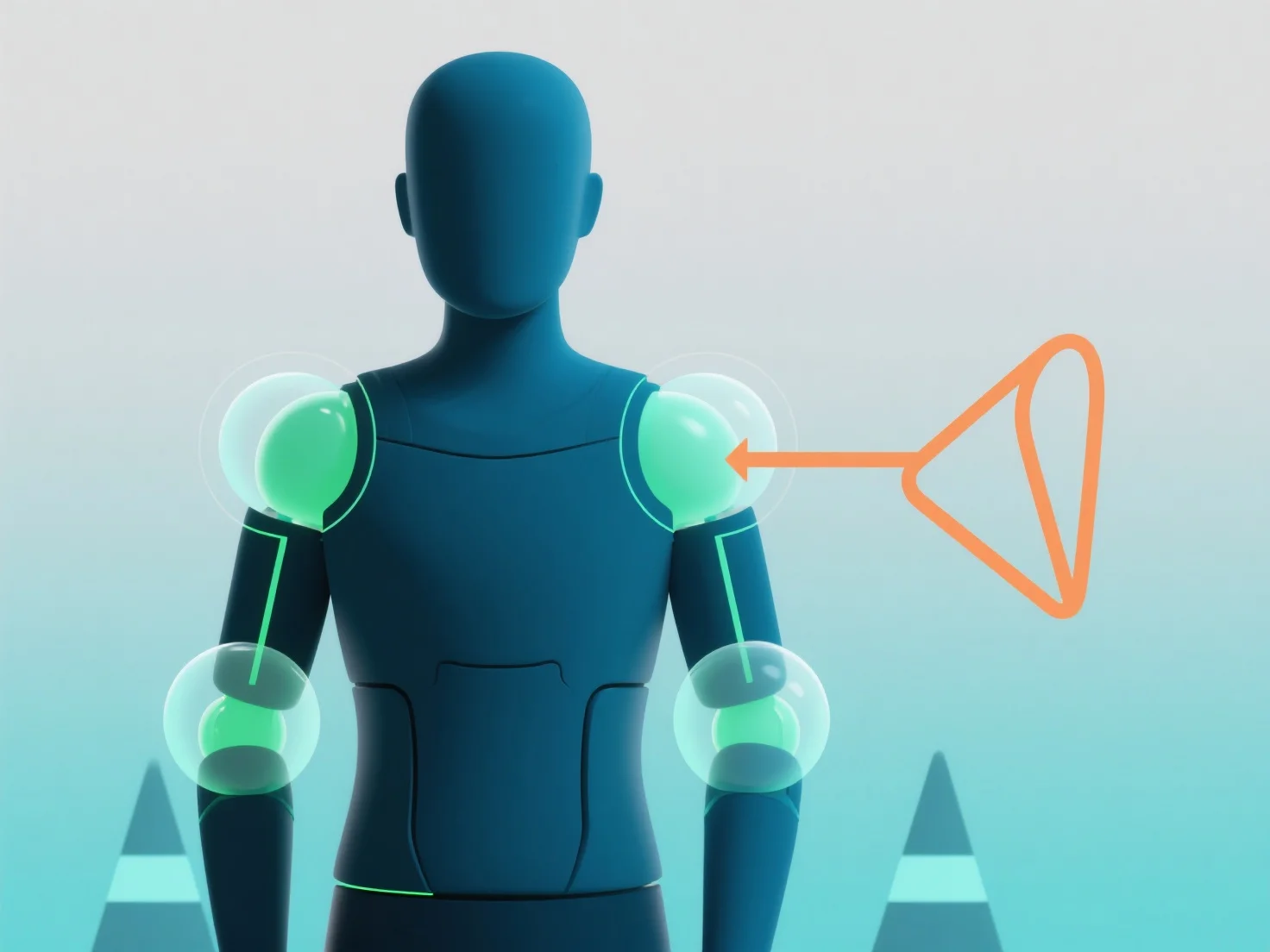
Gelenke und Einschränkungen in der Rigging bestimmen direkt das Bewegungsverhalten und die strukturelle Stabilität eines 3D-Modells während der Animation.
Gelenke fungieren als Drehpunkte und ermöglichen Kernbewegungen wie die Rotation.
Einschränkungen, wie z. B. IK (Inverse Kinematik), Limit- oder Eltern-Kind-Einschränkungen, beschränken oder leiten die Bewegung. IK hält die Gliedmaßen beim Greifen in Ausrichtung, Limit-Einschränkungen verhindern eine Überdrehung, und Eltern-Kind-Verbindungen gewährleisten eine hierarchische Bewegung.
Zusammen stellen sie sicher, dass sich das Modell auf kontrollierte, realistische Weise bewegt, wobei es vermieden wird, unzusammenhängende oder unnatürliche Posen einzunehmen, und die strukturelle Integrität erhalten bleibt.