


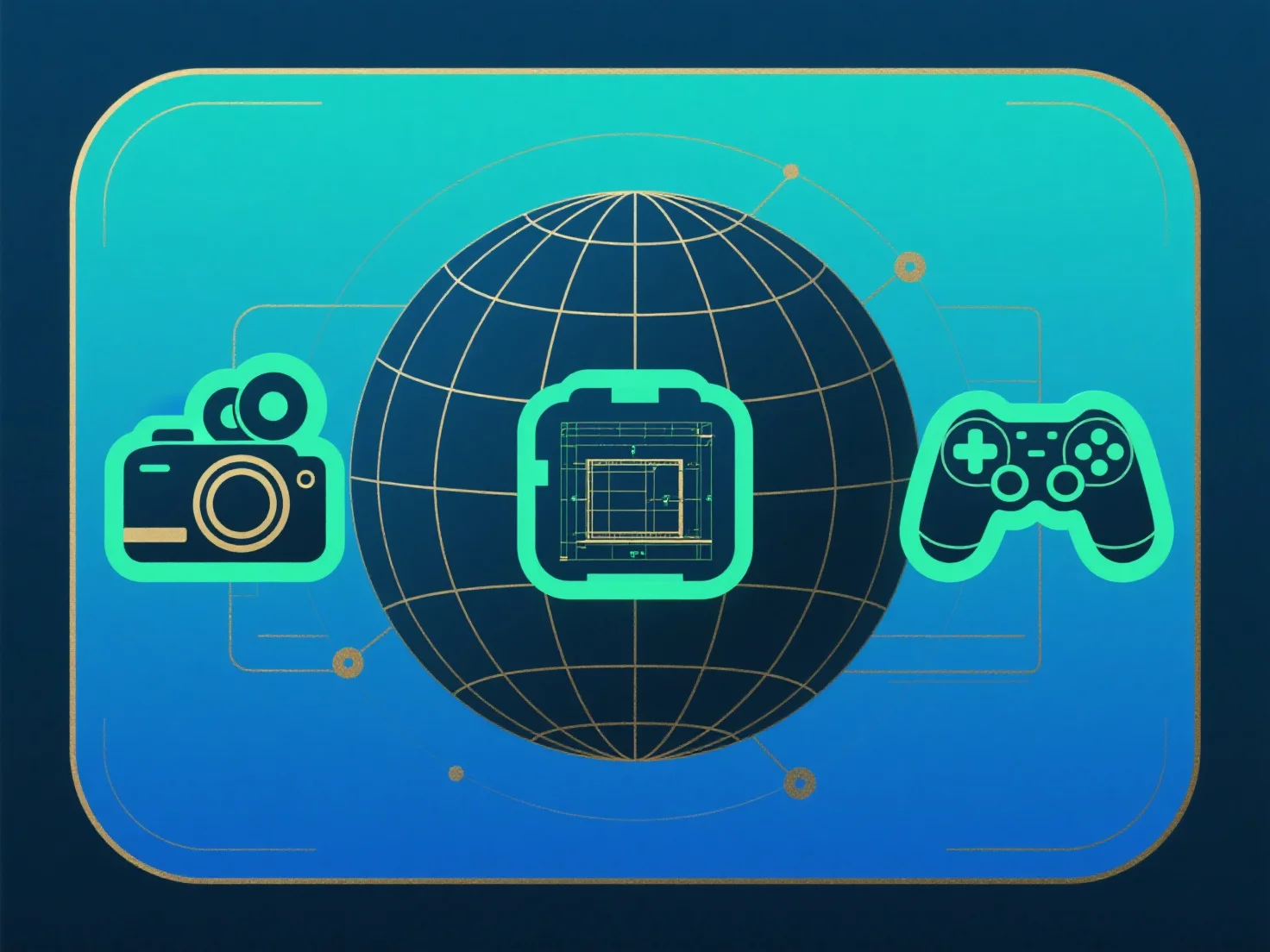
3D-Modellierungswerkzeuge passen sich verschiedenen Branchen an, indem sie spezialisierte Funktionen integrieren, die auf die einzigartigen Arbeitsabläufe, Output-Anforderungen und Kernprioritäten jedes Sektors zugeschnitten sind, wie z. B. Film, Gaming und Architektur.
Zu den branchenspezifischen Anpassungen gehören: - Film: Priorisieren Sie hochauflösende Texturierung, dynamische Beleuchtung und fortschrittliche Animationswerkzeuge, um realistische Charaktere, Umgebungen und visuelle Effekte für Filme und Werbespots zu erstellen. - Gaming: Konzentrieren Sie sich auf optimierte Polygonzahlen, Echtzeit-Rendering-Engines und Rigging-Systeme, um sicherzustellen, dass Assets in interaktiven Spielen reibungslos funktionieren. - Architektur: Integrieren Sie parametrischen Design, BIM-Kompatibilität (Building Information Modeling) und präzise Skalierungs-Tools, um die strukturelle Planung, Visualisierung und Konstruktionsdokumentation zu unterstützen.
Die Auswahl von Tools mit branchenspezifischen Vorlagen oder Plugins optimiert die Arbeitsabläufe und passt sich an die sektorspezifischen Anforderungen an.