


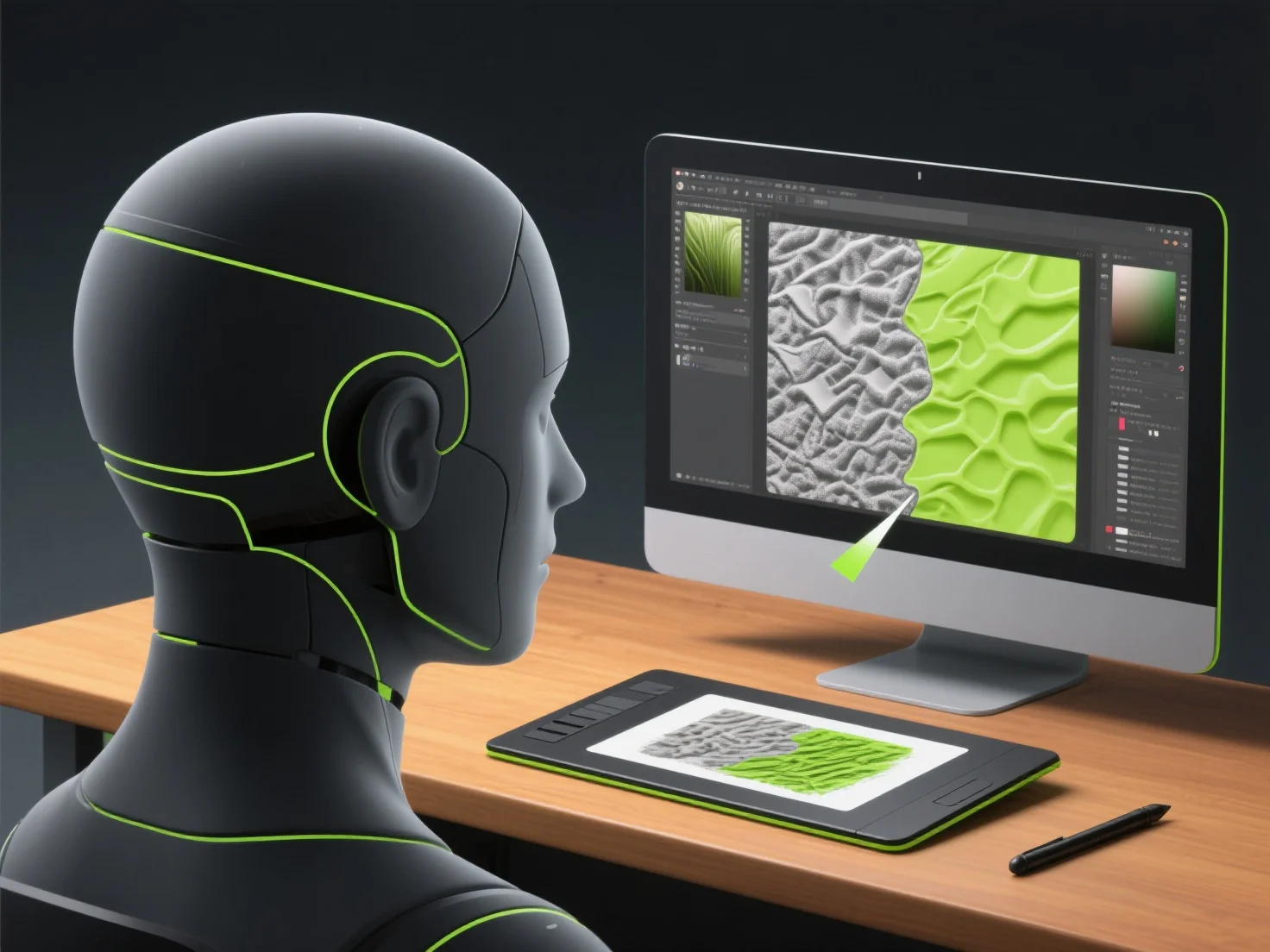
3D-Modellierer erstellen detaillierte Texturen für 3D-Spielmodelle, indem sie 2D-Bilddesign, UV-Unwrapping und spezialisierte Software kombinieren, um realistische Oberflächendetails auf die 3D-Geometrie zu projizieren.
Zunächst entwerfen sie Basis-Texturen mit 2D-Tools wie Photoshop oder GIMP, erstellen Farb-/Albedo-Karten für die Oberflächenfarbe und Normal-Karten, um Tiefe zu simulieren.
Als nächstes glättet das UV-Unwrapping die Oberfläche des 3D-Modells in 2D-UV-Koordinaten und stellt sicher, dass die Texturen genau mit der Form des Modells übereinstimmen, ohne Verzerrungen.
Dann fügen sie Details hinzu, indem sie Software wie Substance Painter verwenden, die prozedurale Elemente (Kratzer, Schmutz) oder handgemalte Ebenen erzeugt, und ZBrush für komplizierte Details. Dieser Schritt beinhaltet auch Materialkarten (Rauheit, Metallizität), um die Lichtinteraktion zu definieren.
Dieser Workflow stellt sicher, dass Texturen im Spiel realistisch aussehen, während gleichzeitig die Leistung optimiert wird, und verbindet künstlerisches Talent mit technischer Präzision.