


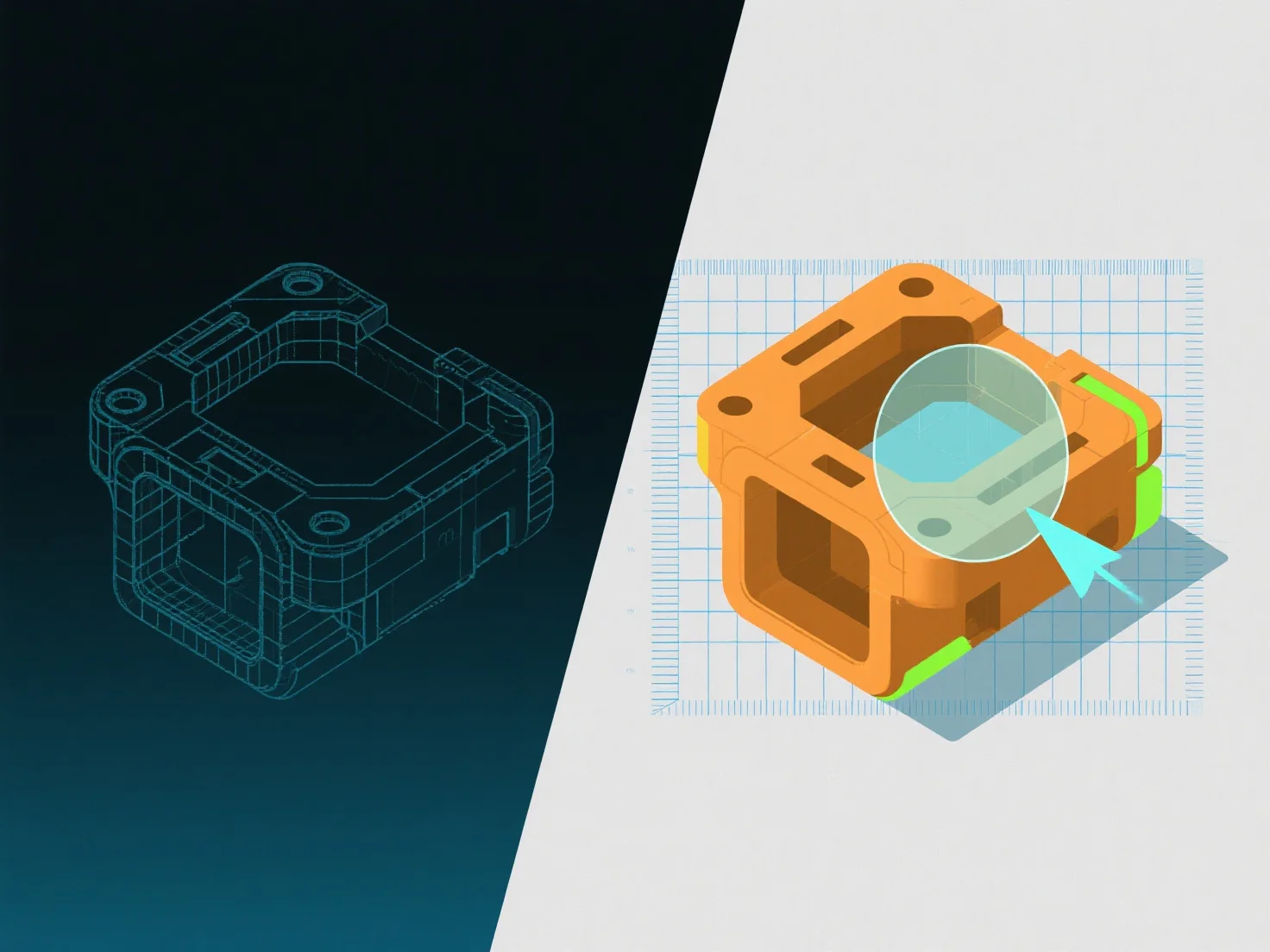
Die 3D-Modellierung ermöglicht eine effiziente Bewertung von Designänderungen nach dem Test, indem visuelle und quantitative Analysen integriert werden, um die Auswirkungen und die Durchführbarkeit zu bewerten.
Zunächst aktualisieren Sie das 3D-Modell mit überarbeiteten Parametern.
Als nächstes verwenden Sie Simulationstools, um kritische Metriken wie strukturelle Belastung, thermische Verteilung oder Fluiddynamik zu analysieren, und generieren numerische Daten zur Leistung nach der Änderung.
Zum Schluss vergleichen Sie diese Daten mit den Benchmarks vor dem Test, um zu überprüfen, ob die Änderungen die identifizierten Probleme lösen, ohne neue Probleme zu verursachen.
Diese virtuelle Bewertung verringert die Abhängigkeit von wiederholten physischen Tests und macht die Designvalidierung schneller und kostengünstiger.