
“Our product lead Zhang Bo demonstrated how our model can reconstruct and model mechanical structures from a single complex image — including the steel bars and wires in the background of the photo,” said the representative from Math Magic.
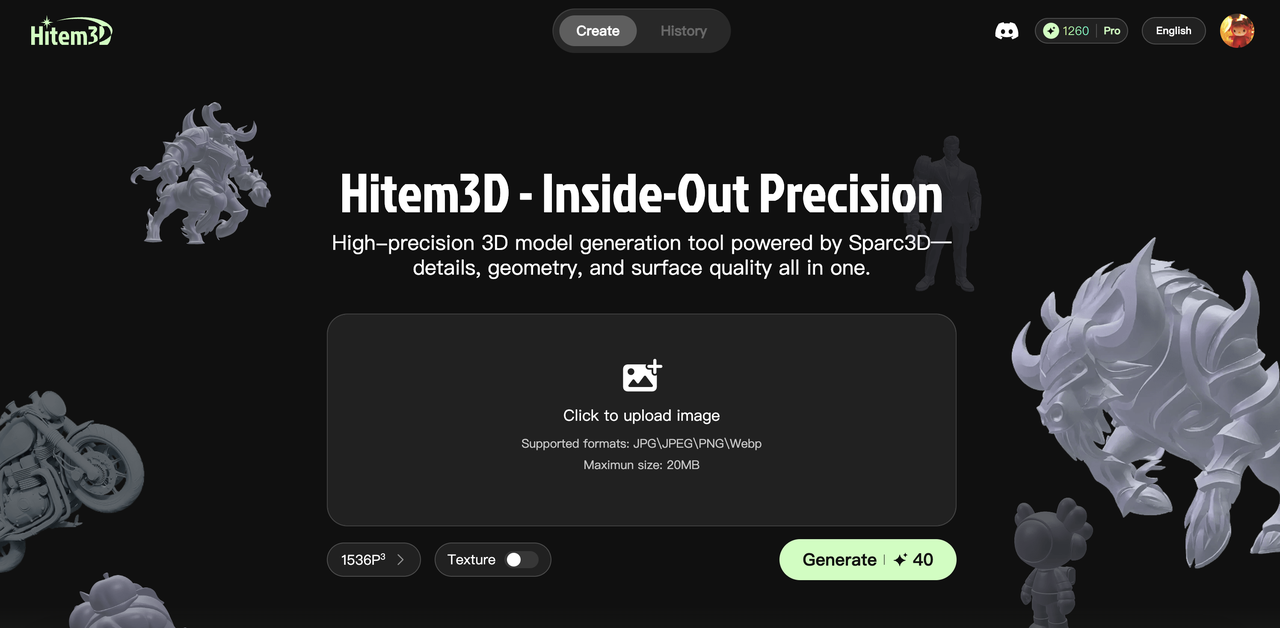
Recently, Math Magic officially launched the world’s first high-definition 3D modeling tool designed for creators — Hitem3D (website: hitem3d.ai). With just a single ordinary image, the system can generate a high-precision 3D model with resolution up to 1536^3 in one click, supporting textures and multiple download formats.

What does this mean?
- For 3D modelers: A complex mechanical model that used to take a team 4–5 days can now be done in under 3 minutes.
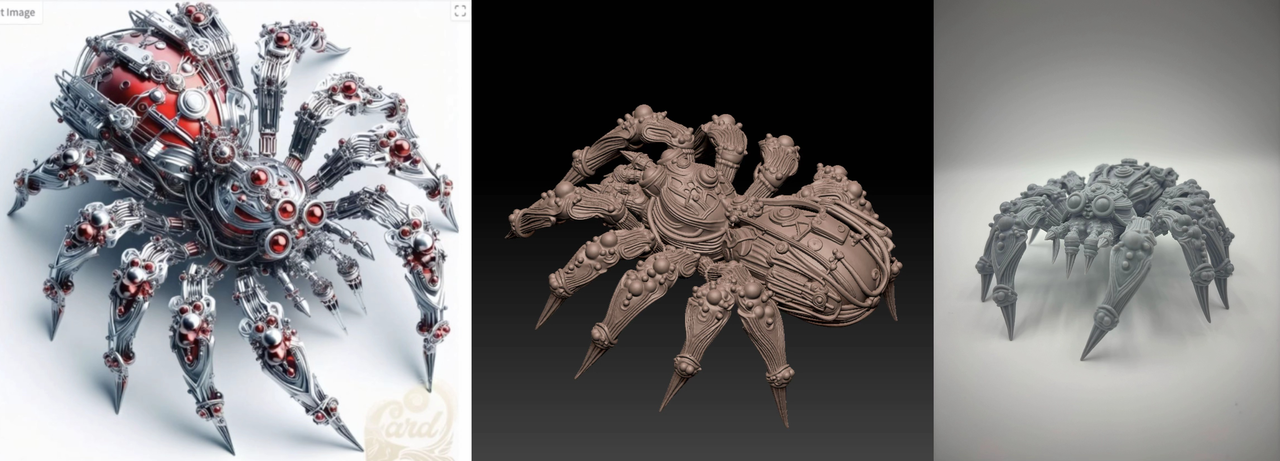
- For designers: There’s no need to learn complex 3D software — creative ideas can now be directly turned into printable or production-ready models.
- For the industry: It marks an upgrade from “rough outlines” to “sculpture-level detail.”
Compared to the common 1024^3 resolution of most similar global products, Hitem3D’s 1536^3 marks a “half-generation leap.” Zhang Bo explains:
“It might seem like a small jump, but it’s like going from a GIF to an HD video — the improvement in detail fidelity and production usability is revolutionary.”
Fast Iteration: From Sparc3D to Ultra3D
The technological breakthrough comes from Math Magic’s self-developed algorithm — a fully sparse convolution-based 3D Variational Autoencoder (VAE).
Traditional methods often project 3D data into 2D images or dense voxels, which can lead to loss of micro-structural details. The Sparc3D model released a month earlier maintains consistent input and output structure, achieving near-lossless compression. As a result, it:
- Reduces Chamfer Distance by about 40% compared to standard models
- Cuts parameter count and FLOPs by half
- Delivers faster training and inference
This enables the AI to generate finer structures like rivets, textures, and even micro-cracks.
Just this month, the team released Ultra3D, an even faster 3D generation framework, improving generation speed by 6.7×.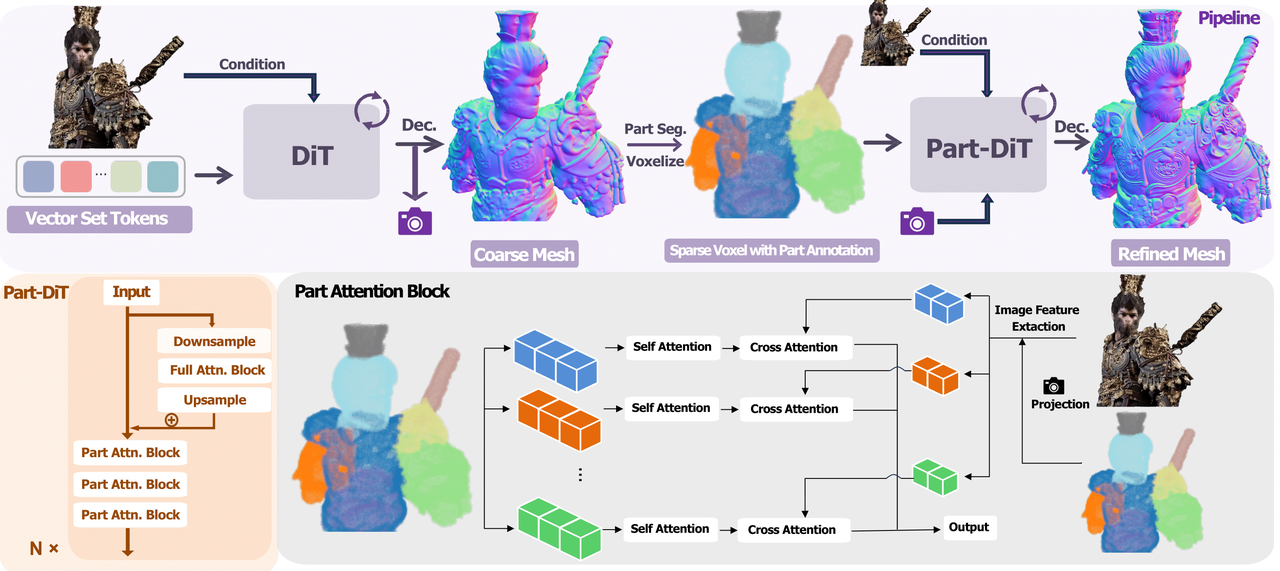
From Tool to Productivity Engine
The underlying logic is straightforward: Traditional AI modeling produced only coarse models requiring extensive post-processing, whereas Hitem3D’s high-resolution, production-ready outputs integrate directly into manufacturing or 3D printing workflows.
This reduces labor and time costs while enabling designers to participate in manufacturing chains with zero learning barriers.
Zhang Bo adds:
“We hope to help more designers turn ideas into reality quickly with AI. For example, a complex mech model that used to take 4–5 days can now be generated in just 3 minutes — and it’s production-ready.”

Community Validation and Global Recognition
In mid-June, Math Magic released its Sparc3D model demo on Hugging Face. Within a week, it topped the platform’s Space trending chart and remained in the top three for three consecutive weeks.

Meanwhile, numerous overseas 3D artists and engineers shared reviews on YouTube and X (Twitter). Many reported a 90% boost in modeling efficiency and detail quality “comparable to handcrafted figures.”
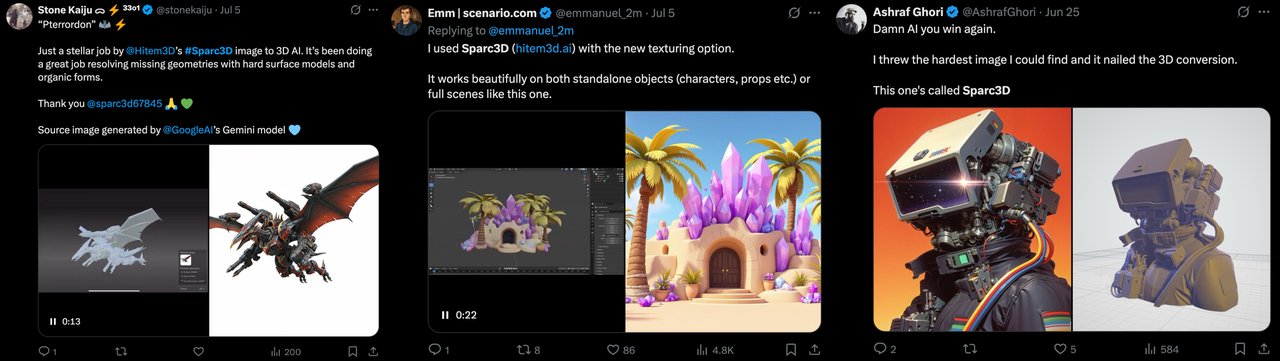
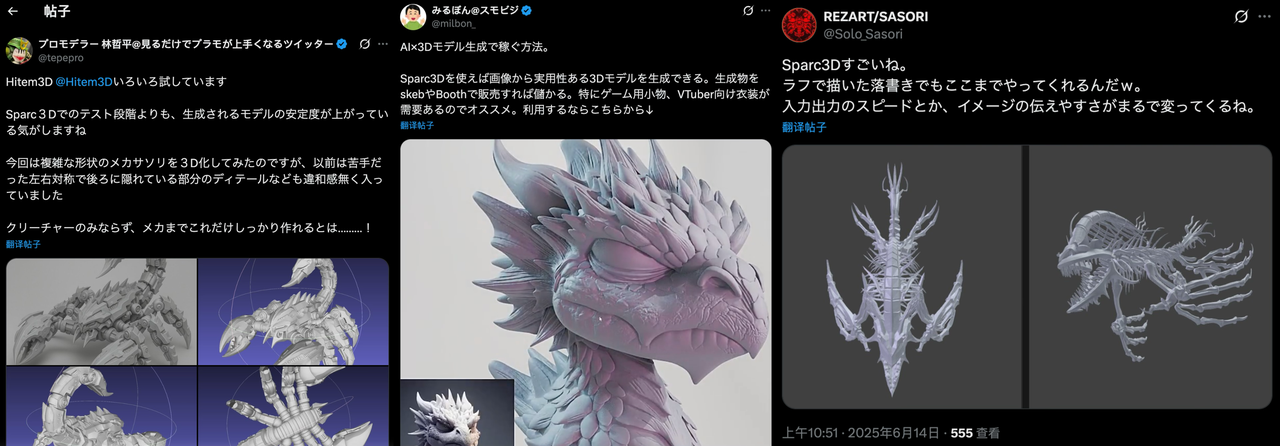
Product team members shared that this user feedback gave them tremendous confidence. What excites us the most is that our AI modeling tools are gaining recognition from global creators.
Industry Impact: From Entertainment to Industrial Efficiency
Industry experts note that high-resolution AI modeling isn’t just transforming CG production in gaming and film — it’s also poised to reshape fields like 3D printing, product prototyping, and industrial manufacturing.
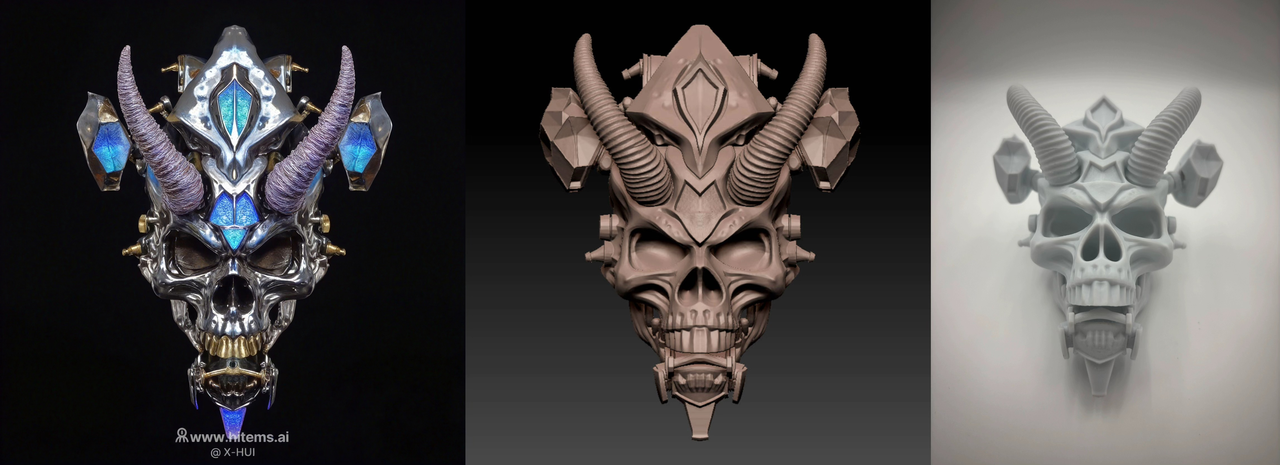
“A digital model used to be just a transitional file, but once it’s clear and compatible enough for production, AI shortens the distance between design and manufacturing,” noted a senior industrial design consultant.
Looking Ahead
As for future tools, the company plans to develop remeshing, multi-view synthesis, and component-splitting features to further lower the barriers to AI modeling.
Their ultimate goal isn’t just to build a better modeling tool — but to let designers truly “see it and make it”:
“Turn imagination into real, manufacturable products — making AI a true part of the productivity pipeline.”