The digital landscape is expanding at an unprecedented rate. With the continuous surge in indie game development, immersive AR/VR experiences, and high-end architectural visualization, the demand for high-quality 3D assets has never been higher. For talented creators, this presents a massive opportunity to sell 3D models online and turn a creative passion into a lucrative career.
Whether you are a seasoned digital sculptor or a rising 3D generalist, learning how to monetize your digital assets is a critical step in your professional journey. If you want to make money with 3D art and build a sustainable career as a passive income 3D artist, you need more than just modeling skills; you need a solid understanding of marketplaces, asset optimization, and production efficiency.
In this comprehensive guide, we will break down the top platforms, what types of models sell best, how to prep your files, and how next-gen tools can help you rapidly scale your portfolio in 2026.
What Does It Mean to Sell 3D Models Online?
To sell 3D models online is to grant digital licenses for your custom-made 3D assets—such as characters, environments, vehicles, or props—to buyers through online storefronts, allowing them to use your work in their own commercial or personal projects while you earn a steady stream of passive income.
A 3D model marketplace acts as the intermediary, handling the hosting, transaction, and delivery of these digital files in exchange for a commission fee, allowing artists to focus entirely on creation.
Top 3D Model Marketplaces for Artists in 2026
Choosing the right platform is the first step toward success. Different marketplaces cater to different audiences, from game developers to 3D printing enthusiasts. Here are the top destinations to list your work:
1. Sketchfab
Sketchfab is renowned for its interactive, real-time 3D viewer. It serves as both a portfolio platform and a robust marketplace. Buyers love Sketchfab because they can inspect the model’s topology, textures, and wireframes directly in their browser before purchasing. It is ideal for game-ready assets and stylized props.
2. CGTrader
CGTrader is one of the largest and most artist-friendly platforms available. It offers a highly competitive royalty rate (often up to 70–80% for exclusive creators). CGTrader is a go-to for architectural visualization, high-poly concepts, and diverse 3D assets. Their built-in analytics also help you track which of your models are performing best.
3. TurboSquid
Owned by Shutterstock, TurboSquid is one of the oldest and most established platforms in the industry. It attracts high-end buyers, including film studios and major ad agencies. They have rigorous quality standards (CheckMate certification), meaning if your models are exceptionally clean and well-documented, you can charge premium prices here.
4. Fab (Formerly Unreal Engine Marketplace / Quixel)
Epic Games’ consolidated marketplace, Fab, is the ultimate destination for game developers. If you create highly optimized, Unreal-ready environments, character rigs, or complex VFX assets, Fab offers massive exposure to an audience that is constantly looking for drag-and-drop solutions for their game engines.
5. ArtStation Market
ArtStation is the industry standard for artist portfolios. Their integrated marketplace allows your followers to easily purchase your models, brushes, and tutorials. It is highly community-driven, making it the perfect place for ZBrush sculpts, base meshes, and digital art resources.
What Types of 3D Models Sell Best?
To maximize your chances of success, you need to understand market demand. Here are the categories that consistently drive high sales:
- Game Assets: Low-poly models, modular environment kits (e.g., sci-fi corridors, medieval villages), and rigged characters. Buyers need these to be highly optimized and game-engine ready.
- Architectural Visualization (ArchViz): Realistic furniture, lighting fixtures, indoor plants, and exterior facades. Interior designers and architects buy these to populate their scenes quickly.
- Characters and Creatures: Rigged, animation-ready characters are always in high demand. Providing variations in clothing or skins can significantly boost their value.
- Everyday Props: Items like vehicles, weapons, electronics, and food. While common, highly detailed and meticulously textured versions of these items sell consistently.
- 3D Printable Models: Miniatures, tabletop terrain, and jewelry designs. These require specific formats (STL) and must be completely watertight.
Preparing Your 3D Models for Sale
Creating a great looking model is only half the battle. To sell 3D models online successfully, your files must be user-friendly, clean, and compatible with multiple software pipelines.
1. Polygon Optimization and Clean Topology
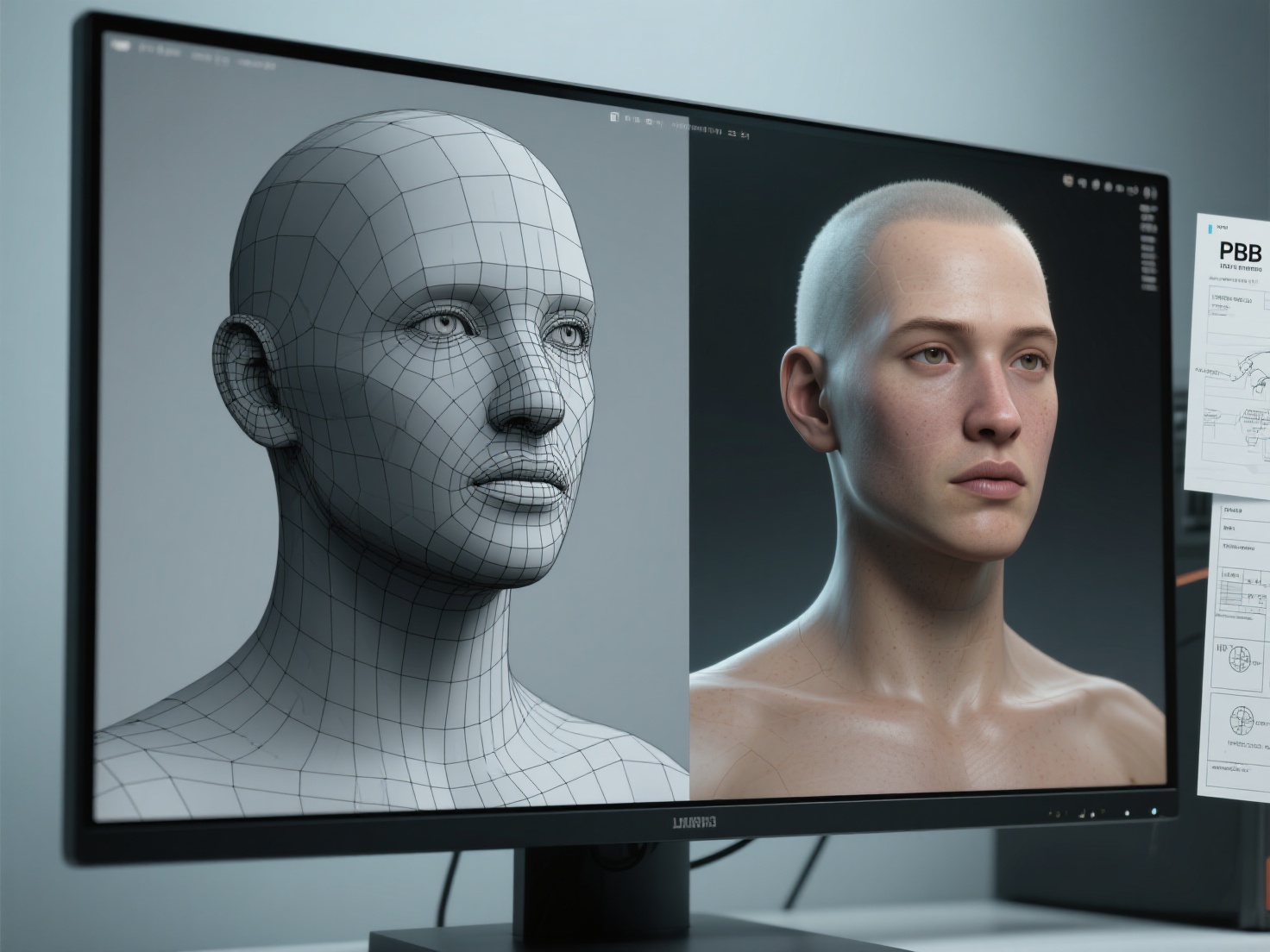
Buyers hate messy geometry. Ensure your models have clean, quad-based topology (especially for characters that need to be deformed/animated). Remove unnecessary edge loops, delete internal hidden faces, and ensure your normals are facing the correct direction.
2. Export in Multiple File Formats
Do not limit your audience by only offering native files (like .blend or .max). Always include universal export formats:
- FBX: The industry standard for game engines (supports rigging/animation).
- OBJ: A universal format accepted by almost all 3D software.
- GLB/glTF: Excellent for web applications and AR.
- STL: Mandatory if your model is intended for 3D printing.
3. High-Quality, Relightable Textures
Buyers need textures that look great in any lighting environment. Provide 4K PBR (Physically Based Rendering) textures (Albedo, Normal, Roughness, Metallic). Crucially, ensure your textures are devoid of baked-in shadows or highlights so buyers can seamlessly integrate them into their own dynamic lighting setups.
4. Clear Documentation
Include a simple readme.txt file detailing the polygon count, whether the model is rigged, the scale (e.g., real-world centimeters), and instructions on how to apply the textures.
Best Practices to Build a Sustainable Income
Building a successful passive income as a 3D artist requires a strategic approach to production, marketing, and pricing.
Strategize Your Pricing
Do not underprice your work. Research what similar models sell for and price accordingly. A common strategy is tiered pricing: offering a standard license for personal/indie use at a lower cost, and an extended commercial license for studios at a premium price.
Create Compelling Renders and Previews
Your thumbnail is your storefront window. Provide at least 5–7 high-quality renders for each product. Include:
- A hero shot with dramatic lighting.
- A flat-lit shot showing the raw texture colors.
- A wireframe overlay shot proving your clean topology.
- A 360-degree turntable if the platform supports it.
Build Your Personal Brand
Don’t rely solely on marketplace algorithms. Build an audience on ArtStation, Instagram, or X (Twitter). Post works-in-progress, share behind-the-scenes insights, and direct your followers to your marketplace links.
Accelerate Your Production Pipeline with AI Tools
The secret to becoming a highly profitable passive income 3D artist is volume. Having 10 models for sale might earn you a little pocket money, but having 200 high-quality models generates a sustainable salary. However, manually sculpting and retopologizing every single background prop is incredibly time-consuming.
This is where next-generation AI tools like Hitem3D come in.
Hitem3D is an AI-powered platform that transforms 2D images into high-fidelity, production-ready 3D models with clean geometry. As a 3D artist, you can use Hitem3D to rapidly generate base meshes for props, background elements, and complex shapes, which you can then polish and customize to sell.
- Unmatched Precision: Powered by in-house Sparc3D (high precision) and Ultra3D (high efficiency) models, Hitem3D handles up to 1536³ Pro resolution (up to 2M polygons), giving you incredibly detailed starting points.
- Invisible Parts Reconstruction: Unlike basic AI generators that only map what is visible, Hitem3D reconstructs hidden structures beyond the visible surfaces, giving you a complete, fully volumetric mesh.
- De-Lighted 4K Textures: Hitem3D’s AI texturing outputs 4K PBR-ready textures and intelligently removes baked-in lighting and shadows. This gives you true, relightable materials—exactly what marketplace buyers demand.
- Print-Ready & Game-Ready: It outputs directly to GLB, OBJ, STL, FBX, and USDZ. If you sell 3D printing assets, Hitem3D ensures print-ready geometry with sharp edges and even offers one-click exports to Bambu Studio and OrcaSlicer.
- Risk-Free Workflow: With their Free Retry system, you can regenerate results without spending additional credits until you get the perfect base model.
By integrating AI into your workflow, you can cut your modeling time in half, allowing you to upload more assets to your chosen 3D model marketplace and drastically increase your revenue potential.
Understand Tax Considerations
As you start to generate income, remember that you are effectively running a small business. Depending on your country, you may need to fill out tax forms (like the W-8BEN for non-US residents selling on US-based platforms) and track your expenses (software subscriptions, hardware upgrades) for tax deductions.
Conclusion: Build Your Passive Income as a 3D Artist
To sell 3D models online successfully in 2026, you must treat your art like a business. By understanding your target audience, choosing the right 3D model marketplace, optimizing your files perfectly, and maintaining high-quality textures, you can absolutely make money with 3D art.
Remember, volume and consistency are key to becoming a successful passive income 3D artist. The more high-quality assets you have available, the more you will earn. By embracing modern workflows and leveraging AI generation to speed up your base modeling, you can outpace the competition and build a highly profitable portfolio.
Ready to scale your 3D asset production and turn your ideas into sellable models faster than ever? Hitem3D, trusted by creators in 50+ countries, is the ultimate AI-powered 3D model generator to supercharge your workflow.
Create For Free today and start building your 3D empire.
Frequently Asked Questions (FAQ)
1. Do I need to offer exclusive rights when I sell 3D models online?
No. Most marketplaces allow you to sell your models on a non-exclusive basis, meaning you can list the exact same model on CGTrader, TurboSquid, and ArtStation simultaneously to maximize your reach. However, some platforms offer higher royalty percentages if you choose to sell exclusively with them.
2. Can I sell models generated or assisted by AI?
Yes, but transparency and quality control are essential. AI-assisted tools like Hitem3D are incredible for generating base meshes and complex topology quickly. However, to command premium prices, you should always take the AI-generated model into your 3D software (like Blender or ZBrush) to refine the topology, adjust the UV maps, and ensure it meets marketplace standards before listing.
3. How much money can a 3D artist realistically make passively?
Income varies wildly based on portfolio size, quality, and niche. Beginners with 10–20 good models might make 50–200 a month. Established artists with hundreds of optimized, high-quality assets (especially in high-demand niches like game environments or ArchViz) can earn anywhere from 1,000 to over 5,000+ per month in purely passive income.
4. What happens if someone steals or pirates my 3D models?
Unfortunately, digital piracy is a reality in the 3D industry. To protect yourself, only upload low-resolution watermarked previews on your portfolio sites. While you can’t stop all piracy, focusing your energy on creating more assets and providing excellent customer support to legitimate buyers is a much better strategy for long-term success.