The gaming industry is evolving at breakneck speed, driven by new technologies, shifting player expectations, and accessible development tools. If you have ever tweaked the rules of a board game to make it more fun, or wondered why a specific boss fight in a video game feels so rewarding, you are already thinking like a designer.
But what is game design, exactly? For aspiring creators looking to enter the industry in 2026, understanding the fundamentals is the first step toward turning a passion for gaming into a tangible skillset. Whether you dream of building the next indie darling or working at a massive AAA studio, mastering game design basics is essential.
In this comprehensive guide, we will break down the core concepts of game design, the skills you need to succeed, potential career paths, and how modern AI tools are revolutionizing how designers prototype their ideas.
What is Game Design? (The Core Definition)
At its core, game design is the process of creating the rules, mechanics, systems, and content that dictate how a game is played and the emotional experience it delivers to the player. It is the blueprint of the game. A game designer focuses on the “fun factor,” ensuring that the game is engaging, balanced, and rewarding.
To fully understand the role, it is crucial to separate game design from other disciplines in game creation. It is a common misconception that game designers spend their days drawing characters or writing code.
Game Design vs. Game Development vs. Game Art
| Discipline | Core Focus | Typical Tools |
|---|---|---|
| Game Design | Rules, pacing, level layout, player psychology, and mechanics. | Spreadsheets, flowcharts, game engines (Unity/Unreal), prototyping tools. |
| Game Development | Writing code to make the designer’s rules actually function. | C++, C#, Python, Visual Studio. |
| Game Art | Creating the visual identity: 3D models, textures, animations, UI. | Blender, Maya, Photoshop, ZBrush. |
While these roles often overlap in smaller indie teams, a dedicated game designer is primarily the architect of the player’s experience.
The Core Pillars: Understanding the MDA Framework
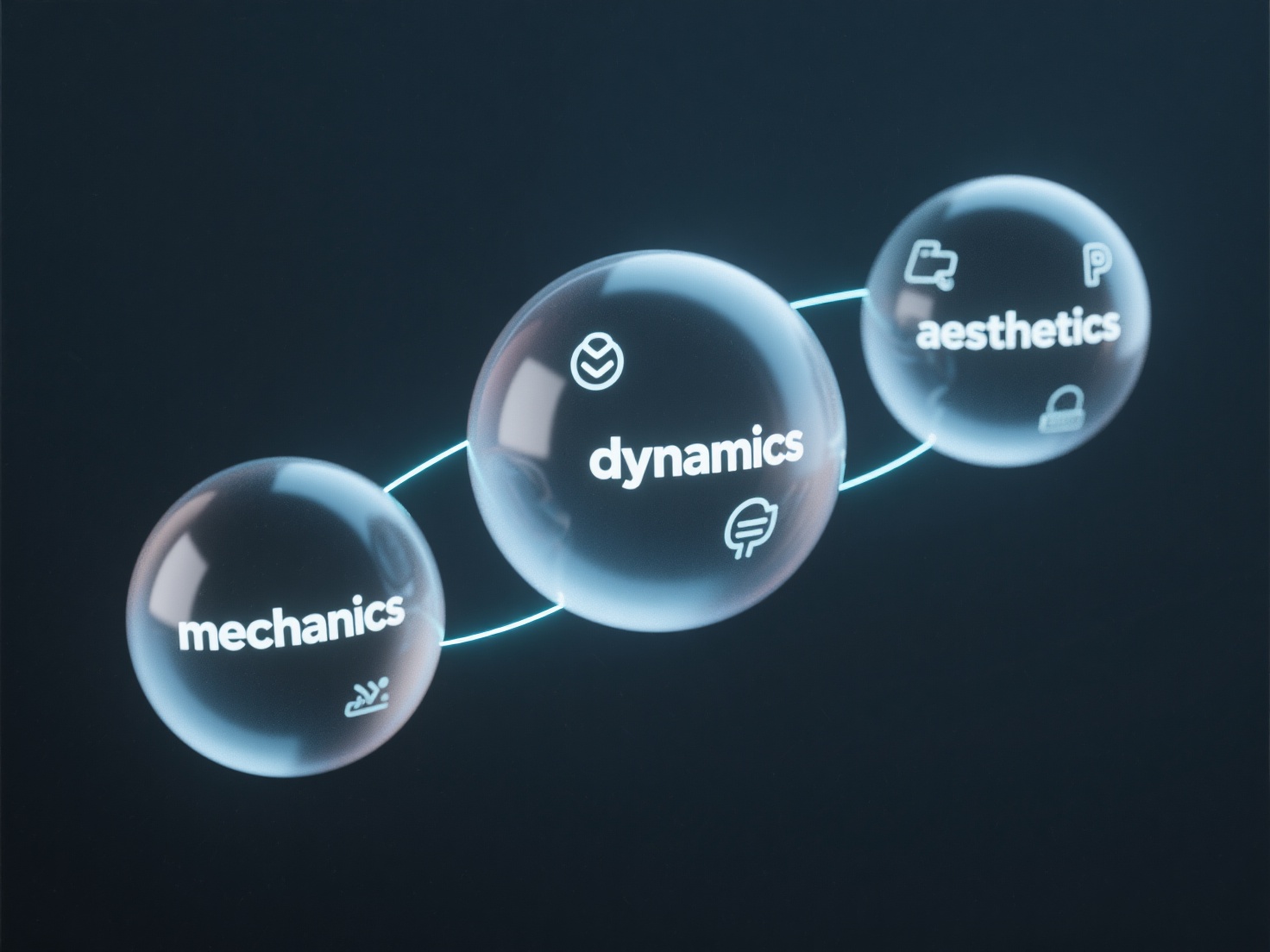
To grasp game design basics, you must understand how games are structured. Professionals often use the MDA Framework to break down game design into three interconnected layers:
1. Mechanics (The Rules)
Mechanics are the foundational rules and systems of the game. This includes running, jumping, shooting, managing inventory, or taking turns. Mechanics are the tools the player uses to interact with the game world. For example, in a platformer, gravity, jump height, and movement speed are all core mechanics.
2. Dynamics (The System Behavior)
Dynamics emerge when players interact with the mechanics in real-time. It is how the rules behave in motion. If a game has a mechanic where “running makes loud noises” and another mechanic where “enemies attack when they hear noise,” the resulting dynamic is that players naturally start adopting a stealthy playstyle to survive.
3. Aesthetics (The Emotional Response)
Not to be confused with visual graphics, aesthetics in the MDA framework refer to the emotional responses evoked in the player. Is the game meant to make the player feel powerful? Terrified? Relaxed? A successful game designer tweaks mechanics and dynamics to achieve the desired aesthetic experience.
What Does a Game Designer Do Day-to-Day?
A game designer career is highly collaborative and iterative. A typical day might involve:
- Writing and Updating the GDD: The Game Design Document (GDD) is the living bible of the project. Designers constantly update it with new mechanics, level layouts, and narrative beats.
- Prototyping and Grayboxing: Building basic, unpolished versions of levels (grayboxing) using primitive shapes to test if a space feels fun to navigate before artists spend time making it look beautiful.
- Balancing Systems: Tweaking numbers in a spreadsheet. Does the sword deal too much damage? Is the boss’s health pool too large? Designers fine-tune these metrics to ensure a fair challenge.
- Playtesting and Iterating: Watching people play the game, gathering feedback, identifying friction points, and going back to the drawing board to fix them.
Essential Skills for a Game Designer
To succeed in game design for beginners, you need to cultivate a specific set of hard and soft skills:
- Systems Thinking: The ability to see how small changes in one rule affect the entire ecosystem of the game.
- Player Empathy & UX (User Experience): Understanding how a player thinks. Can they easily navigate the menus? Do they understand where to go next without explicit instructions?
- Storytelling and Narrative Design: Weaving the lore, dialogue, and environment together to create a cohesive world.
- Rapid Prototyping: The faster you can test an idea, the faster you can find out if it is fun. Prototyping is arguably the most valuable technical skill a designer can have.
Career Paths: Where Can Game Design Take You?
The gaming industry offers diverse environments for a game designer career. Depending on your goals, you might pursue:
AAA Studios
Working on massive, big-budget titles (like Call of Duty or God of War). In AAA, roles are highly specialized. You might work specifically as a Level Designer, Combat Designer, or Economy Designer.
Indie Development
Working on smaller, innovative teams. Indie designers often wear multiple hats, handling coding, narrative, and level design simultaneously. It offers immense creative freedom but demands a broader skill set.
Mobile & Hyper-Casual Games
A fast-paced sector focused on creating addictive, easily accessible games. This path requires a deep understanding of player retention metrics, monetization design, and short gameplay loops.
Best Practices for Game Design Beginners
If you are just starting your journey, here are a few actionable tips to guide you:
- Start Small: Do not try to build an open-world RPG as your first project. Start with a clone of Pong or Tetris, then add your own unique mechanic.
- Fail Fast, Iterate Often: Your first idea will rarely be your best. Build a prototype quickly, test it, find the flaws, and improve it.
- Embrace Feedback: Do not get defensive when someone critiques your game. Watch how they play rather than just listening to what they say.
- Learn Game Engines: Familiarize yourself with Unity, Unreal Engine, or Godot. You do not need to be an expert programmer, but you must know how to navigate the software to build basic prototypes.
How AI is Revolutionizing Game Prototyping
One of the biggest bottlenecks for game designers—especially those working in indie teams or solo—is the need for 3D assets to test out their ideas. While you can use basic cubes and spheres (grayboxing), having recognizable 3D models makes playtesting significantly more intuitive and visually appealing to stakeholders.
Historically, waiting for a dedicated 3D artist to create placeholder assets could take weeks. Today, AI-powered tools are completely changing this workflow.
This is where Hitem3D becomes an invaluable asset for game designers. As a next-generation AI-powered 3D model generator, Hitem3D allows designers to rapidly prototype game assets without needing extensive 3D modeling skills.
By simply uploading a 2D concept image, designers can generate production-ready 3D assets instantly. Here is why it is a game-changer for game development workflows:
- Reconstructs Invisible Parts: Unlike basic generators, Hitem3D’s Sparc3D (high precision) model intelligently reconstructs hidden structures beyond the visible surface, providing complete, solid geometry perfect for game engines.
- De-Lighted PBR Textures: It generates 4K resolution PBR-ready textures with baked-in lighting removed. This means the assets will react perfectly to the dynamic lighting in your Unity or Unreal Engine scenes.
- High-Fidelity Output: With support for up to 1536³ Pro resolution (up to 2 million polygons), you get highly detailed models that can be seamlessly exported in standard game development formats like FBX, GLB, and OBJ.
- Risk-Free Iteration: Thanks to Hitem3D’s Free Retry system, designers can regenerate results without spending additional credits until they get the perfect placeholder asset.
Using tools like Hitem3D allows game designers to focus on what they do best: designing mechanics and crafting fun experiences, rather than getting bogged down in asset creation.
Conclusion & Next Steps
Understanding what is game design is the first step toward a rewarding career in interactive entertainment. It is a discipline that marries technical logic with creative empathy, requiring you to think deeply about rules, psychology, and player experience. By mastering the MDA framework, sharpening your prototyping skills, and learning to iterate based on feedback, you can start bringing your own game worlds to life.
As you begin building your portfolio, leverage modern AI tools to accelerate your workflow and bring your prototypes closer to a finished state. Do not let a lack of 3D modeling skills hold back your brilliant game mechanics.
Ready to rapidly prototype your next game idea? Create For Free with Hitem3D today and transform your 2D concepts into game-ready 3D models in minutes.
Frequently Asked Questions (FAQ)
Do I need to know how to code to be a game designer?
While you do not need to be a professional software engineer, having a basic understanding of scripting (like C# for Unity or Visual Scripting in Unreal) is highly recommended. It allows you to build and test your own prototypes without waiting on a programmer.
Is game design a good career in 2026?
Yes. As the gaming industry continues to expand into virtual reality, mobile, and live-service models, the demand for creative problem-solvers who can design engaging systems remains strong. However, it is highly competitive, making a strong portfolio essential.
How do I build a game design portfolio?
Start by creating small, playable games or levels. Write clear Game Design Documents detailing your thought process. Participate in game jams (like Ludum Dare or Global Game Jam) to collaborate with others and produce finished, bite-sized projects that showcase your ability to design fun mechanics.